

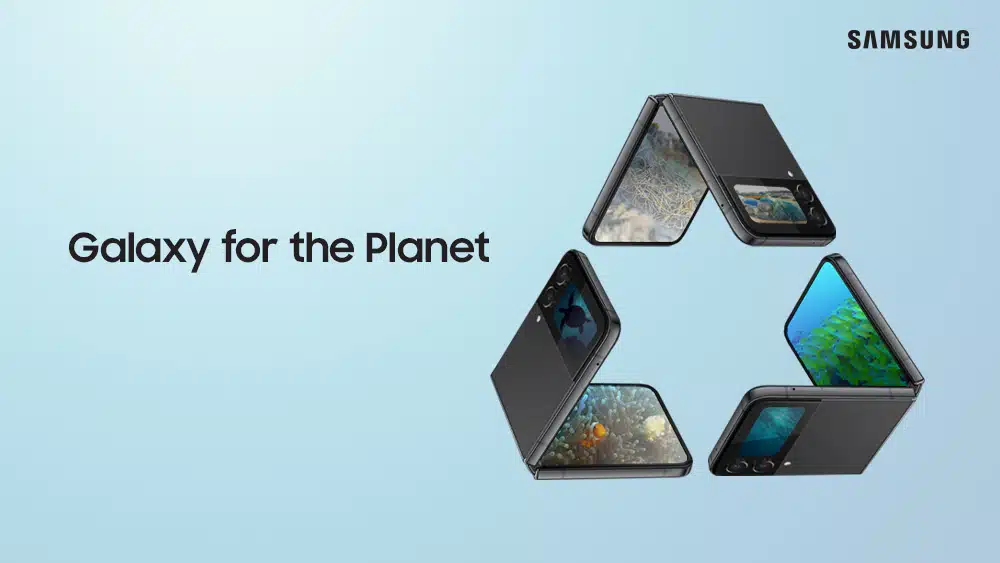
Samsung Electronics has announced a significant expansion of its sustainability roadmap after achieving its original 2025 environmental targets ahead of schedule. Rather than slowing down, the company is accelerating its efforts through the next phase of its Galaxy for the Planet initiative, a long-term framework that shapes how it designs and manufactures mobile phones, tablets, and wearable devices.
This updated strategy introduces clear, measurable goals for 2030. The focus areas include expanding the use of recycled materials, improving water stewardship, and protecting natural ecosystems. These changes are not just policy-level statements. They will directly influence how Galaxy devices are built and how Samsung operates its factories worldwide, including its large-scale manufacturing facility in India.
Key Takeaways
- Samsung achieved all four of its 2025 sustainability goals ahead of schedule
- By 2030, every module in every mobile product must include at least one recycled material
- The company plans to return 110% of the water it consumes back to nature
- All 10 global mobile manufacturing sites, including Noida in India, have reached 100% landfill diversion
- Samsung will conserve ecosystems equal in size to its global mobile business footprint
Expanding the Use of Recycled Materials in Galaxy Devices
One of the most notable shifts in Samsung’s 2030 plan is the requirement that every part of every mobile device must contain at least one recycled material. This is more comprehensive than it might initially sound.
At present, Samsung uses 10 different types of recycled materials across Galaxy devices. These include plastics made from discarded fishing nets, recycled glass, recycled aluminum, and metals such as cobalt and lithium. These materials appear in various components, from internal brackets to external frames.
By 2030, the company aims to integrate recycled content into every module of a device, including the battery, display, and camera assemblies. That is a fairly bold move when you consider how complex smartphone supply chains can be. Ensuring consistency, durability, and safety while increasing recycled inputs is not always straightforward.
Packaging has also evolved. Samsung has removed nearly all single-use plastics from its mobile product boxes and replaced them with paper-based materials. On the technical front, engineers have reduced standby power consumption in chargers to near-zero levels. The latest 15W, 25W, and 45W chargers now consume minimal electricity when plugged in but not actively charging a device. It may seem like a small tweak, but across millions of units, the cumulative impact can be meaningful.
Water Stewardship and Biodiversity Commitments
The 2030 strategy extends beyond product materials. Samsung is placing stronger emphasis on water management at its manufacturing facilities. The company is targeting Platinum certification from the Alliance for Water Stewardship, often referred to as AWS. This rating requires responsible water use, risk management, and community engagement around shared water resources.
More notably, Samsung plans to return 110% of the water it uses in its mobile operations back to the environment. In practical terms, this means replenishing more water than it consumes during manufacturing. It is a step beyond simple conservation. It reflects a replenishment model, which I think signals a broader shift in how global manufacturers view environmental responsibility.
Biodiversity is another key pillar of the plan. Samsung intends to conserve or restore ecosystems equal in size to its total mobile business footprint worldwide. In other words, the company will invest in protecting forests, wildlife habitats, or other natural areas to offset the land used by its offices, factories, and operational sites. The idea is to create environmental balance, though measuring that balance precisely can be complex.
Impact on Local Manufacturing in India
For consumers in India, these global commitments are not abstract. Samsung’s manufacturing plant in Noida is among the 10 global mobile production sites that have achieved a 100% waste diversion rate. This means that no waste generated from Galaxy device production is sent to landfills. Instead, materials are either recycled, repurposed, or processed within controlled systems.
This Zero Waste to Landfill approach reflects how sustainability targets are now integrated into daily factory operations. TM Roh, head of Samsung’s mobile division, has emphasized that environmental considerations are no longer secondary initiatives. They are embedded into product design, sourcing decisions, and resource management strategies.
It suggests that sustainability is becoming a structural part of Samsung’s manufacturing model rather than a standalone corporate responsibility campaign. Whether that transformation will be fully visible to end users is another question, but the operational shift appears substantial.
Frequently Asked Questions
Q1: What is the Galaxy for the Planet initiative?
A1: Galaxy for the Planet is Samsung’s long-term sustainability roadmap for its mobile business. It sets defined environmental goals related to product design, recycled materials, waste management, energy efficiency, and water stewardship.
Q2: Which Galaxy products use recycled materials?
A2: Most recent Galaxy smartphones, tablets, and smartwatches incorporate recycled materials. These include ocean-bound plastics in internal components and recycled glass or aluminum in exterior structures.
Q3: How does Samsung reduce plastic waste in India?
A3: Samsung has transitioned to paper-based packaging for mobile devices sold in India. Additionally, its Noida manufacturing facility follows Zero Waste to Landfill practices, ensuring that production waste is recycled or reused rather than discarded.
Q4: Does using recycled materials affect phone quality?
A4: No. All recycled materials used in Galaxy devices undergo third-party testing to ensure they meet the same durability and strength standards as newly sourced materials.
Q5: What is Samsung’s 2030 water conservation goal?
A5: Samsung aims to return 110% of the water it uses in its mobile operations back to nature. The company is also pursuing Platinum certification from the Alliance for Water Stewardship for responsible water management.