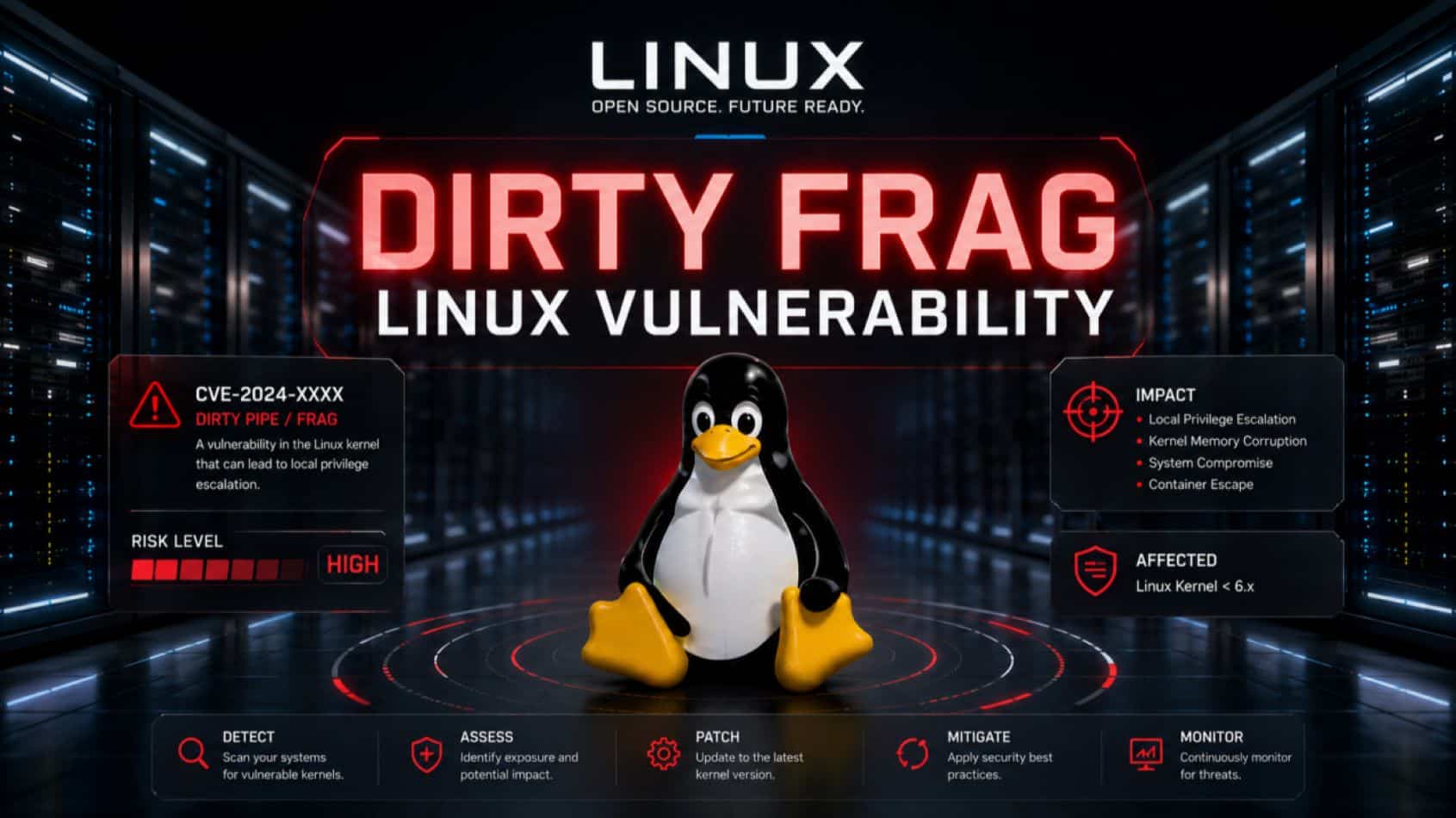
Researchers have found a serious Linux kernel bug called Dirty Frag, tracked as CVE-2023-4797. It messes with how the kernel handles memory when breaking up IPv4 packets. If someone already has access to your machine, they can use this to corrupt memory and get root privileges. Worse, it lets them dodge security tools and stick around without you noticing. Not great.
Key Takeaways
- Dirty Frag exploits a memory corruption bug inDirty Frag takes advantage of a memory bug in the Linux kernel’s networking code.elevate their permissions to root level.
- Attackers use Dirty Frag to hide out and slip past most security software.
- Linux distros are pushing out patches now, so updates are coming.
The problem sits right in the Linux kernel, the software that runs the show on your machine. The bug is in the networking part that handles fragmented packets. When data moves over a network, it gets chopped into fragments. The kernel puts these back together. Dirty Frag tricks this process. If an attacker sends the right kind of fragments, they can overflow a buffer and overwrite important memory. That’s where things go sideways.

This kind of memory corruption is bad news because it happens with full system authority. Once the attacker gets in, they can run their own code. That means the usual permission checks are out the window. Suddenly, a normal user can poke around in places they shouldn’t.
Security experts highlight that Dirty Frag is particularly useful for post-compromise activity. This means that after a hacker geExperts say Dirty Frag is especially handy for hackers after they’ve already broken in. Once they have a foothold, they use this bug to disappear. They can hide files, network activity, even running processes. Security teams might think everything looks fine, but the attacker is still there, doing whatever they want. That’s a headache for anyone trying to keep systems clean.d in millions of servers, cloud environments, and Android devices, the potential surface for this attack is vast. System administrators should check their current kernel version and apply security updates immediately. Because the attack requires local access or a pre-existing entry point, keeping all software updated remains the best defense.
Frequently Asked Questions
Q. What exactly is Dirty Frag?
A. Dirty Frag is a nickname for a security bug in the Linux kernel. It focuses on how the system handles broken-up internet data packets to take over the computer.
Q. Can someone hack me over the internet using this?
A. Usually, an attacker needs a way to run code on your machine first. They use Dirty Frag as a second step to get full control and hide their tracks.
Q. Is my Android phone at risk?
A. Android uses the Linux kernel, so it is technically possible. However, mobile devices usually receive these fixes through monthly security updates from the manufacturer.
Q. How do I fix Dirty Frag on my laptop?
A. Open your terminal and run your system’s update command, such as sudo apt update and sudo apt upgrade. Restarting your computer after the update is necessary to load the new kernel.
Q. Why is it called Dirty Frag?
The name is a play on previous famous Linux bugs like Dirty COW. “Frag” refers to the packet fragmentation process that the bug exploits.