

Microsoft Chairman and CEO Satya Nadella has cautioned corporate enterprises against the hidden intellectual property risks of artificial intelligence. In a detailed strategic essay published on the social media platform X, Nadella introduced the concept of the Reverse Information Paradox. He argued that businesses seeking better performance from AI models are inadvertently handing over their unique internal expertise, workflow traces, and critical operational decisions to external technology providers. This trend risks eroding the long-term competitive edge of companies that heavily feed their proprietary data into shared systems.
Key Takeaways
- Enterprises face a dual cost structure, paying for AI systems first with financial capital and second with sensitive corporate knowledge.
- The original 1966 information paradox by economist Kenneth Arrow focused on seller vulnerabilities, but AI flips this risk onto the buyer.
- Standard data protection methods fall short because models actively extract value from everyday user prompts, tool traces, and error corrections.
- Nadella advocates for a strict corporate trust boundary built around five pillars: control, capability, choice, cost, and compounding.
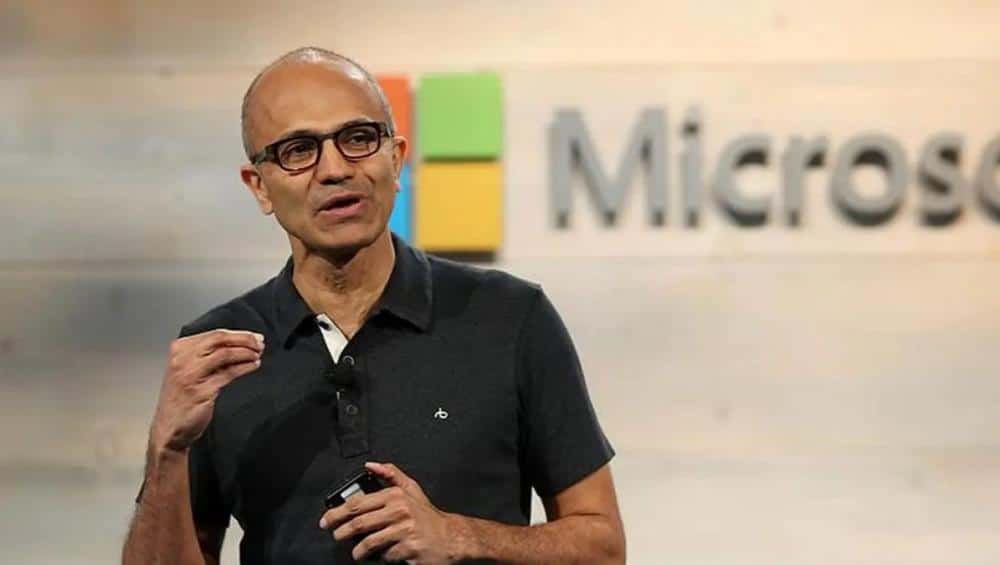
Nadella explained that the current wave of intelligence adoption completely flips a classic economic theory on its head. In 1966, Nobel Prize-winning economist Kenneth Arrow outlined the original Information Paradox, which stated that a seller faces severe risks when trying to value and sell information because exposing the data to prove its worth effectively gives it away for free. In the current technological environment, the Microsoft executive noted that buyers now bear the ultimate vulnerability. Corporate clients must reveal their most guarded operational methods to ensure an AI model delivers highly accurate, contextual outputs.
This dynamic creates an ongoing imbalance where the model seller continually learns about the buyer, yet the buyer gains no deeper understanding of the core underlying model. According to Nadella, this system creates an imperceptible leak of institutional memory. Every time an employee writes a detailed prompt, utilizes an autonomous agent tool, or corrects an AI error, the system captures that action as data exhaust. The system then distills these specific human corrections into broader institutional know-how, which can allow infrastructure owners to absorb the unique business intelligence of their own clients.
To prevent the concentration of economic value among a tiny handful of centralized platform owners, Nadella urged businesses to establish absolute operational autonomy. He outlined a strategic framework focused on creating a secure tenant boundary that stops learning data from flowing back to external vendors. The framework highlights the necessity of decoupling the enterprise orchestration layer from any single AI model. By maintaining independent evaluation systems and localized learning loops, Indian businesses and global corporations can successfully swap out generic backend models without losing their accumulated operational context or sacrificing their core intellectual property.
Frequently Asked Questions
Q1. What is the Reverse Information Paradox defined by Satya Nadella?
A1. It is a situation where corporate buyers of AI tools end up paying for the technology twice. Companies pay once with money for the software license or token usage, and a second time by feeding the system their proprietary workflows, prompts, and corrections to make the tool function effectively.
Q2. How does this concept differ from Kenneth Arrow’s original paradox?
A2. Kenneth Arrow’s 1966 theory stated that the seller of information faces the risk of losing value by revealing data to a prospect. The reverse paradox states that the buyer of AI now faces the risk, as they must reveal secret corporate data to get the software to perform well.
Q3. What constitutes the data exhaust that AI systems collect from businesses?
A3. Data exhaust includes the everyday interactions employees have with AI systems, such as specific text prompts, workflow traces from software agents, performance evaluations, and the manual corrections made when the model produces an incorrect answer.
Q4. What solution does the Microsoft CEO propose to protect corporate data?
A4. Nadella advises firms to build a secure trust boundary within their cloud architecture. This involves using private evaluation systems, keeping organizational memory within local tenant environments, and separating the orchestration layer from individual AI models to retain full control over the corporate learning loop.