LG Electronics shared a comprehensive roadmap to establish a household environment that minimizes daily chores through coordinated smart technologies. The company presents its vision of a “Zero Labor Home” using a setup built on three central pillars: specialized AI appliances, ThinQ AI orchestration, and autonomous home robots. Driven by localized consumer trends and shifting economic factors, the brand is positioning its premium, intelligent systems to meet the changing preferences of Indian households.
Key Takeaways
- Core Pillars: The setup integrates learning appliances, a generative AI hub, and physical automation agents.
- Platform Evolution: The ThinQ ecosystem progresses from simple remote operation to multi-brand coordination via Homey integration.
- Indian Market Focus: Growing urbanization and rising incomes drive the adoption of intelligent, premium home utility systems.
- Local Manufacturing: Production plants in Greater Noida and Pune are aligned to manufacture global AI-ready components.
The Technological Framework
The autonomous setup functions via three interconnected segments. Next-generation appliances form the first segment, embedding intelligent hardware into core components to analyze user behavior. For instance, modern refrigerators evaluate daily habits to modify cooling cycles, maintaining food preservation while managing power use.
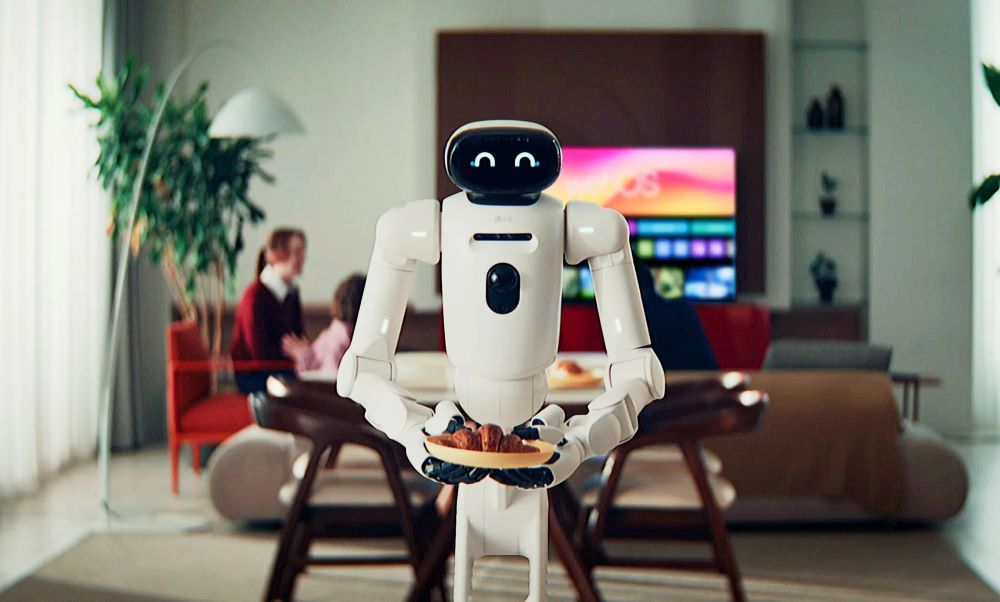
ThinQ AI Orchestration serves as the central control unit, utilizing a generative AI platform to interpret conversational context and unify devices across the living space. The third segment introduces physical automation through autonomous home robots like LG CLOiD. First revealed at CES 2026, this mobile agent uses a spatial vision engine to navigate rooms and perform chores. CLOiD links with the central ThinQ ON hub to manage physical tasks, such as handling laundry cycles or organizing clothing prior to the arrival of the homeowner. The robot moves using the LG Actuator AXIUM, a compact, modular platform combining a motor, reducer, and drive into one single unit for precise joint movement.
Evolutionary Timeline of ThinQ
The software platform has transitioned through distinct phases to move away from standard consumer technology:
- Reactive Automation: This initial phase utilized smartphone apps for basic Wi-Fi tracking, remote on/off functions, and system troubleshooting.
- Continuous Adaptability: Through ThinQ UP, appliances received over-the-air software updates to adapt to user patterns over time. ThinQ Care added predictive diagnostics by reviewing usage habits to alert users before technical faults occurred.
- The Orchestrated Universe: Powered by the ThinQ ON hub and integrated with the open ecosystem Homey from Athom, the platform now handles over 50,000 devices across hundreds of independent brands, requiring little manual input.
Indian Market Alignment and Infrastructure
Rising household incomes, rapid urbanization, and a general drive to modernize living spaces fuel a strong premiumization trend in India. Consumers in major metro areas increasingly look past basic product functions, choosing instead high-capacity, energy-efficient, and intelligent washing machines or refrigerators.
To support this demand, LG Electronics India relies on solid domestic production infrastructure. The manufacturing facilities located in Greater Noida and Ranjangaon, Pune possesses the capacity to output items like air conditioners, LED TVs, and washing machines. These local plants are fully tied into the global production roadmap. This alignment helps scale next-generation components efficiently, ensuring steady distribution of AI Wash 2.0 systems and connected appliances customized for Indian homes.
Frequently Asked Questions
Q1. What is the main objective of the LG Zero Labor Home vision?
A1. The goal is to build an autonomous spatial operating system where intelligent appliances, central orchestration hubs, and mobile robots handle daily household tasks with minimal human intervention.
Q2. How does the open ecosystem integration work in the latest ThinQ phase?
A2. The system incorporates Athom’s Homey platform via the ThinQ ON hub, allowing users to connect and manage more than 50,000 devices across hundreds of different brands using natural language commands.
Q3. What specific role does the LG CLOiD robot perform?
A3. CLOiD serves as a physical assistant that navigates homes using a spatial vision engine. It coordinates with local appliances to execute real-world chores, such as managing laundry or setting up clothing ahead of time.
Q4. Where are the AI-enabled appliances for the Indian consumer market manufactured?
A4. The units are produced at local manufacturing plants in Greater Noida and Ranjangaon, Pune, which are integrated with the global technology map to scale smart components efficiently.