

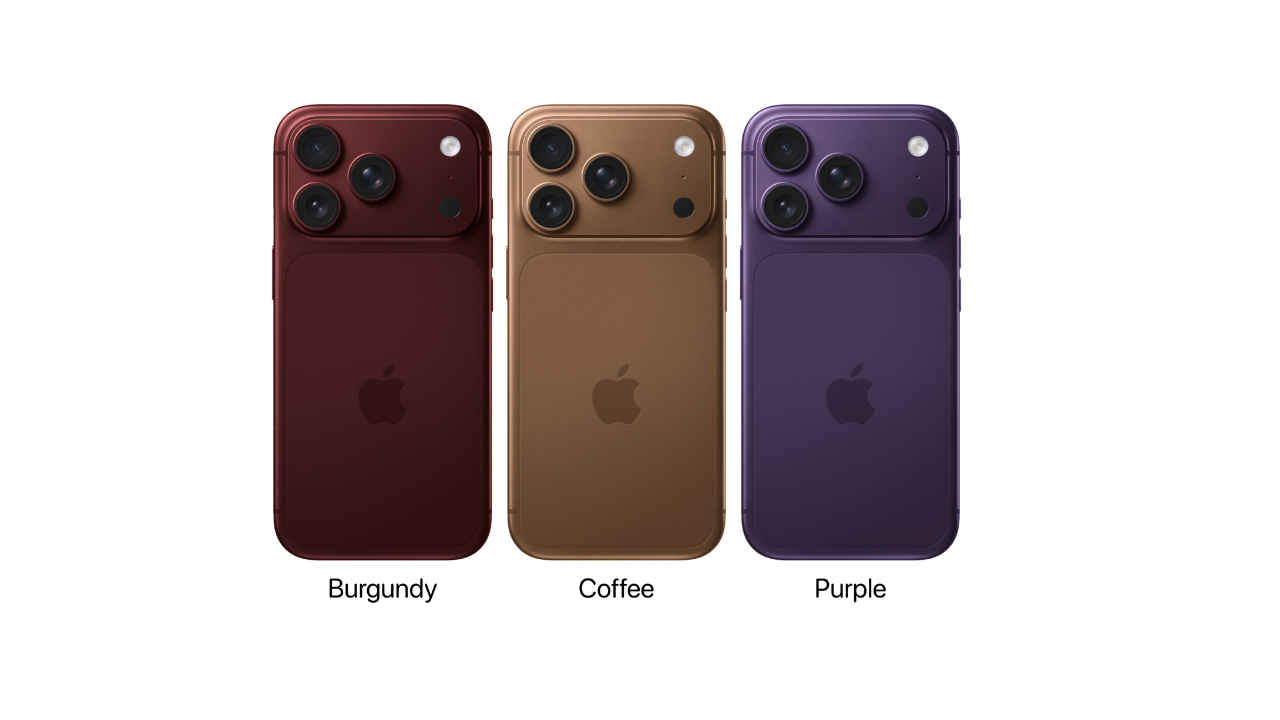
Apple appears to be preparing some notable hardware changes for its 2026 flagship lineup, the iPhone 18 Pro and iPhone 18 Pro Max. The official launch is still several months away, yet early reports are already hinting at a shift in both design and internal architecture. If the current leaks turn out to be accurate, these models could represent one of the more meaningful updates to the Pro series in recent years.
The upcoming devices are expected to focus heavily on professional grade photography, improved battery life, and a cleaner front display. Perhaps the most visible change involves the front panel itself, where Apple may finally move beyond the familiar screen cutout that has defined recent iPhones.
Key Takeaways
- Under-Display Face ID: Apple may hide Face ID hardware beneath the display, removing the Dynamic Island.
- Mechanical Iris Camera: At least one rear camera could include a variable aperture system.
- 2nm A20 Pro Chip: The next-generation processor may be built using TSMC’s advanced 2nm fabrication process.
- Larger Battery: The iPhone 18 Pro Max is rumored to feature a 5,100mAh battery.
- Integrated RAM Packaging: RAM may sit directly alongside the CPU and Neural Engine for faster processing.
Under-Display Technology and a Cleaner Front Design
One of the most talked-about changes involves Apple’s plan to move Face ID components beneath the display glass. If this technology makes it to the final device, it could eliminate the need for the Dynamic Island entirely.
Instead, the front panel might feature only a small punch-hole camera placed near the top-left corner of the screen. That would create a noticeably cleaner viewing experience, especially when watching videos or playing games. It is the kind of design shift Apple has been gradually moving toward for years.
That said, the rest of the device may remain familiar. The overall frame and body structure are expected to follow the design language introduced in recent generations. Apple tends to refine rather than completely reinvent its hardware, so this approach would not be surprising.
On the rear panel, the triple-camera arrangement is expected to stay. However, Apple may adjust the finish of the glass to blend more naturally with the surrounding frame. Internal prototypes are reportedly testing new color options as well, including burgundy, deep purple, and a coffee-inspired brown tone.
Mechanical Iris Camera and New Sensor Technology
The camera system might receive one of its most interesting upgrades in years. Reports suggest that at least one of the rear cameras could include a mechanical iris.
Unlike the fixed apertures used in most smartphones today, a mechanical iris can physically open or close to control how much light enters the lens. In brighter environments, the aperture can narrow to preserve detail and reduce overexposure. In darker scenes, it can widen to capture more light.
In theory, this approach offers better control over exposure and depth of field. It is something traditionally associated with dedicated cameras, so seeing it implemented in a smartphone would be a fairly significant step.
Apple is also said to be testing a three-layer stacked image sensor developed by Samsung. This type of sensor design aims to reduce noise while capturing more detail in both highlights and shadows. If implemented correctly, it could improve dynamic range in challenging lighting conditions, such as nighttime photography or scenes with strong backlighting.
A20 Pro Chip Built on a 2nm Process
At the center of the iPhone 18 Pro series will likely be the A20 Pro chip. According to early reports, the processor may use TSMC’s 2nm manufacturing process, which would represent a notable improvement in power efficiency and performance density.
A smaller fabrication process generally allows more transistors to fit into the same space. In practical terms, that can translate into faster processing speeds while using less power. For smartphones that rely heavily on AI processing and advanced camera algorithms, those gains can be quite meaningful.
Apple may also introduce a packaging technique known as Wafer-Level Multi-Chip Module integration. This approach places RAM directly alongside the CPU, GPU, and Neural Engine within a tightly integrated package.
The benefit here is faster communication between components. Data does not need to travel as far across the motherboard, which can improve processing speeds and free up internal space for other hardware components.
Larger Battery and Connectivity Improvements
Display sizes are expected to remain unchanged for the upcoming models. The iPhone 18 Pro may continue with a 6.3-inch display, while the Pro Max is likely to retain its larger 6.9-inch panel.
However, the Pro Max variant could become slightly thicker in order to accommodate a larger battery. Leaks suggest a capacity of around 5,100mAh, which would be one of the largest batteries ever used in an iPhone.
Naturally, a bigger battery may also increase the device’s weight. Some reports indicate the Pro Max could exceed 240 grams, which would make it heavier than previous generations.
Connectivity improvements are also expected. Apple may introduce its in-house C2 modem, designed to support mmWave 5G along with broader global network compatibility. If successful, this could reduce Apple’s reliance on third-party modem suppliers while improving wireless efficiency.
Expected Launch Timeline and Pricing
Apple typically introduces its flagship iPhones during a September launch event, and the iPhone 18 Pro series is widely expected to follow that schedule. If Apple maintains its usual cadence, the official announcement will likely take place in September 2026.
Pricing remains uncertain at this stage. The iPhone 17 Pro Max currently starts at ₹1,49,900 in India, and component costs for advanced chips and memory continue to rise. Analysts hope Apple will maintain similar pricing, though the addition of new technologies such as integrated RAM packaging could influence the final retail cost.
For now, most of the information surrounding the iPhone 18 Pro remains based on leaks and early reports. Still, taken together, these details suggest Apple is working toward a more immersive display, a smarter camera system, and a noticeably more powerful internal platform.
Related FAQs
Q1: When is the iPhone 18 Pro expected to launch?
A1: Apple traditionally launches its flagship iPhones in September. Based on that pattern, the iPhone 18 Pro and iPhone 18 Pro Max are most likely to debut in September 2026.
Q2: Will the iPhone 18 Pro have a better battery than the iPhone 17?
A2: Leaks suggest the iPhone 18 Pro Max may include a 5,100mAh battery, which is intended to support the efficiency and processing demands of the 2nm A20 Pro chip.
Q3: Does the iPhone 18 Pro remove the Dynamic Island?
A3: Reports indicate Apple is testing under-display Face ID technology. If implemented, this could replace the Dynamic Island with a smaller hole for the front camera.
Q4: What is a mechanical iris in a smartphone camera?
A4: A mechanical iris allows the camera lens to physically adjust its aperture. This provides better control over light intake, exposure, and depth of field depending on the lighting conditions.