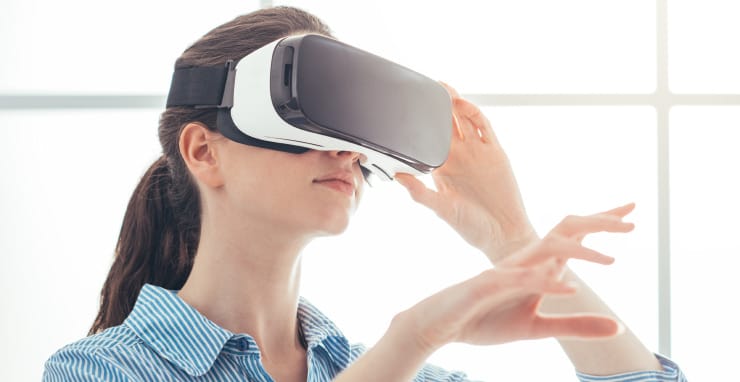
Researchers have developed a technique to access online accounts via the distinct vibration characteristics of an individual person’s skull. This system, VitalID, is based on the body’s internal processes, such as the heartbeat and respiration, for identification and authentication. This removes the necessity of passwords or biometric authentication via facial recognition. The technology captures the body’s internal processes, as they travel through bone and tissue, via the existing sensors in the majority of wearable headset technology.
Key Takeaways:
- VitalID captures unique biometric vibrations through the user’s heart and lung activity as they travel through the user’s skull.
- The system relies on the motion tracker that is already integrated into most virtual reality headsets.
- The designed system achieved 95% accuracy when identifying the correct user.
- This system is developed without the need for additional hardware and contact less scanners.
- The researchers focused their software development for extended reality, gaming, and remote work.
The technology was created by researchers from several American universities, including Rutgers University and the New Jersey Institute of Technology. It uses the internal response of an individual’s tissue and bone structure to identify them. Each person has a unique response to internal stimuli due to the variability in skull shape and density.
VitalID is primarily grounded in Extended Reality or XR. XR combines both virtual and augmented reality where users don headgear to play games or perform work functions. In India, a country where a large number of young people own gaming headsets used for professional training, a problem occurs when users want to enter passwords by using hand movements or gestures. This software solves that problem by being an automatic and hands-free system.
How the Identification Works
The system works with the Inertial Measurement Unit or IMU. This is a small sensor already present in most modern headsets, and it performs in the range of motion and head position. VitalID analyses the minuscule data points from the sensor to detect the pulse. It can differentiate between a user and an intruder with a 98% reliability score.
The system also doesn’t need any additional hardware. Yingying Chen, a researcher at Rutgers University, the system is fully functional with an update on the software and uses the same hardware already present. The identification software was tested by the team with 52 different persons, over a duration of 10 months, to ensure the accuracy of the identification was consistent, even with an increase or decrease of the person’s heart rate.
The researchers also addressed external noise. With head movements and walking, the software filters out such micro movements. The focus stays on the body’s internal rhythm. This activates additional defense layers against hacking. Capturing internal bone vibrations of other users is not something hackers can rely on.
The software is mainly developed headsets for now, but the researchers think it can be applied to other categories of wearable technology as well. At this point of the project, the team is pursuing patent rights to the technology and are seeking commercialization partners.
Frequently Asked Questions
Q1: What is VitalID and how does it work?
A1: VitalID is a software system that identifies you by recording the unique vibrations your heartbeat and breathing send through your skull. It uses standard motion sensors to read these patterns.
Q2: Do I need to buy a new headset to use VitalID?
A2: No, the system is designed to work with the sensors already built into most virtual reality and augmented reality headsets. It only requires a software update.
Q3: Is VitalID more secure than a fingerprint?
A3: The researchers claim it is very secure because it is difficult for someone else to replicate your internal bone structure and the way vibrations move through your body.
Q4: Can I use this if I am moving or exercising?
A4: Yes, the software has a filtering system that removes noise from physical activities like walking or nodding, focusing only on the internal body vibrations.