


The mouse hasn’t changed much since the 1980s. Now, that’s shifting. Developers are building AI right into the pointer. You’ll see new systems like World Mouse and AI-powered cursors. Instead of just clicking, your cursor can now sense space and respond to gestures. It can move through 3D environments and even handle tricky tasks on its own. Less clicking around, less dragging files. The cursor does more of the work for you.
Key Takeaways
- Spatial Navigation: Modern cursors now use “World Mouse” technology to move between 2D windows and 3D objects in augmented reality.
- Agentic Control: AI agents can now take control of the cursor to execute multi-step workflows like coding and testing without human input.
- Gesture Integration: New virtual mouse systems use webcams and computer vision to track hand movements, removing the need for physical hardware.
- Contextual Intelligence: The pointer is evolving into a smart agent that understands the content it hovers over, offering instant AI actions.
From Static Clicking to Spatial Intelligence
For decades, the mouse pointer has been a simple 2D cFor years, your mouse pointer was just a dot on a flat screen. That’s changing fast. With spatial computing and AI, the old rules don’t apply. The World Mouse system lets you move through 3D scenes. The pointer wraps around digital objects. Move your mouse over a 3D model and the cursor shifts its depth and angle to match. It almost feels like you’re touching the thing, not just pointing at it. Strange, but kind of cool.tools. For example, the latest updates to the Cursor code editor allow AI agents to “take the wheel.” Instead of a human clicking through folders, these agents use an agent-centric workflow to plan and execute tasks across thousands of files simultaneously. This transition from a “file-centric” to an “agent-centric” model means the pointer is no longer just a tool for the user but a vehicle for AI automation.
Hardware Free Interaction via Computer Vision
You might not even need a mouse anymore. In India and elsewhere, people are using AI virtual mouse systems with just a webcam. The tech tracks 21 points on your hand. Libraries like MediaPipe and OpenCV turn a finger pinch into a click, or a palm move into a cursor shift. It’s cleaner, and it helps if you have a disability or work somewhere you can’t use a regular mouse. I tried it once—takes a bit of getting used to, but it works.
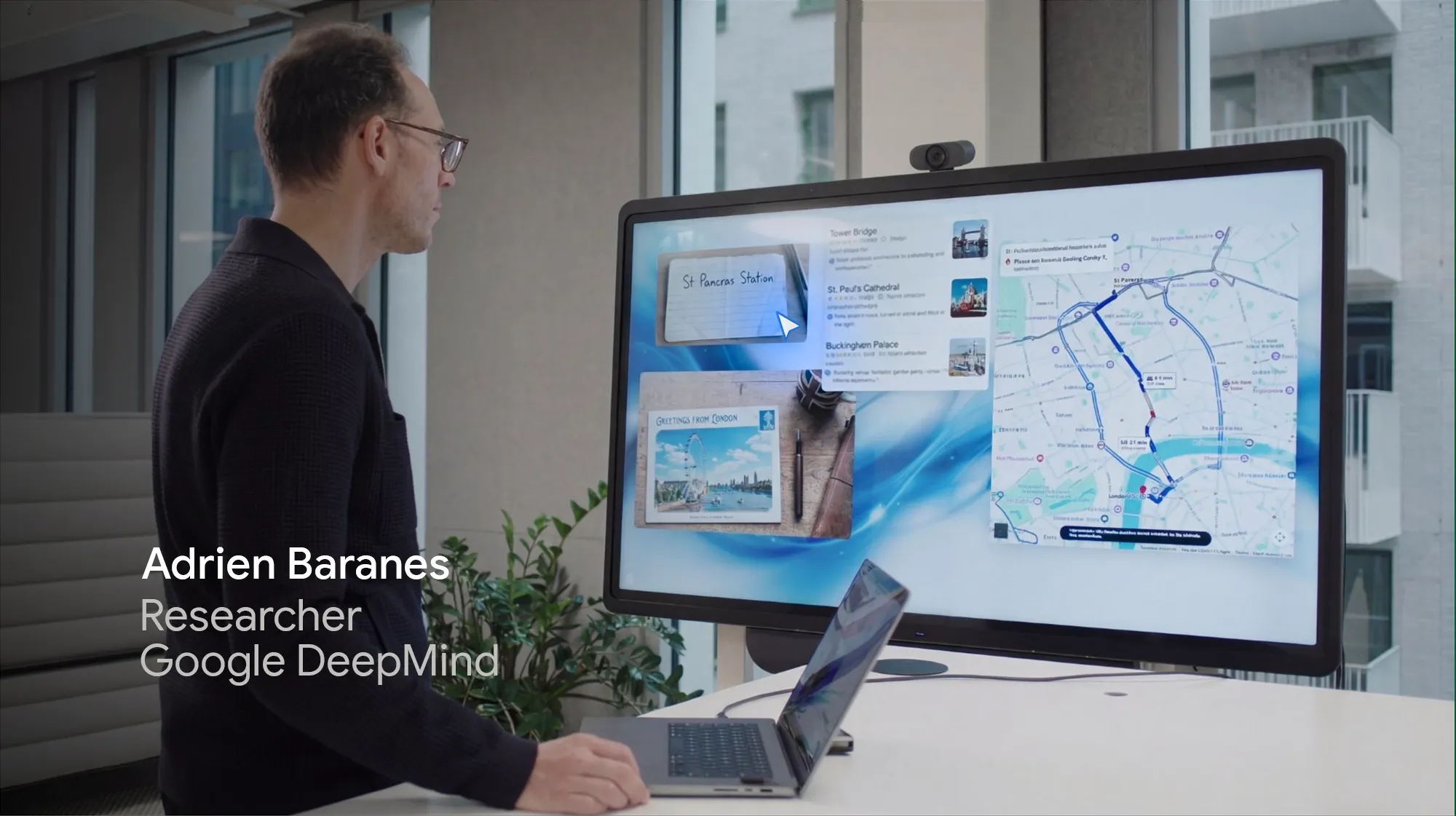
Google’s in on this too. Their Gemini 3 system brings in advanced spatial smarts. The OS can see what’s happening on your screen as you work. Hover over a big data set and the AI cursor can sum it up for you. Or it might suggest what to do next, like moving numbers from a spreadsheet into a slide deck. Saves time, if you ask me.
The Future of the Pointer
AI is getting baked into operating systems now. The old point-and-click routine is on its way out. Next up: intent-based navigation. Your computer guesses where you want to go, based on what you’re doing. Sure, there are privacy questions—how much does the AI actually see? But the productivity boost is real. Developers are already testing agents that can build whole web engines from nothing. The cursor just shows you what the AI is thinking as it works.
Related FAQs
Q1. What is an AI virtual mouse?
A1. An AI virtual mouse is a system that uses a webcam and computer vision to track hand gestures, allowing you to control the screen pointer without physical hardware.
Q2. How does a 3D cursor work in augmented reality?
A2. A 3D cursor, or World Mouse, uses surface normals to “stick” to the geometry of digital objects, allowing for precise placement and interaction in a 3D space.
Q3. Can AI agents move the mouse pointer on their own?
A3. Yes, new agentic AI platforms can control virtual machines, moving the cursor to click buttons, write code, and navigate apps to complete tasks autonomously.
Q4. Do I need a special camera for gesture-based mouse control?
A4. No, most modern AI virtual mouse systems work with standard built-in webcams found on laptops.
Q5. Is the traditional mouse becoming obsolete?
A5. While not obsolete, the traditional mouse is being augmented by voice, gaze tracking, and AI agents that handle the “drudgery” of repetitive clicking.