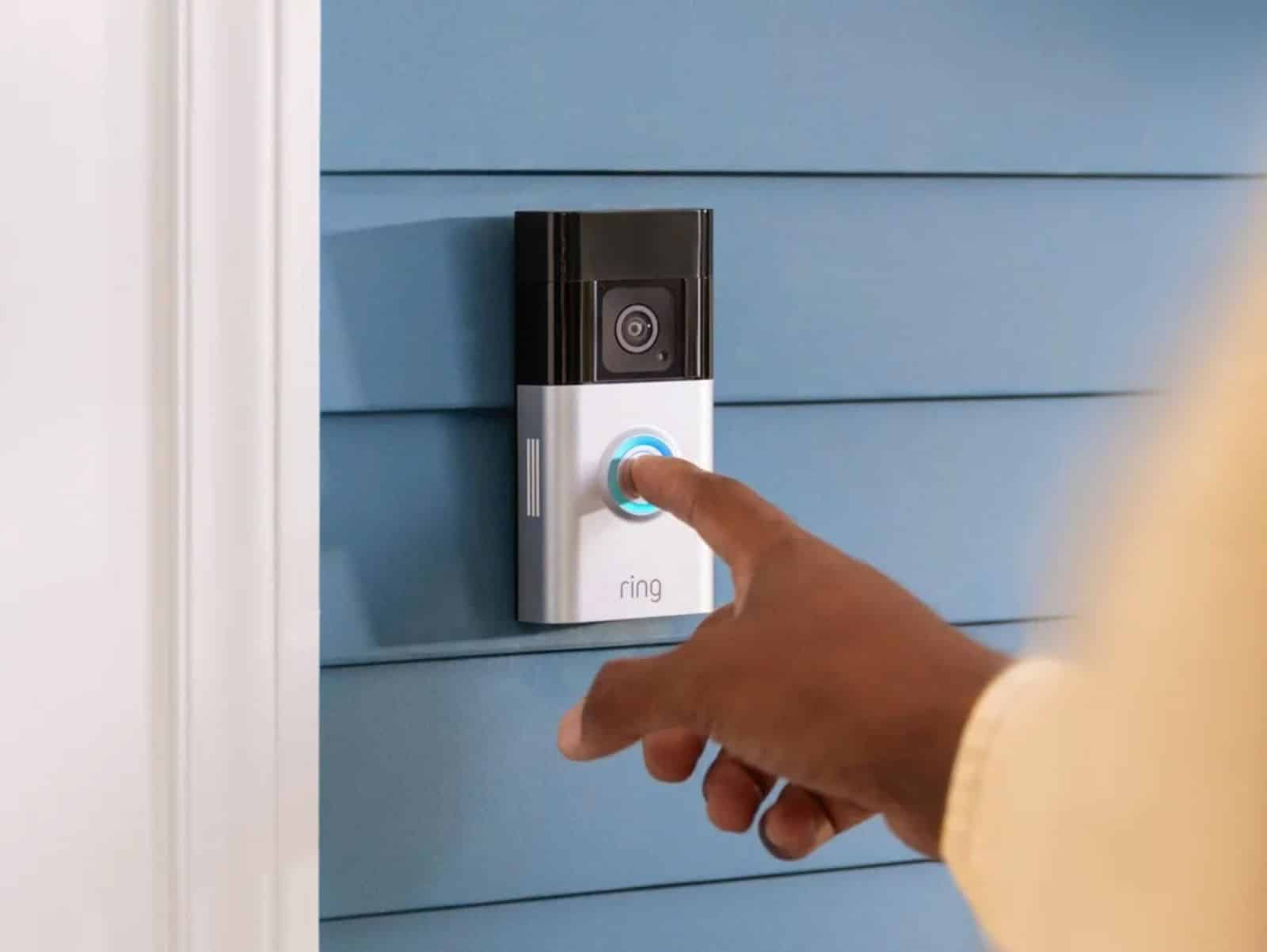
In a significant advancement for home security, Amazon’s Ring, a prominent name in smart security devices, is rolling out new artificial intelligence capabilities that will allow its cameras and doorbells to “learn the routines of your residence.” This development aims to move beyond basic motion detection, offering users a more nuanced and intelligent understanding of activity around their properties. The integration of generative AI is set to transform how homeowners interact with their security systems, providing detailed, context-rich alerts and aiming to minimize unnecessary notifications.
Key Takeaways:
- Ring’s new AI features provide detailed text descriptions of motion events.
- Future AI plans include “routine learning” to identify unusual patterns in activity.
- This aims to reduce notification fatigue by focusing on significant or anomalous events.
- The initial feature, “Video Descriptions,” is in beta for Ring Home Premium subscribers in the US and Canada.
- Ring is also working on combining multiple motion events into single, cohesive alerts.
- Privacy implications are a key discussion point as AI systems analyze daily habits.
- The AI capabilities are compatible with all currently available Ring doorbells and cameras.
Jamie Siminoff, founder of Ring and current Vice President of Product at Amazon, has outlined a vision where AI plays a central role in enhancing peace of mind for homeowners. This new wave of AI integration, beginning with a feature called “Video Descriptions,” marks what Siminoff refers to as the “first cornerstone pieces of our AI work.”
Video Descriptions: A Leap in Alert Specificity
The initial rollout of Ring’s AI, currently in beta for Ring Home Premium subscribers in the United States and Canada, focuses on “Video Descriptions.” This feature leverages generative AI to analyze the initial seconds of a motion-activated video and then generates a concise, descriptive text summary.
Previously, a user might receive a generic “Motion Detected” alert. With Video Descriptions, this evolves into something far more informative, such as “A person is walking up the steps with a black dog,” or “Two people are peering into a white car in the driveway.” This level of detail helps users quickly discern the nature of an event without needing to open the Ring app and review footage every time. The AI is engineered to describe only the main subject and action, ensuring that notifications are to the point and actionable. This serves to address a common pain point for smart security camera users: notification fatigue caused by a constant stream of vague alerts.
Learning Routines: The Next Frontier
The more ambitious aspect of Ring’s AI roadmap involves the system’s ability to “learn the routines of your residence.” This is where the AI moves beyond simple object identification to understand normal patterns of activity. Jamie Siminoff detailed plans for “custom anomaly alerts” that will only notify users when something out of the ordinary occurs on their property.
For example, if a delivery driver routinely drops off packages at a certain time, the system will eventually recognize this as a normal event and may not issue an alert. However, if a car parks in an unusual spot for an extended period in the middle of the night, or if a person lingers at the doorstep when no one is expected, the AI would flag this as an anomaly and trigger an alert. This proactive approach aims to significantly reduce irrelevant notifications, allowing users to focus on events that genuinely require their attention. The system achieves this by continuously analyzing video data to establish a baseline of typical movement, presence, and activity. Deviations from this baseline are then identified as potential anomalies.
Behind the Scenes: How Ring’s AI Works
While Ring has not publicly disclosed the specific AI models powering these features, the underlying technology involves advanced computer vision and machine learning algorithms. These algorithms process vast amounts of video data captured by Ring devices. For “Video Descriptions,” the AI analyzes pixel patterns and movement to identify objects (people, animals, vehicles) and their actions. This is similar to how “Smart Alerts” for people, packages, and vehicles have functioned, but with the added layer of generative AI to create natural language descriptions.
The “routine learning” aspect goes a step further. It requires the AI to not only identify objects but also to track their frequency, timing, and interaction within defined “zones” or across the entire property. Over time, the system builds a profile of normal activity. This is an iterative process, with the AI refining its understanding of routines as it gathers more data. The ability to customize motion zones and sensitivity settings will likely play a role in training the system, allowing users to guide the AI’s learning process. For instance, a user might define a “package zone” where the AI specifically monitors for the presence of a delivery. Similarly, “Custom Event Alerts,” which allow users to define two states of an object (e.g., an open or closed garage door) and receive alerts when the state changes, demonstrate a foundational element of this routine-learning capability.
Privacy Considerations and User Control
The prospect of AI learning a household’s routines naturally raises questions about data privacy. Ring has faced scrutiny regarding privacy in the past, including concerns about third-party data sharing and the security of user information. Jamie Siminoff has stated that these new AI features are designed to improve user experience while maintaining control.
Users will reportedly be able to enable or disable these AI features through the Ring app, offering a level of control over the data analysis. The company emphasizes that the AI analyzes only the initial seconds of motion-activated video for “Video Descriptions” and that the summaries are concise. However, the continuous learning of routines necessitates ongoing data collection and analysis. This brings to the forefront the balancing act between enhanced security and potential privacy implications. Ring’s “Control Center” in the app provides customizable privacy settings, allowing users to manage their data and security preferences. Transparency in how data is collected, processed, and secured will be paramount for user trust as these advanced AI capabilities roll out more broadly.
Broader AI Integration within Amazon’s Ecosystem
Ring’s AI advancements are part of a wider push by Amazon to integrate generative AI across its various products and services. Amazon CEO Andy Jassy has highlighted the company’s extensive investment in AI, with applications ranging from the next-generation Alexa+ assistant to AI shopping assistants and tools for its fulfillment network. This strategic direction suggests that Ring’s AI capabilities will likely become more integrated with other Amazon smart home devices, potentially creating a more cohesive and intelligent home ecosystem. For example, a Ring camera detecting an anomaly could potentially trigger other smart home actions or inform a broader security response involving Ring Alarm.
Availability and Future Outlook
The “Video Descriptions” feature is currently in beta for Ring Home Premium subscribers in the US and Canada and is available only in English. It is compatible with all currently available Ring doorbells and cameras. The broader “routine learning” and “custom anomaly alerts” are still in development, representing Ring’s future direction.
This move by Ring reflects a growing trend in the smart home security market, where AI is increasingly being used to make devices more intelligent and less prone to false alarms. Companies like Google’s Nest have also introduced similar AI-powered descriptions and smart search features for their cameras. As AI technology continues to evolve, the distinction between security and surveillance may become less clear for some users. However, for many, the promise of a security system that truly understands and adapts to their home’s unique rhythms offers a compelling vision of enhanced peace of mind. The success of Ring’s new AI features will ultimately depend on their accuracy, the robustness of their privacy safeguards, and how effectively they deliver on the promise of smarter, more relevant home security.
FAQ
Q1: What does it mean for Ring’s AI to ‘learn the routines of your residence’?
A1: It means Ring’s artificial intelligence systems will observe and analyze the typical patterns of activity around your home over time. This includes understanding when people, vehicles, or animals usually appear, and what kind of movements are considered normal. By learning these routines, the AI can then identify and alert you to activities that are unusual or anomalous, rather than simply notifying you of every motion detection.
Q2: How does Ring’s AI differentiate between normal activity and an ‘anomaly’?
A2: The AI uses machine learning algorithms to establish a baseline of normal behavior based on the video data it collects. For example, if a mail carrier consistently delivers packages at 2 PM on weekdays, the AI will learn this is a routine. An ‘anomaly’ would be something that deviates from this learned pattern, such as a person loitering near your property late at night or a vehicle that doesn’t usually frequent your street.
Q3: Is the ‘routine learning’ feature available now?
A3: The initial AI feature, “Video Descriptions,” which provides text summaries of motion events, is currently in beta for Ring Home Premium subscribers in the US and Canada. The more advanced “routine learning” and “custom anomaly alerts” are future developments that Ring plans to roll out.
Q4: Which Ring devices will support these new AI features?
A4: Ring has stated that the new AI features, including “Video Descriptions,” are compatible with all currently available Ring doorbells and cameras. This broad compatibility ensures that a wide range of existing Ring users can benefit from the enhancements once they are fully released.
Q5: What are the privacy implications of Ring’s AI learning my home’s routines?
A5: The main privacy implication is the collection and analysis of continuous video data to build a profile of your daily habits. While Ring asserts that user control is a priority and features can be disabled, it prompts questions about how this data is stored, secured, and potentially used. Users should review Ring’s privacy policies and utilize the in-app privacy controls to manage their data preferences.