

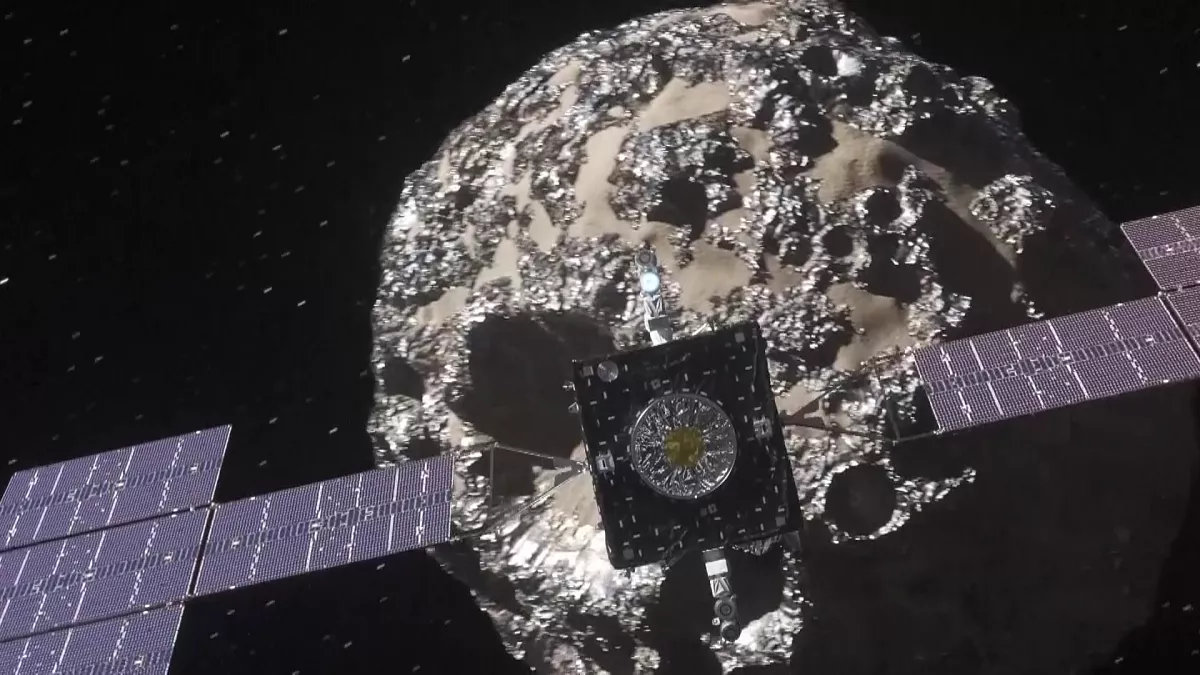
A spacecraft designed to map asteroid resources prepares for launch. This mission marks a step towards the potential of asteroid mining. The spacecraft will survey near-Earth asteroids. It will identify those rich in valuable minerals. The mission focuses on the identification and characterization of potential mining targets.
The spacecraft, developed by a private company, aims to gather detailed data. This data includes mineral composition and surface mapping. The mission’s primary objective is to create a resource map of selected asteroids. This resource map will support future mining operations. The spacecraft uses advanced sensors. These sensors include spectrometers and high-resolution cameras. They analyze the surface and subsurface of asteroids.
The mission targets near-Earth asteroids. These asteroids pass relatively close to Earth. This proximity makes them accessible for future mining missions. The spacecraft will conduct flybys and orbital surveys. It will collect data over a period of several months. The data will be transmitted back to Earth for analysis. Teams of scientists and engineers will analyze the data. They will determine the composition and potential value of the asteroids.
The launch follows years of research and development. The company worked with space agencies and research institutions. They developed the technology and mission plan. The company states that the mission is a crucial step. It validates the feasibility of asteroid resource mapping. The mission aims to reduce the risk of future mining operations. It provides accurate data on asteroid composition.
The spacecraft’s sensor package includes a near-infrared spectrometer. This spectrometer identifies minerals based on their spectral signatures. A high-resolution camera captures detailed images of the asteroid surface. Radar instruments map the subsurface structure. These instruments help determine the distribution of resources. The spacecraft also carries a magnetometer. This magnetometer measures the magnetic field of the asteroids. It provides information about their internal structure.
The selection of target asteroids involved a detailed analysis of their orbits and compositions. Scientists used telescopic observations and radar data. They identified asteroids with high concentrations of platinum-group metals. These metals include platinum, palladium, and rhodium. They are valuable in various industries. The mission also targets asteroids with water ice. Water ice is a resource for future space exploration.
The mission faces technical challenges. These challenges include navigating in deep space. The spacecraft must maintain precise orientation. It must collect accurate data. The radiation environment in space poses a risk to electronic systems. The company implemented radiation shielding and redundant systems. These systems ensure the reliability of the spacecraft.
The data collected by the spacecraft will be made available to researchers. It will support scientific studies of asteroids. It will also help develop future mining technologies. The company plans to use the data to select targets for future mining missions. The mission aims to demonstrate the economic potential of asteroid mining.
The mission is part of a growing interest in space resources. Governments and private companies invest in asteroid mining. They seek to access resources beyond Earth. These resources can support space exploration and terrestrial industries. The mission represents a step towards a sustainable space economy. The mission provides data that can be used to plan future missions and infrastructure.
The mission’s success depends on the performance of the spacecraft’s systems. It also depends on the accuracy of the data collected. The company conducted extensive testing of the spacecraft. These tests simulated the conditions of space. The tests verified the performance of the sensors and navigation systems.
The spacecraft uses a combination of chemical and electric propulsion. These systems allow it to navigate between asteroids. The electric propulsion system provides high efficiency. It allows the spacecraft to perform long-duration maneuvers. The chemical propulsion system provides high thrust. It allows the spacecraft to perform rapid maneuvers.
The mission’s launch window is determined by the orbits of the target asteroids. The launch window ensures the spacecraft can reach the asteroids with minimal fuel. The company worked with launch providers to secure a launch slot. The launch will take place from a spaceport.
The mission aims to demonstrate the viability of asteroid resource assessment. It will provide data that can be used to develop a business case for asteroid mining. The mission represents a step towards the commercialization of space resources. The mission’s data helps to determine the feasibility of future mining operations. Future operations could reduce the reliance on earth based resources.