


Uber has a new internal tool: the AI PRD Evaluator. It gives product managers a first look at their Product Requirement Documents before anyone else reviews them. If you’re not familiar, a PRD spells out what a new product or update should do. The AI scans these drafts for missing data, risks, or lessons from past projects that might slip through the cracks.
Key Takeaways
- The AI PRD Evaluator scans documents to find gaps and suggest improvements.
- It uses a knowledge base of linked documents, meeting notes, and prior experiment results.
- The system classifies PRDs to decide how deep the review should be.
- It aims to make human review meetings faster and more focused on big decisions.
How the evaluator works
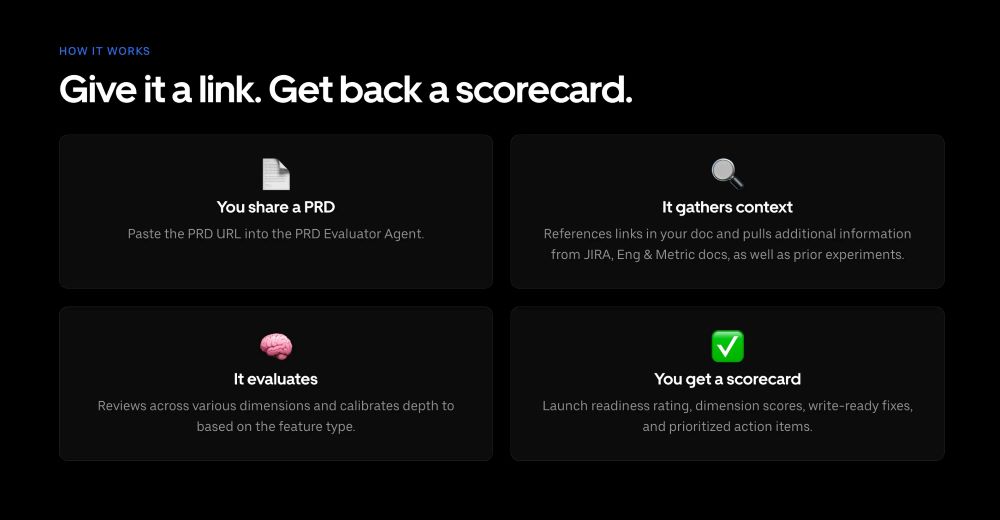
The system works in four steps. First, it builds a knowledge base. It pulls info from slide decks, engineering notes, and Uber’s own principles. That way, the AI gets more context than what’s in the PRD alone.
Next, the tool classifies the PRD. Not every update needs the same level of review. If it’s just a small UI tweak, the check is quick. But if you’re changing pricing or marketplace logic, the tool digs in deeper. It focuses effort where it counts.
Then, it checks if the project is ready to launch. The AI looks for things that might trip you up, like a new Uber Eats feature that could break something drivers use. At the end, you get a scorecard. It tells you what to fix and ranks the issues by importance. No endless list of nitpicks.
Lessons from the build
Uber’s engineers realized generic AI feedback doesn’t help much. So they built the evaluator around specific frameworks and decision rules. That way, the advice is actually useful. They also found that context matters. Blind spots often come from info buried in old experiments or another team’s notes. By connecting those dots, the AI becomes a kind of memory for the company.
The goal is not to replace human judgment. Instead, the tool acts as a guardrail. If a PRD is missing fundamental logic, the AI flags it early. This ensures that when a group of senior leaders meets to discuss a project, they spend their time on trade-offs and strategy rather than pointing out basic errors.
FAQs
Q1. What is the main purpose of Uber’s AI PRD Evaluator?
A1. The tool provides an automated first review of product documents to catch errors, identify missing context, and ensure a project is ready for human review.
Q2. Does the AI make the final decision on product launches?
A2. No, the tool is a first-pass reviewer. Human product managers and leaders still make all final decisions regarding product strategy and launches.
Q3. What kind of documents does the AI scan?
A3. It scans the PRD itself plus linked materials like meeting notes, technical decks, and results from previous experiments to get a full picture.
Q4. How does the tool help save time for Uber employees?
A4. By catching simple mistakes and gaps early, it prevents teams from having multiple repeat meetings. This allows review forums to move faster and stay focused on complex problems.
Q5. Can the AI handle different types of product updates?
A5. Yes, it categorizes projects. Simple UI updates get a quick check, while high-risk changes like pricing undergo a much deeper analysis.