

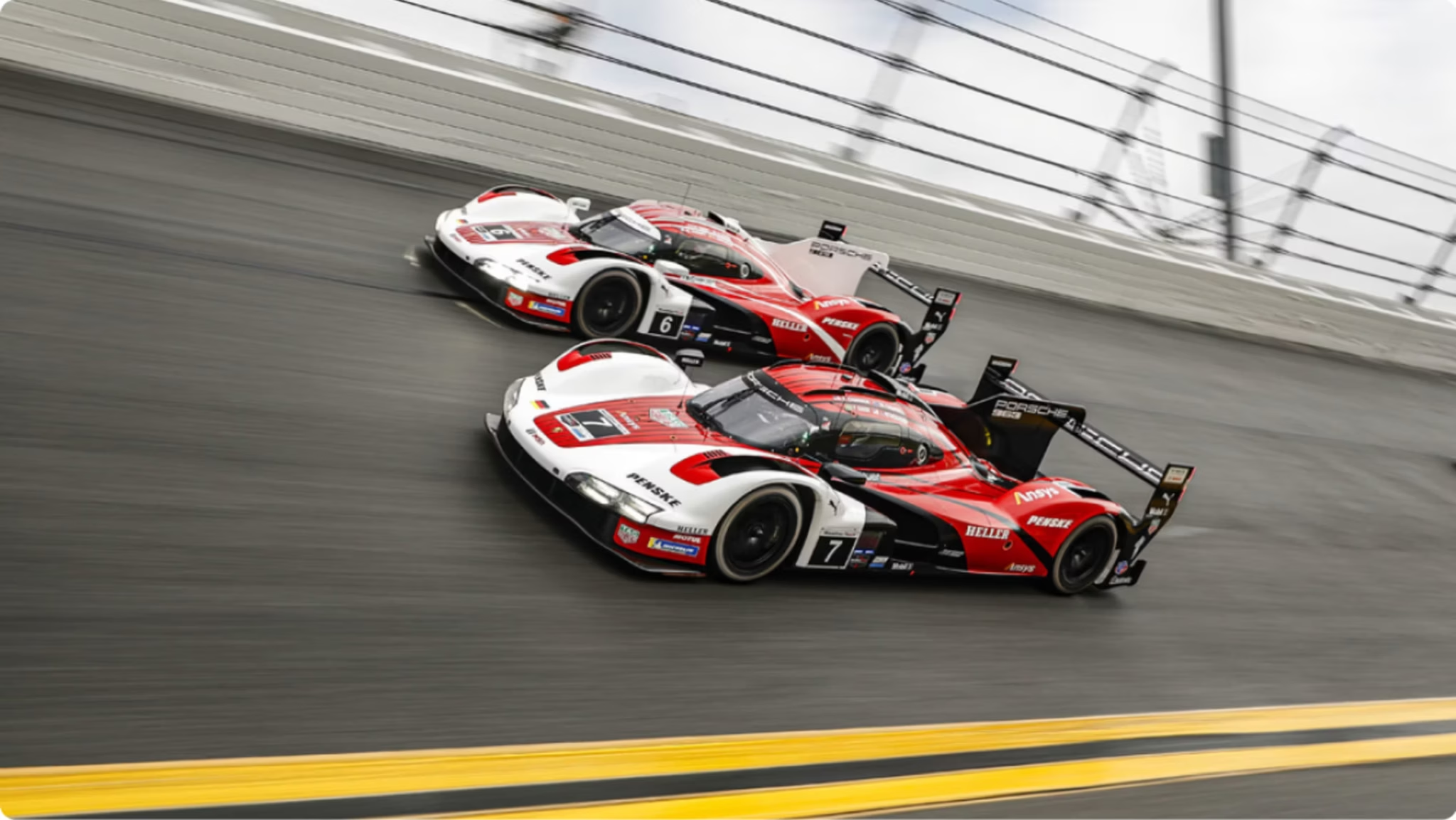
Endurance racing is one of motorsport’s most challenging arenas, where technological innovation, team strategy, and driver resilience are put to the ultimate test. Few names carry the weight of success in this domain like Porsche. The German automaker’s return to the top of prototype racing with the Porsche 963 has been met with excitement, sparking conversations about its potential to redefine endurance racing.
The Porsche 963, built according to the new Le Mans Daytona hybrid (LMDh) regulations, marks a new chapter for Porsche, one that aims for overall victories in the most prestigious endurance races. With the ambitions of conquering the FIA World Endurance Championship (WEC) and IMSA WeatherTech SportsCar Championship, the 963 is not just a race car — it’s a high-performance machine designed to dominate.
The LMDh Regulations: A Common Platform for Competition
The foundation of the Porsche 963’s competition is the LMDh category, which was designed to create a level playing field for manufacturers by standardizing several key components. Under LMDh, all teams must use a chassis from one of four approved constructors: Dallara, Ligier, Multimatic, or Oreca. Porsche chose Multimatic for its chassis, ensuring a solid and lightweight base for its prototype.
A hybrid powertrain also plays a central role. The system, which includes a Bosch motor-generator unit (MGU), Xtrac gearbox, and a Williams Advanced Engineering battery, offers a commonality that allows manufacturers to focus on optimizing their car’s performance in areas like aerodynamics, engine integration, and overall vehicle setup.
Porsche’s decision to use a shared platform is strategic, allowing them to focus development on key areas that will set the 963 apart from the competition. This move also positions the 963 for dual participation in both WEC and IMSA, offering Porsche visibility and competitiveness across major racing markets.
Engineering Excellence: Power, Precision, and Performance
At the core of the Porsche 963 is a 4.6-liter twin-turbocharged V8 engine, paired with the standardized hybrid system. This combination produces an estimated 680 horsepower, making the car a formidable contender in the highly competitive world of endurance racing. The internal combustion engine draws inspiration from the Porsche RS Spyder, which achieved great success in the American Le Mans Series.
The hybrid system enhances the car’s efficiency, allowing for energy recovery during braking and providing a boost of power when needed. In endurance racing, managing this balance of power and energy recovery is a critical aspect of race strategy, demanding both advanced control systems and adept driving.
Porsche’s engineers have also prioritized aerodynamics in the design of the 963. With extensive wind tunnel testing and computational fluid dynamics (CFD) simulations, every surface of the car has been meticulously crafted to reduce drag and generate downforce, helping the car maintain stability at high speeds and maneuvering through tight corners.
The Porsche 963’s Debut and Early Challenges
The 963 made its competitive debut at the 24 Hours of Daytona in January 2023, where it faced off against other top-tier competitors in both LMDh and Hypercar categories. As expected for a new prototype, the debut wasn’t without its challenges. Despite showing impressive pace early on, the 963 faced some reliability issues in its initial outings.
Endurance racing is a game of constant refinement, and early challenges are an inherent part of the process. Each race provides invaluable data that engineers use to optimize the car’s performance and reliability. This process is critical for the car’s continued development, and with Porsche Penske Motorsport’s support, the team has been working diligently to resolve these issues.
Global Ambitions: Setting Sights on Iconic Victories
The Porsche 963 is not just about racing — it’s about reclaiming dominance at the world’s most iconic endurance events. The 963’s goals are clear: overall victories at events like the 24 Hours of Le Mans, 24 Hours of Daytona, and 12 Hours of Sebring. These races are grueling, testing both the cars’ durability and the endurance of the drivers and teams over extended periods.
In the FIA World Endurance Championship, Porsche competes against other industry giants like Toyota, Ferrari, and Cadillac in the Hypercar class. In IMSA, it faces off against Acura and Cadillac in the GTP category. This fierce competition drives teams to push the boundaries of performance, ensuring that the race for supremacy is always evolving.
The success of the 963 in these prestigious events will undoubtedly shape Porsche’s future in both motorsport and automotive production. Technologies honed in the demanding environment of endurance racing often find their way into road cars, influencing everything from hybrid powertrains to lightweight materials and advanced aerodynamics.
The Porsche 963’s journey is far from over. Initial races have shown the car’s potential, but the real test lies in its consistency and ability to deliver under race conditions. The team’s primary focus now is to improve reliability, fine-tune performance, and ultimately convert that speed into consistent podium finishes.
Porsche’s return to the endurance racing scene with the 963 is not just a campaign for glory; it’s a testament to their engineering prowess, racing heritage, and unyielding ambition. As the season progresses, fans around the world will eagerly watch the 963’s development, hoping for a future filled with more podiums, victories, and record-breaking performances.
In the ever-evolving world of endurance racing, the Porsche 963 RSP stands poised to be a game-changer. With its advanced technology, strategic design, and Porsche’s unparalleled legacy, it’s clear that the 963 isn’t just competing — it’s aiming to lead.