

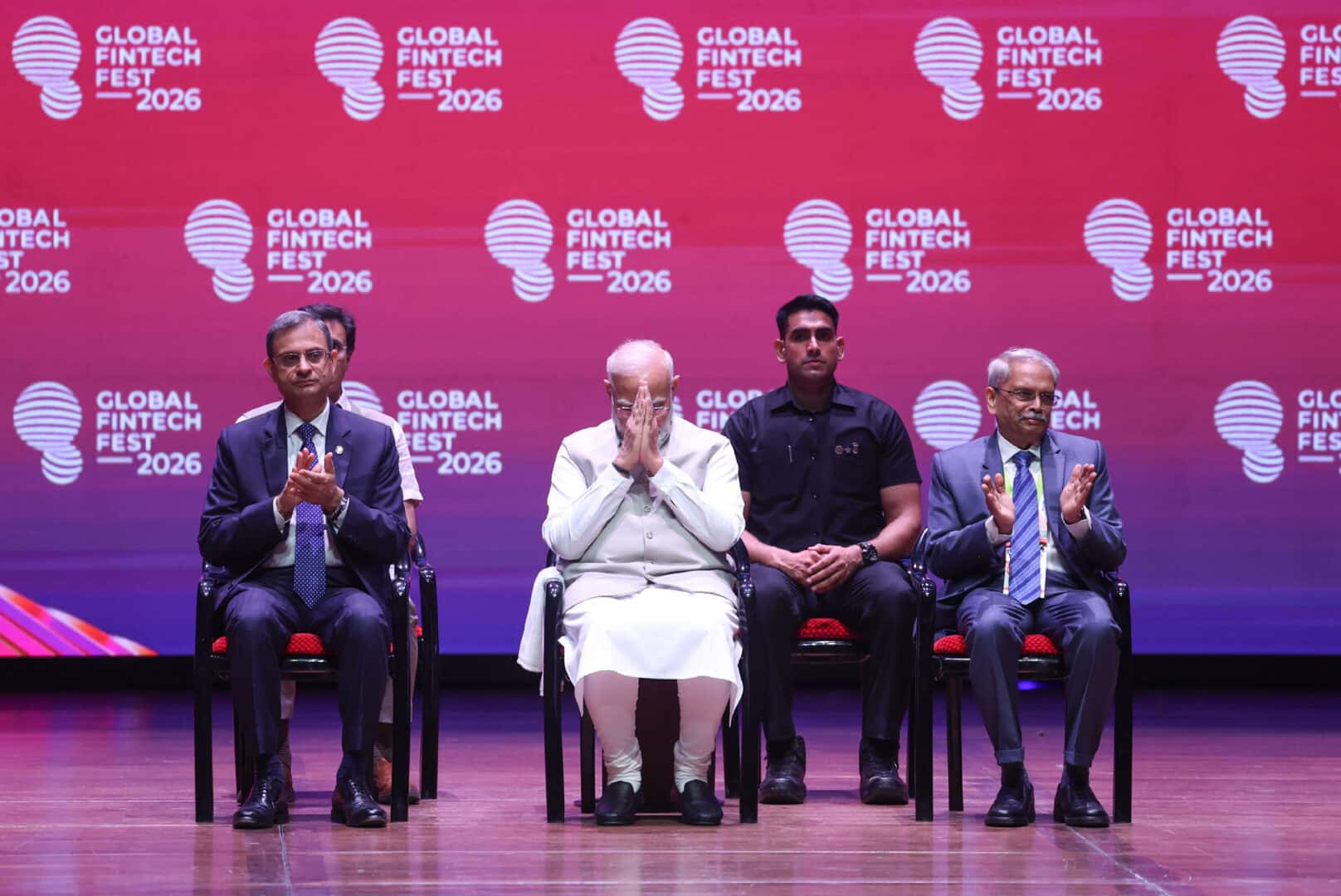
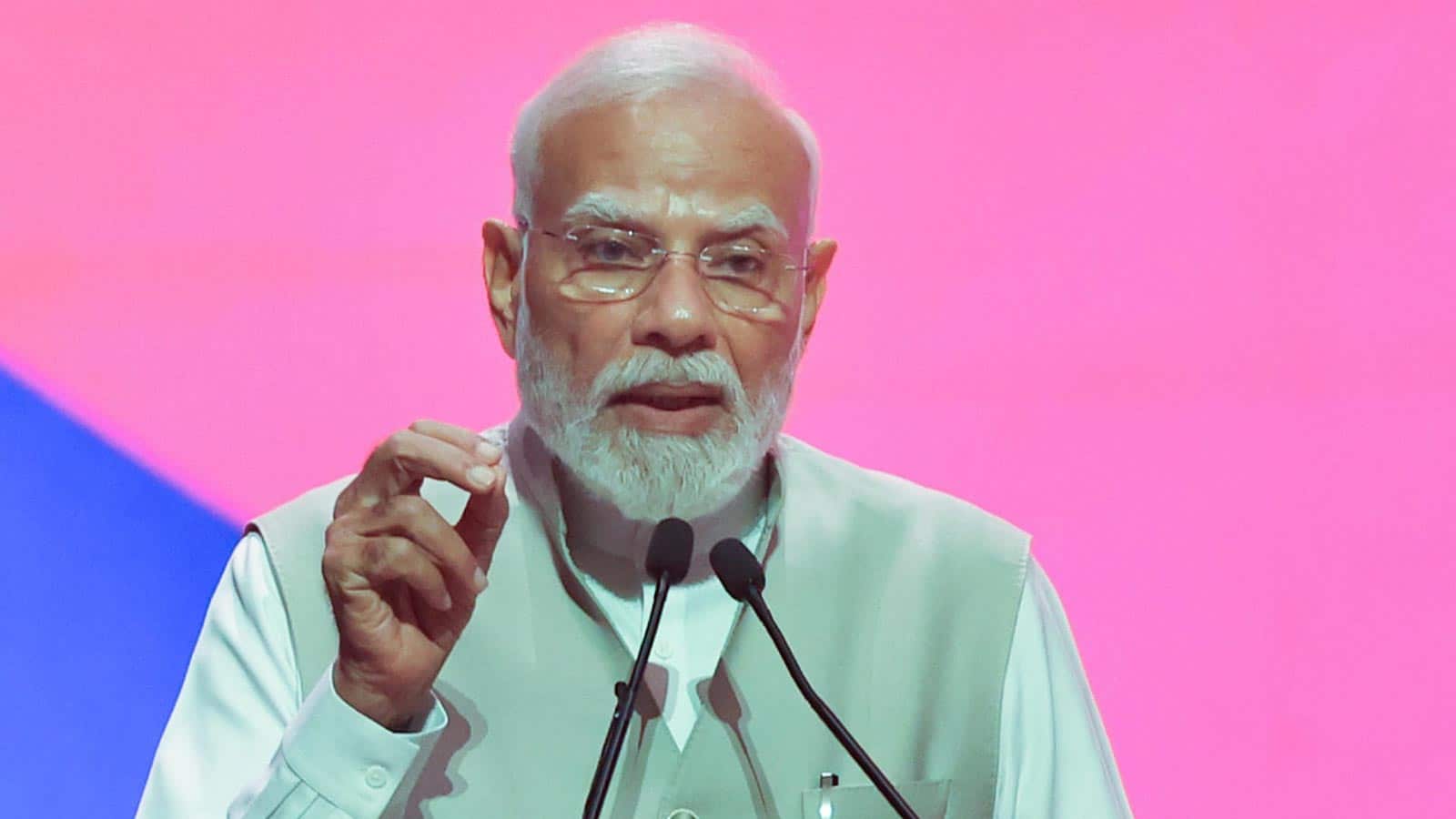
Prime Minister Narendra Modi inaugurated the seventh edition of the Global Fintech Fest (GFF) 2026 in Mumbai on Tuesday, urging financial technology companies to take the Unified Payments Interface (UPI) to more global markets and expand beyond simple money transfers into savings, credit, insurance, and pensions. Speaking before international policymakers, investors, and startup founders, Modi pointed out that the Indian economy registered 7.8 percent growth in the April to June quarter despite worldwide supply disruptions and conflict. He also noted that UPI completed 10 years of public service on Aug. 25, turning financial access into an everyday tool across the nation.
Key Takeaways
- Prime Minister Narendra Modi opened the Global Fintech Fest 2026 in Mumbai, highlighting India’s 7.8 percent GDP growth during the first quarter.
- UPI completed a decade of operations on Aug. 25 and now functions across 11 countries.
- The prime minister asked fintech firms to look past payment processing and offer services like micro-credit, insurance, investments, and pension plans.
- A four-point plan was presented to the industry: top-grade cybersecurity, voluntary data protection rules, deep regulatory cooperation, and a Fintech Consumer Protection Index.
- The conference theme centers on turning agentic artificial intelligence, tokenisation, and quantum systems into everyday financial tools.
Four Priorities for Fintech Companies
Modi laid down four specific goals for domestic and global firms operating in the sector. The first requirement is building top-level cybersecurity defenses to protect digital infrastructure from sophisticated attacks. The second asks companies to set high ethical rules for handling customer data. Third, Modi asked industry founders to coordinate closely with regulatory bodies so policies keep up with fast-paced software tools. Fourth, he proposed a Fintech Consumer Protection Index, which will provide users a clear metric to evaluate service providers on how well they protect customer interests.
Economic Resilience and Global Recognition
During his address, the prime minister touched on the global economic environment, which faces trade tensions and supply chain bottlenecks. He stated that India’s steady 7.8 percent expansion gives confidence to international investors. Modi also highlighted that a Japanese credit rating agency recently upgraded India’s sovereign rating to the A category, an adjustment that arrived after a 30-year gap. He linked this rating upgrade to stable public finances and continuous domestic policy updates.
Taking UPI to World Markets
UPI serves as the backbone of India’s retail payments, run by the National Payments Corporation of India (NPCI). The platform is operational in 11 countries, including linkage projects like the India-Singapore cross-border network. Modi stated that cross-border links help reduce remittance fees and settle transactions faster for Indian families abroad. The four-day event in Mumbai brings together over 700 speakers and 5,000 participating firms discussing agentic AI, programmable token assets, and quantum safety protocols.
Frequently Asked Questions
Q1. What is the Global Fintech Fest 2026?
A1. The Global Fintech Fest (GFF) 2026 is an international finance and technology conference held in Mumbai from Sept. 8 to 11, bringing together regulators, bank executives, and startup founders.
Q2. What did PM Modi highlight regarding UPI at GFF 2026?
A2. PM Modi noted that UPI marked 10 years of operations on Aug. 25, runs across 11 nations, and needs to expand further into non-payment services like lending, insurance, and retirement products.
Q3. What are the four priorities PM Modi outlined for fintech firms?
A3. He outlined four core areas: building top-grade cybersecurity, establishing ethical data standards, working closely with financial regulators, and setting up a Fintech Consumer Protection Index.
Q4. What is the official theme of GFF 2026?
A4. The theme is “Potential to Impact: Agentic AI, Tokenisation, Quantum — Trusted, Connected, Global Systems for Inclusive Finance.”