

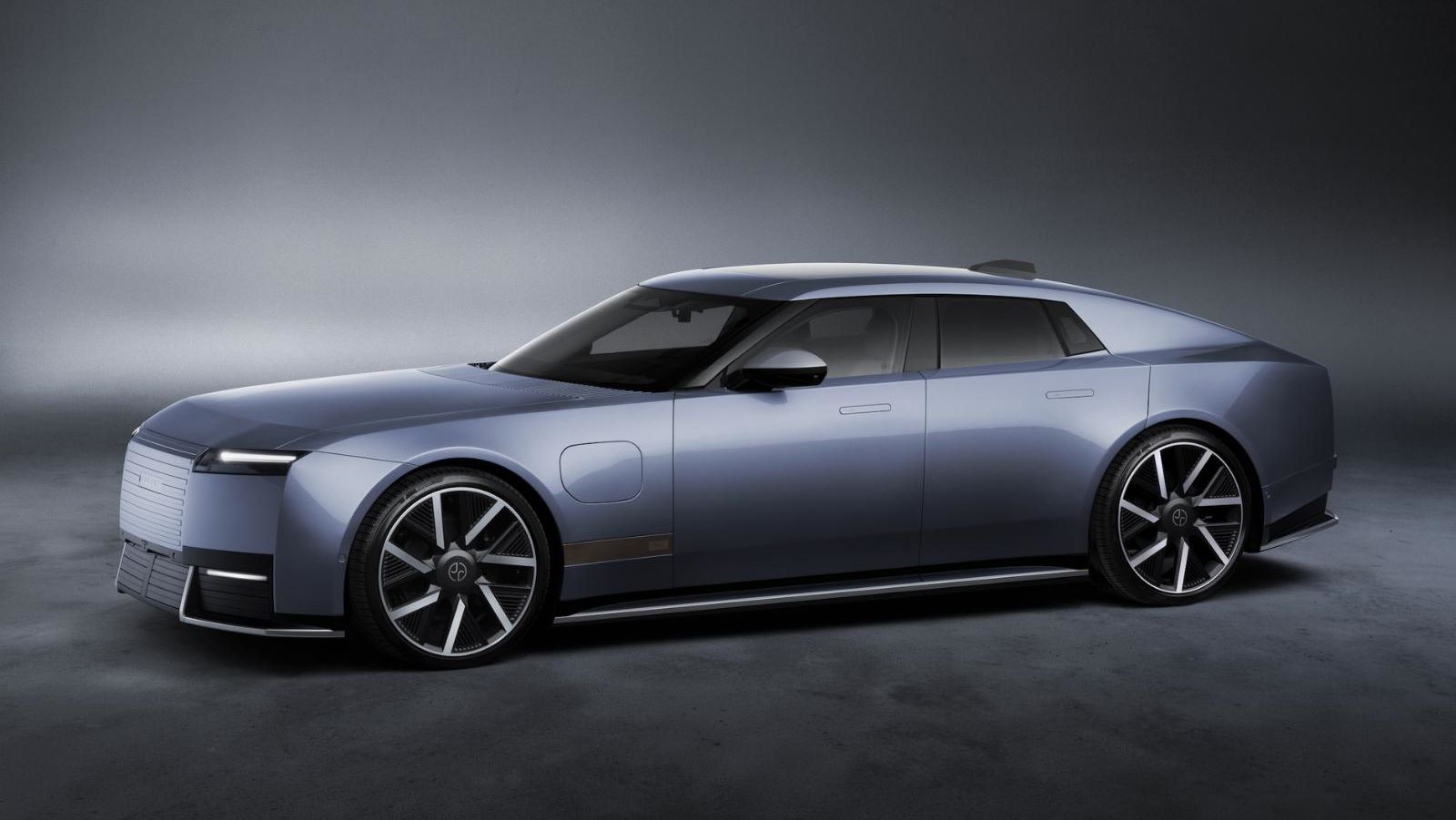
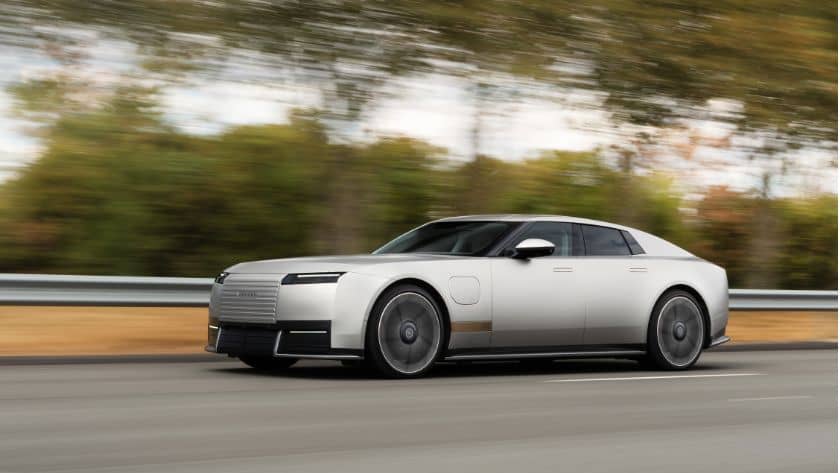
Jaguar has taken the wraps off the production-spec Type 01, an all-electric four-door grand tourer that signals the British luxury brand’s complete move into high-end battery-powered mobility. Owned by India’s Tata Motors, the automaker confirmed the four-door flagship delivers an estimated WLTP driving range of up to 720 km on a single charge. The vehicle ditches the traditional rear windscreen altogether, using roof-mounted digital cameras and a live digital inside rearview mirror (IRVM) display to give the driver a clear view behind. Jaguar plans to introduce the production model to global markets starting in 2027, with an Indian market arrival planned soon after as a direct rival to luxury battery electric vehicles like the Porsche Taycan and Audi e-tron GT.
Key Takeaways
- Driving Range: Packs a 120 kWh nickel manganese cobalt battery that provides up to 720 km of WLTP certified driving range.
- No Rear Glass: Replaces the standard glass windscreen with a solid flush tailgate and a high-definition digital camera feed.
- Tri-Motor Output: Uses three electric motors producing 1,030 hp and 1,365 Nm of torque, hitting 0 to 100 kph in 3.2 seconds.
- Ultra-Fast Charging: Runs on an 850-volt system capable of accepting 350 kW DC charging, restoring 321 km of range in 13 minutes.
Powertrain and Underpinnings
The vehicle sits on the dedicated Jaguar Electric Architecture (JEA). Power comes from three motors, one mounted on the front axle and two at the rear. Together, they produce 1,030 hp and 1,365 Nm of torque. Even with a heavy kerb weight of nearly 2.7 tonnes, the car sprints from 0 to 100 kph in 3.2 seconds before reaching a limited top speed of 250 kph.
The battery pack has a total capacity of 120 kWh, with 118 kWh usable. Charging uses an 850-volt setup supporting up to 350 kW DC fast chargers. This allows the pack to charge from 10 to 80 percent in 22 minutes. For added convenience, Jaguar built AC charging ports onto both front fenders.
Design Without a Rear Window
The most radical detail on the Type 01 remains its rear design. The sloping roofline merges into a solid body-coloured hatch without any glass. Instead, a roof-mounted camera relays a continuous wide-angle video stream to a digital mirror inside the cabin. Tata Motors uses similar screen-based systems on its newest Range Rover models, and has showcased digital camera feeds on domestic concepts like the Sierra EV.
A panoramic glazed glass roof brings light inside the cabin to balance out the enclosed rear design. The car also features rear-wheel steering to reduce its turning circle to 11.5 metres, alongside active twin-valve air suspension.
Frequently Asked Questions
Q1. Why does the Jaguar Type 01 not have a rear windscreen?
A1. Jaguar removed the rear windscreen to maintain a low aerodynamic roofline and a clean body profile. A roof camera feeds live footage straight to an interior digital mirror.
Q2. What is the battery capacity and range of the Type 01?
A2. The car carries a 120 kWh battery pack (118 kWh usable) offering a driving range of up to 720 km under the WLTP test cycle.
Q3. When will the Jaguar Type 01 launch in India?
A3. Global deliveries begin in 2027, with the Indian market launch expected to follow shortly via the completely built unit (CBU) import route.