

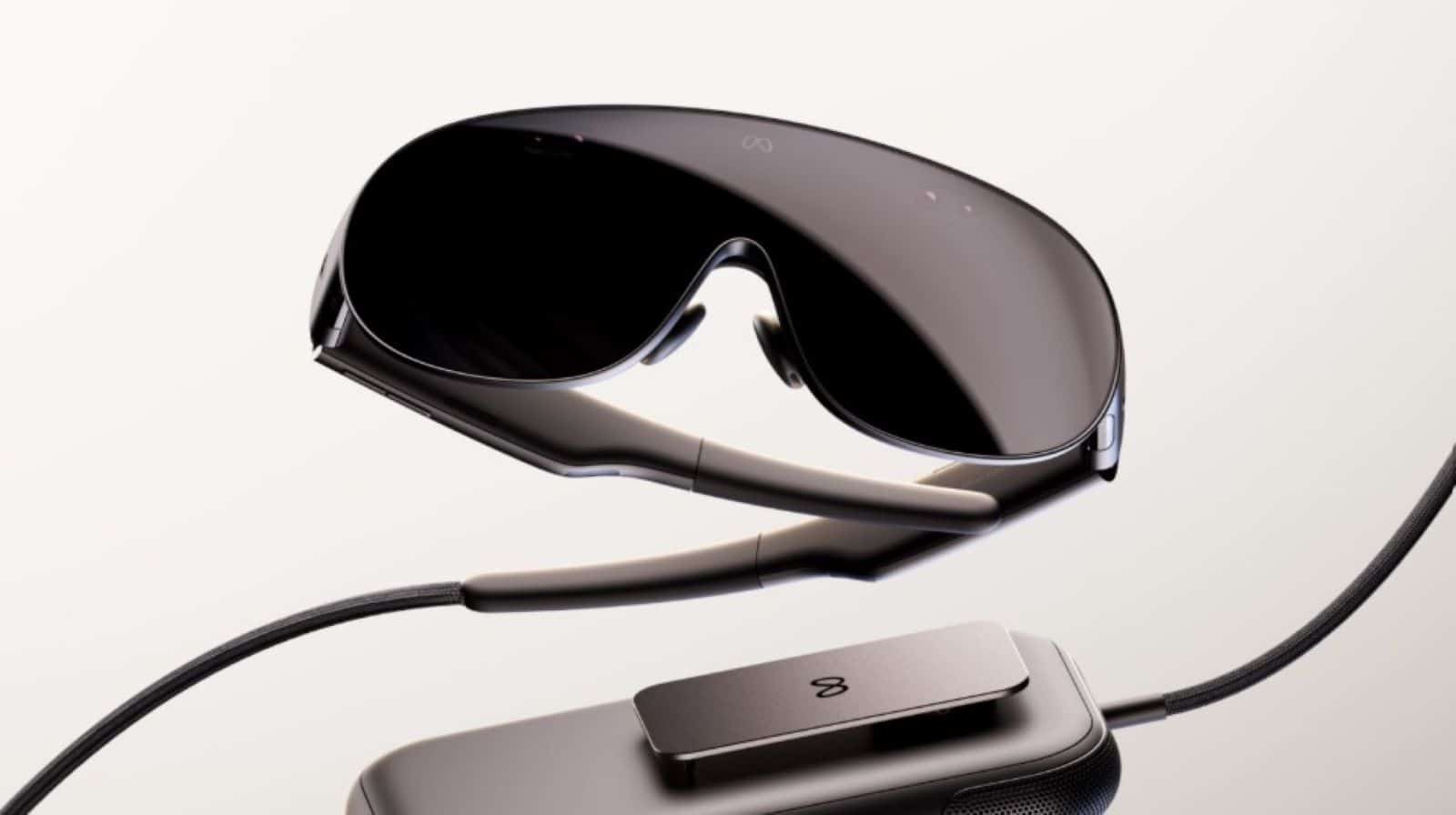
Meta Platforms has officially introduced Meta VR Glasses, a lightweight headset designed to replace bulky headgear with a wearable frame that weighs approximately 100 grams. Chief Executive Officer Mark Zuckerberg announced the hardware at the Meta Connect conference on Wednesday, confirming a retail price of $1,299.99 (roughly Rs 1,08,000 before taxes) and a commercial release set for spring 2027. By shifting internal processing and power components off the wearer’s face, the social media and hardware giant delivers a dedicated cinema screen, virtual office setup, and gaming device without traditional elastic straps or heavy facial cushions.
Key Takeaways
- The Meta VR Glasses weigh around 100 grams, making them five times lighter than the Meta Quest 3.
- Hardware functions split between a lightweight magnesium alloy headset and a tethered computing puck that clips to clothing.
- The eyewear features a 5K Infinite Display built on micro-OLED panels, running at 37 pixels per degree with Dolby Vision and Dolby Atmos.
- Qualcomm provides processing power through the Snapdragon Reality Elite chipset housed inside the pocket puck.
- Hand tracking, eye tracking, and voice input via Meta AI eliminate the need for handheld controllers for general navigation.
- Global retail launch begins in spring 2027 at $1,299.99.
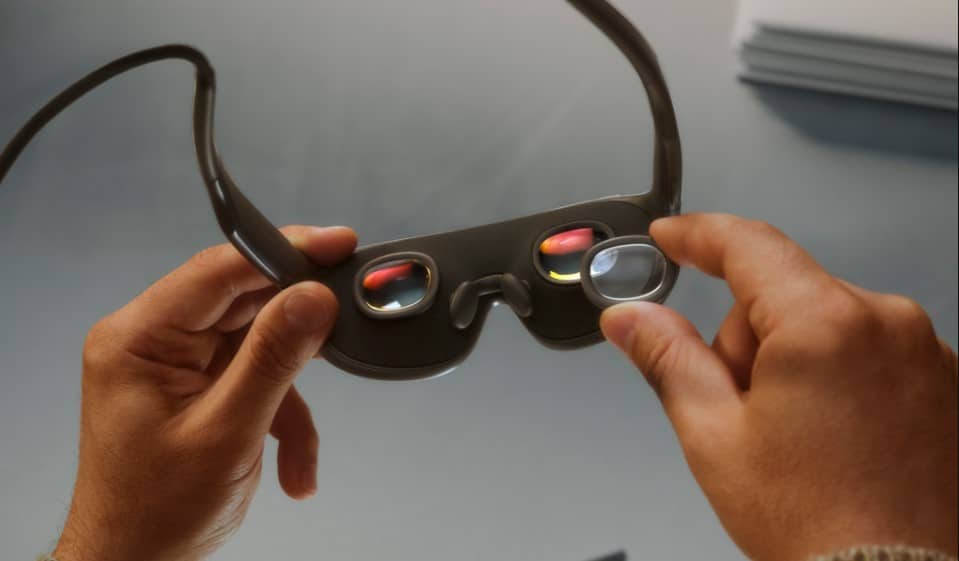
Two-Piece Architecture Sheds Facial Bulk
Virtual reality headsets traditionally pack heavy battery cells, cooling fans, and logic boards directly onto the user’s forehead. Meta bypasses this limitation through a two-piece design. The face-worn glasses contain only optical lenses, micro-OLED displays, and passthrough cameras. A thin optical cable runs down to an external puck that slips into a pocket or clips onto a belt. This puck carries the battery, storage drive, and Qualcomm Snapdragon Reality Elite processor.
The external puck powers up to three hours of continuous high-resolution video playback on a single charge and supports 45W fast charging over USB-C. Because the sides remain open, users preserve natural peripheral vision, letting them see physical surroundings while watching virtual displays.
Virtual Workspaces and Cinema Screens
For productivity, the glasses project multiple virtual desktop monitors anywhere in a room. Users can link a Windows PC or Mac wirelessly or through USB-C, while physical keyboards and desks remain fully visible through color passthrough. The software can also map an interactive digital keyboard onto any flat tabletop.
Entertainment features include IMAX Enhanced certification alongside native apps for streaming platforms such as Disney+, Prime Video, and YouTube. Users can view select 3D releases or place themselves in courtside positions for live NBA and MLB broadcasts. Built-in hologram tools project photorealistic digital avatars during video calls on WhatsApp and Zoom, matching facial gestures in real time.
Gaming support spans more than 75 controller-free titles configured for bare hand tracking at launch. Players who prefer tactile feedback can pair Touch Plus controllers or standard Bluetooth gamepads for cloud streaming services like Xbox Cloud Gaming.
Frequently Asked Questions
Q1. What is the official price of Meta VR Glasses?
A1. Meta priced the device at $1,299.99 for global markets, which translates to roughly Rs 1,08,000 in India before local import duties and taxes.
Q2. When will the Meta VR Glasses launch?
A2. The glasses will go on sale in spring 2027.
Q3. How does the headset achieve a weight of 100 grams?
A3. Meta moved the processor, storage, and battery pack out of the eyewear into an external computing puck connected by a light optical cable.
Q4. Can you connect personal computers to Meta VR Glasses?
A4. Yes, the glasses pair with Windows PCs and Apple Macs wirelessly or over USB-C to display multiple private virtual screens.
Q5. How long does the battery last on a single charge?
A5. The computing puck provides up to three hours of media playback and recharges quickly using 45W fast charging.