

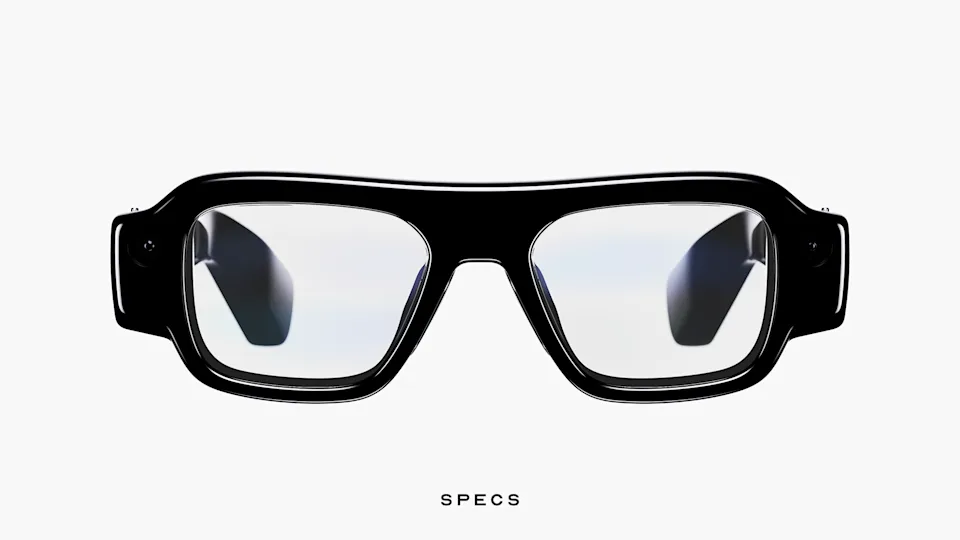
Snap Inc., the parent company behind the Snapchat messaging application, officially opened pre-orders for its newest augmented reality eyewear, branded simply as Specs, priced at $2,195. Unlike previous camera-focused Spectacles or competitor audio frames, the device operates as a fully standalone spatial computer that places digital images and software directly across the real world without needing a wired connection or a nearby smartphone. Chief Executive Officer Evan Spiegel positioned the eyewear as a new kind of see-through personal computer, targeting developers, creative studios, and early tech adopters across the United States, the United Kingdom, and France.
Key Takeaways
- Snap Specs cost $2,195 standalone, or $2,395 when bundled with a cellular-enabled charging case.
- The glasses run without a phone or PC, relying on two Qualcomm Snapdragon processors and custom Snap OS software.
- Liquid crystal on silicon (LCoS) projectors and optical waveguides provide a 51-degree diagonal field of view.
- Hand tracking, palm gestures, and an AI service called Specs Intelligence drive everyday interaction.
- Deliveries begin later this fall in selected international markets.
Hardware Architecture and Display Specs
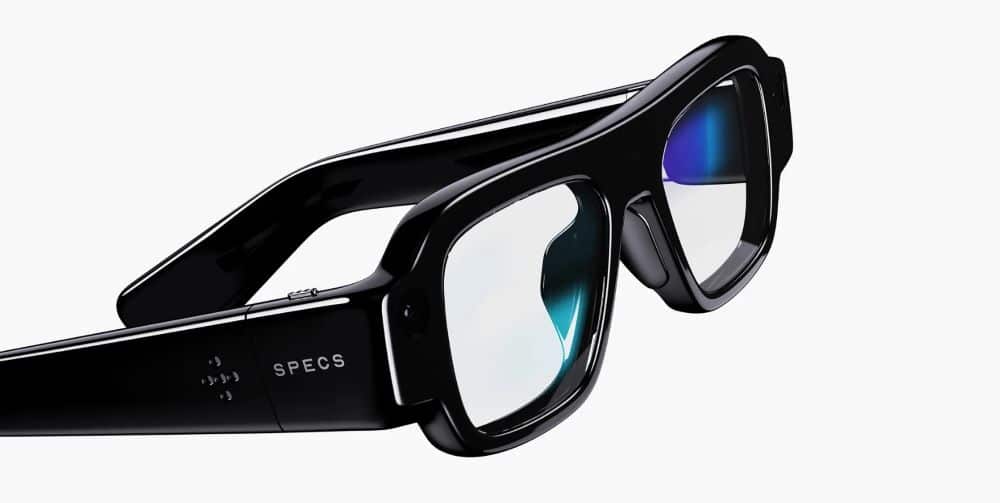
The Specs frame weighs approximately 132 grams (about 4.7 ounces) and comes in two sizing options: 47 mm and 52 mm. To eliminate the need for an external compute pack, Snap engineered a dual-chip design powered by Qualcomm Snapdragon processors. One chipset tracks user motion and maps the surrounding physical space in real time using six degrees of freedom, while the second processor runs the underlying Snap OS and graphic overlays. Snap rates motion-to-photon latency at 13 milliseconds, keeping display stutter low enough to reduce visual disorientation.
Visuals project through LCoS micro-projectors paired with optical waveguides etched straight into the glass. This creates a see-through screen area with a 51-degree field of view, resembling a 100-inch virtual monitor placed ten feet away. Users navigate apps by pointing their finger, pinching to click, or facing their palm upward to view system shortcuts.
Software, Apps, and Connectivity
The eyewear runs Snap OS, which allows software windows to float in room space or follow the user while walking. Snap built an AI system dubbed Specs Intelligence, which processes user context, tracks schedules, handles voice tasks, and translates spoken language across roughly 60 tongues. Third-party partners have also added software experiences. Spotify allows floating music controls, Tripadvisor surfaces local restaurant reviews in view, and Shopify previews 3D furniture models inside living rooms.
For mobility, buyers can purchase an optional $200 Connected Case ($2,395 total bundle). Developed with cellular provider Verizon in the US, the case contains its own cellular hotspot to give the eyewear data access anywhere without Wi-Fi.
Frequently Asked Questions
Q1. How much do the new Snap Specs cost?
A1. The glasses cost $2,195 for the standalone setup or $2,395 when purchased alongside the cellular Connected Case.
Q2. Do Snap Specs require an iPhone or Android phone to function?
A2. No. Specs carry built-in processors, batteries, cameras, and display systems, allowing them to run independently without tethering to a phone or PC.
Q3. What are the key display specifications of the glasses?
A3. Specs use LCoS micro-projectors with optical waveguide lenses, offering a 51-degree diagonal field of view and a 13-millisecond response latency.
Q4. How do users control the interface?
A4. The device tracks hand and finger movements via front sensors. Wearers pinch their fingers to click, raise an open palm to view menus, or speak commands to the built-in assistant.
Q5. Are the new Snap Specs available in India?
A5. Snap is rolling out pre-orders initially in the United States, the United Kingdom, and France, with shipments scheduled for this fall. An India launch date has not yet been announced.