

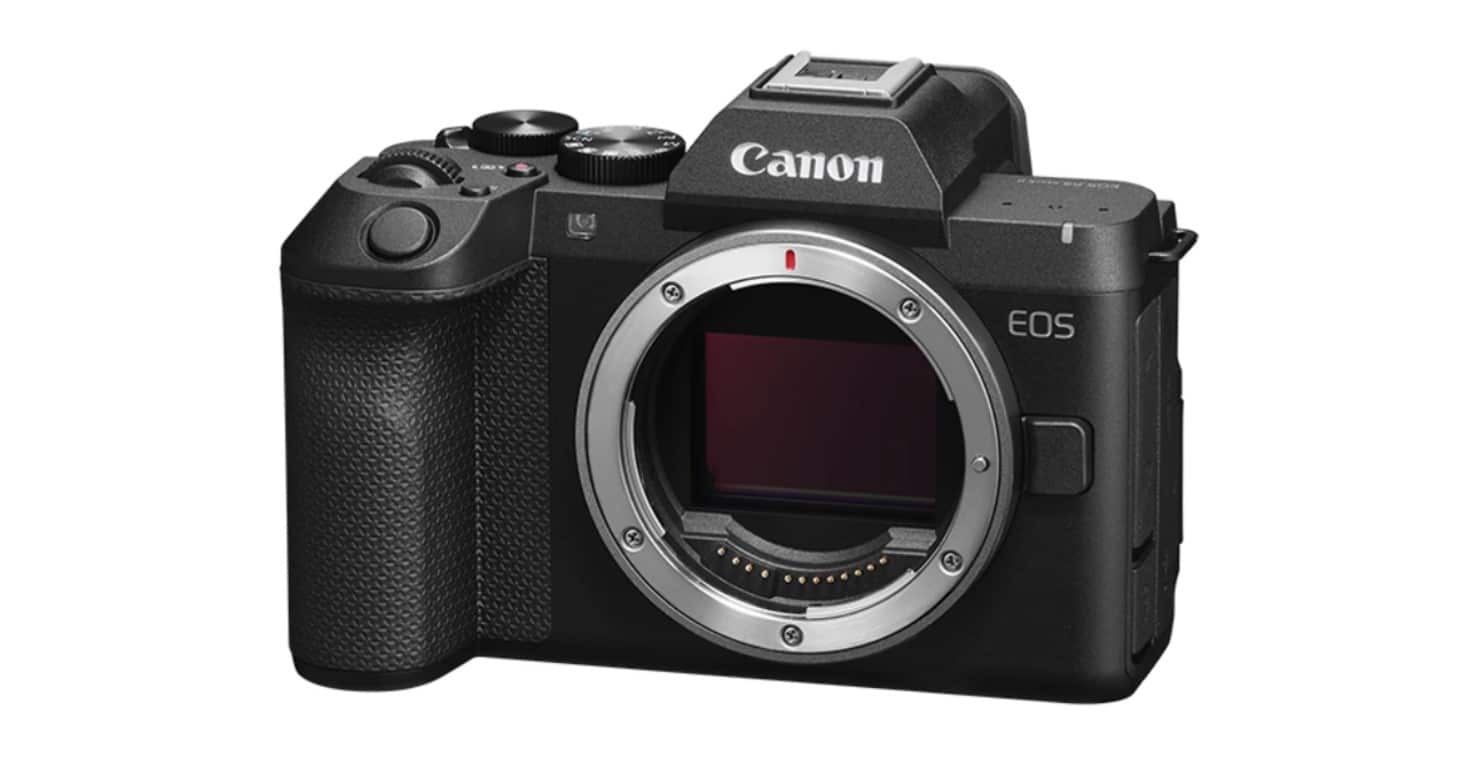
Canon introduced the EOS R8 Mark II in India on Wednesday, September 16, 2026, bringing five-axis in-body image stabilization to its lightweight full-frame mirrorless lineup. The camera features a 24.2-megapixel full-frame CMOS sensor, a DIGIC X image processor, and an added rear multi-controller joystick for quicker autofocus control. Aimed at both still photographers and video creators, the body weighs roughly 546 grams including battery and SD card, making it Canon’s most compact full-frame model equipped with sensor-shift stabilization. The company set the retail price at Rs 1,78,995 for the standalone body.
Key Takeaways
- Sensor and Processor: 24.2-megapixel full-frame CMOS sensor paired with a DIGIC X processor.
- Built-in Stabilization: 5-axis In-Body Image Stabilizer offering up to 7.5 stops of Coordinated Control IS with compatible RF lenses.
- Speed and Focus: Dual Pixel CMOS AF II, pre-continuous shooting, and up to 40 frames per second via an electronic shutter.
- Video Capabilities: Oversampled 4K video at up to 60p, Full HD at 180p, Canon Log 3, and support for custom lookup tables.
- Body and Ergonomics: Features a physical autofocus joystick, weighs approximately 546 grams, and includes a single UHS-II SD card slot.
- Price: Available in India for Rs 1,78,995 (MRP, inclusive of all taxes).
Upgraded Hardware and Handling
The EOS R8 Mark II refines the form factor of its predecessor while resolving major hardware limitations. The primary upgrade is the built-in sensor-shift mechanism. When paired with stabilized RF-mount lenses, the Coordinated Control IS system corrects camera shake up to 7.5 stops at the center and 7.0 stops at the frame edges.
Canon also added a physical joystick multi-controller to the rear panel, letting users adjust autofocus points easily while looking straight through the electronic viewfinder. For photographers needing a more substantial grip surface, Canon announced the optional Extension Grip EG-E2 for Rs 9,995, which attaches without blocking the battery door or tripod thread.
Still Photography and Autofocus
Action and street photographers get electronic shutter speeds reaching 40 frames per second along with a Pre-Continuous Shooting mode that buffers frames before the shutter button is fully pressed. The shutter reaches speeds up to 1/16,000s in manual and priority modes.
The autofocus system relies on Dual Pixel CMOS AF II with deep-learning algorithms for subject tracking. A new Register People Priority mode allows users to register specific faces in the menu system, directing the camera to maintain focus on that designated person even in crowded environments.
Video Production and Streaming
Video shooters receive 6K-oversampled 4K capture at up to 60 frames per second without severe crops, plus slow-motion recording at Full HD up to 180 frames per second with sound. Production workflows benefit from 10-bit Canon Log 3 and the Cinema EOS Custom Picture profile system, allowing operators to load custom LUTs directly into the camera.
The body features UAC and UVC compatibility, functioning as a plug-and-play webcam via USB-C at up to 4K 60p. Canon also listed the Tripod Grip HG-1000TBR with a bundled BR-E2 wireless remote controller for Rs 11,495 to support vloggers and solo operators.
Frequently Asked Questions
Q1. What is the price of the Canon EOS R8 Mark II in India?
A1. The camera body carries an official MRP of Rs 1,78,995 inclusive of all taxes.
Q2. Does the EOS R8 Mark II have in-body image stabilization?
A2. Yes, it features 5-axis In-Body IS that delivers up to 7.5 stops of stabilization when combined with compatible RF lenses.
Q3. What is the continuous shooting speed of the EOS R8 Mark II?
A3. It shoots up to 40 frames per second using its electronic shutter and includes a pre-burst shooting mode.
Q4. What type of memory card does the EOS R8 Mark II use?
A4. The camera includes a single card slot that supports standard SD, SDHC, and SDXC memory cards up to UHS-II bus speeds.
Q5. Can the EOS R8 Mark II record video in Canon Log?
A5. Yes, it supports 10-bit Canon Log 3 recording alongside custom LUT import profiles.