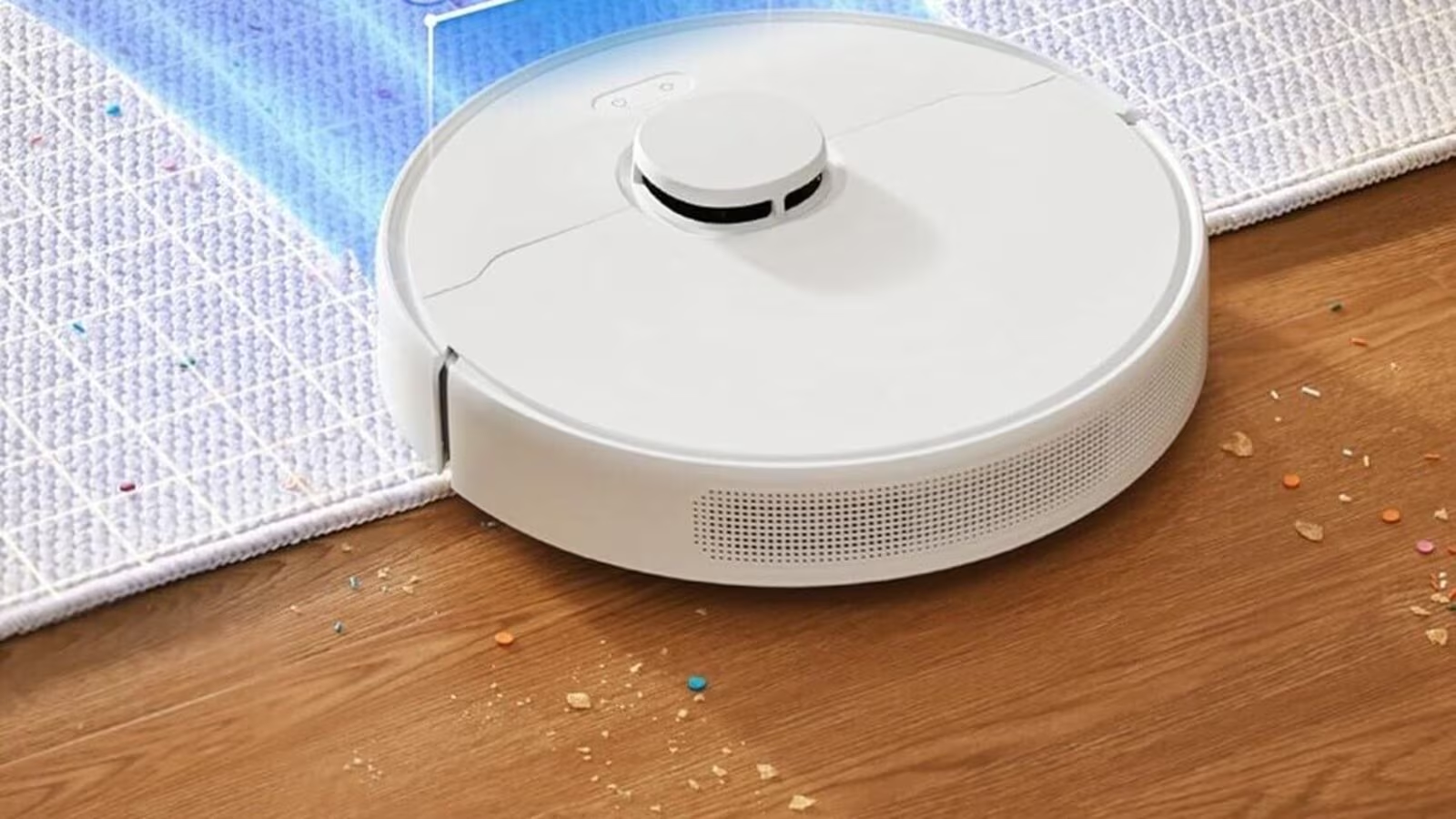
The persistent hum of a traditional vacuum cleaner or the back strain from mopping can be a daily grind. For many, the promise of an automated home has long been a dream. Today, that dream is closer to reality than ever, not just in terms of technological advancement, but also affordability. Across major online retailers and brand-specific stores in the United States, robot vacuum cleaners are seeing significant price reductions, with some models marked down by as much as 80%. This substantial price drop presents a timely opportunity for consumers to upgrade their cleaning routines with a smart, hands-free solution.
- Key Takeaways:
- The Landscape of Discounted Smart Cleaning
- Spotlight on Specific Deals and Features
- Understanding the Technology: What Makes a Robot Vacuum Smart?
- The User Perspective: What Do People Say?
- Why Now Is The Best Time To Shop
- Maximizing Your Purchase: Tips for Buyers
- Frequently Asked Questions (FAQ)
Key Takeaways:
- Leading robot vacuum brands like Ecovacs, Dreame, and iLife are offering discounts of up to 80% on various models in June and July 2025.
- These sales encompass a range of features, from advanced LiDAR navigation to powerful suction and integrated mopping capabilities.
- The current period, coinciding with mid-year sales events like Prime Day, is historically a favorable time for significant discounts on electronics and home appliances.
- Popular models such as the Dreame D10 Plus Gen 2, Ecovacs DEEBOT N20 PRO, and ILIFE T20s are among those seeing steep reductions.
- Features like self-emptying docks, anti-tangle technology, and extended battery life are becoming more accessible at lower price points.
The Landscape of Discounted Smart Cleaning
The current surge in robot vacuum sales is not a random occurrence. Retailers and manufacturers frequently coordinate promotions around specific times of the year, and mid-year, particularly June and July, often sees substantial discounts as companies clear inventory for upcoming models or celebrate major shopping events like Prime Day. This strategic timing aligns perfectly for consumers looking to invest in a robot vacuum, a device that has transitioned from a luxury item to a practical home essential for many American households.
Brands at the forefront of these deals include Ecovacs, known for its comprehensive DEEBOT series with advanced mapping and mopping functions; Dreame, which consistently delivers strong suction and intelligent navigation; and iLife, offering value-oriented models with solid performance. Even iRobot, the pioneer in robot vacuum technology with its Roomba line, has various models experiencing price adjustments, making their premium features more attainable for a wider audience.
Spotlight on Specific Deals and Features
A deeper dive into the ongoing sales reveals impressive reductions on feature-rich models:
The Dreame D10 Plus Gen 2 Robot Vacuum Cleaner stands out with significant discounts on some platforms. This model boasts automatic dust emptying, capable of storing up to 90 days of debris, a considerable convenience for busy households. Its Smart Pathfinder navigation ensures systematic cleaning, while its 6000 Pa (Pascals) suction power makes it adept at handling carpets and pet hair. The 2-in-1 vacuum and mop system further enhances its utility, covering a broad range of cleaning needs. With a battery runtime of up to 150 minutes on a single charge, it is suitable for homes of various sizes.
Another significant offering is the Ecovacs DEEBOT N20 Pro Robotic Vacuum Cleaner, which has seen notable discounts. This high-performance unit features an 8000 Pa suction power, designed to tackle stubborn dirt and debris. It incorporates anti-hair tangle technology, a welcome feature for pet owners, and the Ozmo Pro 2.0 vibrating mopping system for wet and dry cleaning. The DEEBOT N20 Pro’s advanced TrueMapping technology allows it to navigate diverse floor types, from tiles to wood, making it well-suited for varied American homes. Its 5200 mAh battery offers a substantial 300 minutes of run-time, covering large areas effectively.
For those seeking a self-emptying solution at a competitive price, the ILIFE T20s Self-Emptying Robotic Vacuum Cleaner is available with significant discounts. Equipped with advanced LDS navigation and 5000 Pa suction, it provides efficient and hassle-free cleaning. The 3.5L dust bag allows for weeks of self-emptying, reducing the frequency of manual intervention. Multi-floor mapping and app control add to its appeal, simplifying customized cleaning routines.
Even more accessible options like the AGARO Alpha Robot Vacuum Cleaner are seeing price drops. This 2-in-1 device offers dry vacuuming and wet mopping with up to 3200 Pa suction power, controlled via an app, Alexa, or Google Assistant, and features LiDAR-based smart mapping.
The Xiaomi Robot Vacuum Cleaner X10, a model launched in 2024, offers up to 60 days of hands-free cleaning thanks to its self-emptying dustbin. With 4000Pa suction and advanced LDS laser navigation, it ensures thorough cleaning across various floor types. Its 240-minute runtime is another appealing specification.
These discounted prices are not limited to a select few models. Many other robot vacuums from these brands and others, including various iRobot Roomba models like the Roomba 692 (often available around $70-100 on sale) and Roomba Combo i5 (seen for around $200, reduced from $350), are also part of these widespread sales. The Roomba Combo i5+ with self-emptying can be found for around $550.
Understanding the Technology: What Makes a Robot Vacuum Smart?
The effectiveness of a robot vacuum largely depends on its underlying technology. When considering a purchase, understanding these core components is crucial:
- Navigation Technology: This determines how efficiently the robot moves and covers an area.
- LiDAR (Light Detection and Ranging): Found in higher-end models, LiDAR uses lasers to create precise maps of a home. This allows for systematic cleaning paths, avoids repeated areas, and provides accurate obstacle detection. Models like the Ecovacs DEEBOT N20 Pro and Roborock Q5 utilize LiDAR.
- Camera-based Navigation: Some robots use cameras to build a visual map of their surroundings. While effective, they can be impacted by lighting conditions.
- Random/Bumper Navigation: Entry-level models often use infrared sensors and bumper feedback, resulting in a more random cleaning pattern. While they eventually cover the area, they are less efficient.
- Suction Power (Pa): Measured in Pascals, this indicates the strength of the vacuum’s motor. Higher Pa ratings are generally better for carpets and picking up pet hair. For hard floors, lower suction can still be effective. The Ecovacs DEEBOT N20 Pro’s 8000 Pa is a testament to the increasing power of these devices. A suction power over 3,000Pa is generally considered sufficient for most household dirt and debris.
- Mopping Functionality: Many modern robot vacuums are “2-in-1” or “hybrid” models, meaning they can both vacuum and mop. Some offer basic wet wiping, while others, like those with vibrating mopping systems (e.g., Ecovacs Ozmo Pro), provide a more thorough scrub. Auto-lift mopping, seen in some premium models, prevents carpets from getting wet during mopping cycles.
- Self-Emptying Docks: A significant convenience feature, these docks automatically transfer collected dust and debris from the robot’s small onboard bin into a larger bag or container in the dock, reducing the frequency of manual emptying. This can range from weeks to months of hands-free operation, a highly valued feature by users on platforms like Reddit.
- App Control and Smart Home Integration: Most robot vacuums connect to a smartphone app, allowing users to schedule cleanings, set no-go zones, view cleaning maps, and monitor battery life. Integration with voice assistants like Alexa and Google Assistant offers even more convenience.
- Battery Life: The runtime of a robot vacuum determines how large an area it can clean on a single charge. Larger homes require longer battery life or a robot that can return to its dock to recharge and resume cleaning. Most robot vacuum batteries last between 2-5 years.
- Filters: HEPA filters are particularly important for allergy sufferers, as they trap a high percentage of allergens and fine particles, typically 99% of particles down to 0.3 microns.
The User Perspective: What Do People Say?
Online communities like Reddit and Quora offer valuable insights into real-world user experiences with robot vacuums. A common sentiment is that robot vacuums are excellent for daily maintenance and upkeep, especially for managing pet hair and general dust. Users frequently highlight the convenience of hands-free cleaning and the ability of robots to reach under furniture.
However, users also point out some limitations and maintenance requirements. Robot vacuums are not a complete replacement for deep cleaning. They may struggle with thick rugs, get stuck on cords or small objects, and require regular emptying of the dustbin (unless it’s a self-emptying model) and cleaning of brushes and sensors. The “poop-ocalypse” scenario, where a robot vacuum spreads pet waste, is a widely discussed cautionary tale, leading many pet owners to only run their robots when they are home or when their pets are secured. Battery degradation over time is also a noted concern, with replacements often needed after a few years.
Despite these caveats, the general consensus is positive, with many users stating they “cannot live without” their robot vacuum once they’ve experienced the convenience. The key is setting realistic expectations and understanding that a robot vacuum complements, rather than entirely replaces, other cleaning methods.
Why Now Is The Best Time To Shop
The current market conditions align to create an opportune moment for purchasing a robot vacuum cleaner in the U.S.:
- Significant Discounts: The widespread “up to 80% off” sales are uncommon for high-demand tech products. This indicates a strategic move by manufacturers and retailers to boost sales and clear stock.
- Technological Maturity and Accessibility: Robot vacuum technology has advanced considerably. Features once exclusive to premium models, like LiDAR navigation, strong suction, and even self-emptying capabilities, are now trickling down to more mid-range and even budget-friendly devices. This means more value for money at every price point.
- Increased Competition: The robot vacuum market is highly competitive, with a growing number of brands vying for consumer attention. This competition often drives down prices and encourages innovative features. The market is projected to grow to $11.14 billion in 2025 in the robotic vacuum cleaners sector, showing robust expansion.
- Mid-Year Sales Cycle: As mentioned, June and July typically bring significant sales events, including Amazon Prime Day, which often features electronics prominently. This period is a prime window for securing deals. Other sales occur around holidays like Black Friday, Cyber Monday, Christmas, and New Year, as well as specific brand events like Ecovacs’ monthly sales.
For those who have been contemplating a robot vacuum, the current price drops make it an ideal time to make the purchase. Whether you are looking for a basic model to assist with daily tidying or a high-end unit with all the bells and whistles, the current sales offer compelling options across the spectrum.
Maximizing Your Purchase: Tips for Buyers
Before making a purchase, consider these aspects to ensure you select the best robot vacuum for your specific needs:
- Assess Your Home: Evaluate your floor types (hardwood, carpet, tiles), the presence of pets, common obstacles (cords, furniture with low clearance), and the overall size of your living space. These factors will influence the required suction power, navigation type, and battery life.
- Prioritize Features: Decide which features are most important to you. Is self-emptying a must-have for convenience? Do you need advanced mapping for multi-floor homes? Is integrated mopping a priority?
- Read Reviews (Beyond the Product Page): Consult independent review sites, tech forums, and user communities like Reddit to get unbiased opinions and learn about potential real-world issues. Look for reviews that match your home setup.
- Check Warranty and Support: Ensure the brand offers reliable customer support and a decent warranty period. This is crucial for any electronic device, especially one that performs a demanding task daily.
- Compare Deals: Don’t settle for the first discount you see. Check multiple retailers and the official brand websites to compare prices and ensure you are getting the best possible deal.
The current market presents a rare confluence of high-quality products at significantly reduced prices. Embracing robotic cleaning technology has never been more accessible or appealing. As these sales are often for a limited time, prospective buyers are encouraged to act promptly to take advantage of these substantial savings and bring a new level of convenience to their homes.
Frequently Asked Questions (FAQ)
Q1: What is the average price range for a good robot vacuum cleaner in the US?
A1: In the U.S., robot vacuums typically range from around $100-$300 for budget-friendly models, $300-$700 for mid-range options with more features, and upwards of $700-$1,500+ for premium models with all the advanced functionalities like self-emptying and advanced mapping. Sales can significantly reduce these prices.
Q2: Are robot vacuums effective on pet hair?
A2: Yes, many robot vacuums are designed with pet owners in mind. Look for models with strong suction power (over 3000 Pa), tangle-free brush rolls, and multi-surface capabilities to effectively pick up pet hair from various floor types. Brands like iRobot (especially the j-series), Dreame, and Roborock are often recommended for pet hair.
Q3: How often do robot vacuum cleaners go on sale in the US?
A3: Robot vacuums frequently go on sale during major US shopping events like Amazon Prime Day (typically July), Black Friday/Cyber Monday (November), and around major holidays such as Christmas, New Year’s, and even Mother’s/Father’s Day. Specific brands also hold their own monthly or seasonal sales.
Q4: Do I need a robot vacuum with a mopping function?
A4: If you have a significant amount of hard flooring (tile, wood, laminate) and want the convenience of combined cleaning, a robot vacuum with a mopping function can be very useful. For homes with mostly carpets, a vacuum-only model might suffice. Some models allow you to switch between vacuuming and mopping bins.
Q5: What is LiDAR navigation and why is it important for robot vacuums?
A5: LiDAR (Light Detection and Ranging) navigation uses lasers to create precise, real-time maps of your home. This technology allows the robot to clean systematically, avoid obstacles more effectively, and create accurate floor plans for customized cleaning routes, leading to more efficient and thorough coverage compared to basic navigation methods.
Q6: How often do I need to empty a robot vacuum’s dustbin?
A6: For standard robot vacuums, you may need to empty the dustbin after every few cleaning sessions, depending on your home’s size and dirt level. Robot vacuums with self-emptying docks, however, can go for weeks or even months (typically up to 60-90 days) without manual emptying, as they automatically transfer collected debris to a larger bag in the charging station.
Q7: Can robot vacuums clean multiple floors in a multi-story home?
A7: Yes, many advanced robot vacuums can create and store multiple floor maps. This allows them to clean different levels of your home. You will typically need to manually move the robot and sometimes its charging dock to the desired floor, but it will remember the layout and cleaning preferences for that specific level.
Q8: What are common user complaints or problems with robot vacuums?
A8: Common issues reported by users include robots getting stuck on obstacles (cords, thick rugs, low furniture), sensors becoming dirty and affecting navigation, brushes tangling with hair (especially pet hair), battery degradation over time, and occasional app connectivity issues. Regular maintenance, such as cleaning brushes, sensors, and filters, can prevent many of these problems.
Q9: What are the benefits of a HEPA filter in a robot vacuum?
A9: HEPA (High-Efficiency Particulate Air) filters are designed to capture a high percentage of tiny airborne particles, including dust mites, pet dander, pollen, and other allergens, down to 0.3 microns. For allergy sufferers or households with pets, a HEPA filter can significantly improve indoor air quality by preventing these particles from being released back into the air during cleaning.