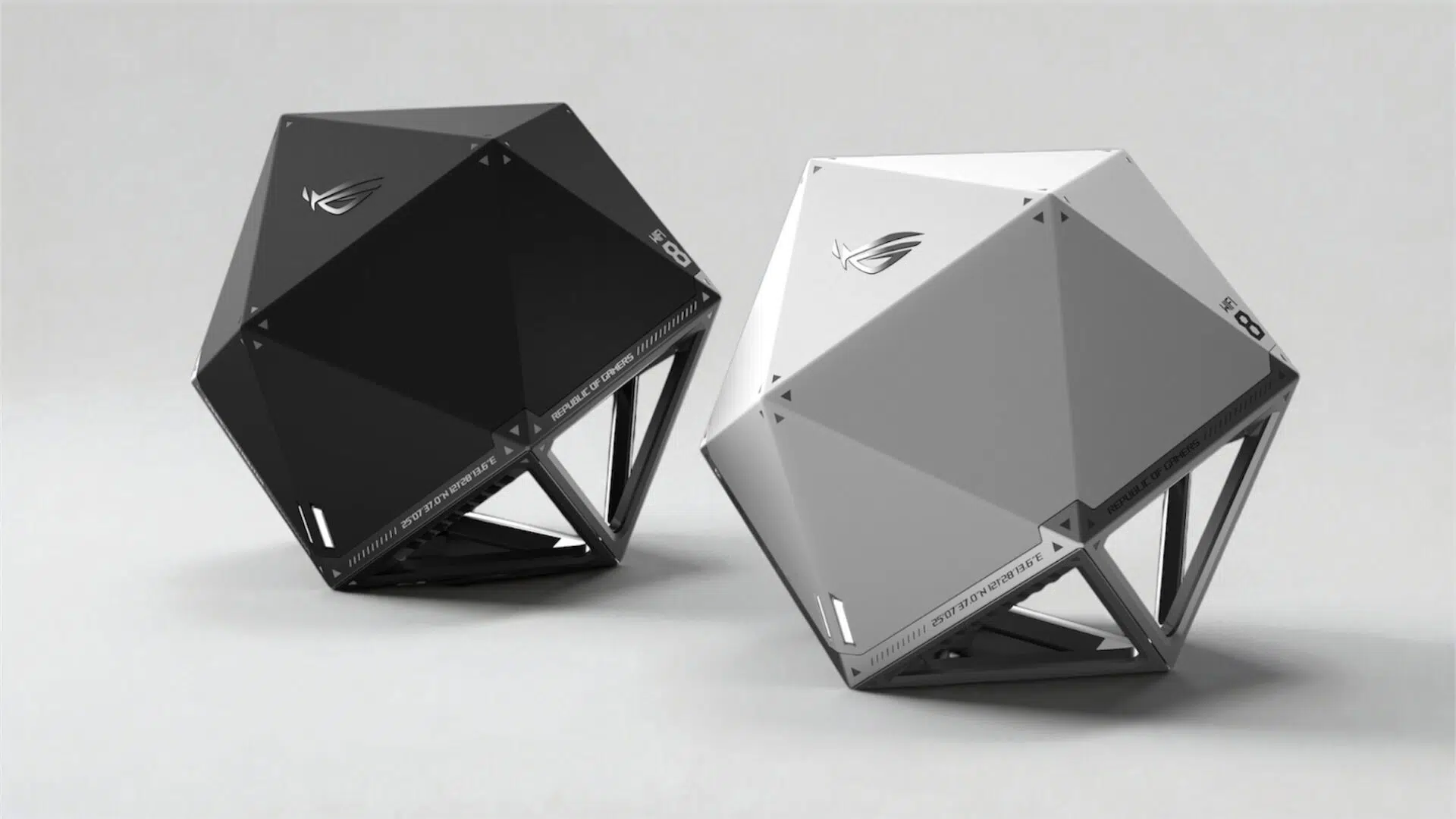
ASUS has officially unveiled the ROG NeoCore, its first WiFi 8 concept router, during CES 2026 in Las Vegas. Alongside the hardware reveal, the company also shared what appears to be the industry’s first real-world performance data for the upcoming wireless standard. WiFi 8, formally known as IEEE 802.11bn, does not chase headline-grabbing peak speeds. Instead, it focuses on something many users arguably care about more: stable, reliable connections that hold up in everyday environments.
ASUS says its first consumer-grade WiFi 8 routers and mesh systems are planned for release later in 2026. These upcoming products will rely heavily on the company’s AI Network Engine, which is designed to manage traffic dynamically and help connected devices cooperate more effectively, especially in crowded or signal-heavy spaces. In theory at least, this should translate into fewer drops, less lag, and more consistent performance across an entire home.
Key Takeaways
- WiFi 8 emphasizes Ultra-High Reliability (UHR) to keep connections stable over distance.
- Internal testing shows up to 2X higher throughput at mid-range distances compared to WiFi 7.
- Coverage for IoT and smart home devices increases by roughly 2X.
- Network lag for the slowest 1 percent of traffic, known as P99 latency, is reduced by as much as 6X.
- ASUS plans to release consumer WiFi 8 hardware throughout 2026.
The shift to WiFi 8 marks a noticeable change in direction for wireless technology. Rather than continuing the race toward higher and higher theoretical gigabit speeds, the standard aims to address familiar frustrations. Signal drops when moving between rooms, performance dips caused by interference, and inconsistent speeds in dense apartment buildings are all issues WiFi 8 is trying to solve.
In environments where dozens of routers are competing for the same airwaves, things can get messy quickly. WiFi 8 introduces coordinated spectrum management, allowing nearby routers to communicate and adjust their behavior instead of blindly competing. This coordination helps reduce waiting times and interference, making it easier for every connected device to get a clean, usable signal.
ASUS shared data suggesting that while peak speeds remain comparable to WiFi 7, the real-world experience looks very different. In the middle areas of a typical home, where signals often begin to weaken, WiFi 8 maintains roughly double the data throughput. That could make a real difference for someone gaming or streaming in a bedroom far from the main router. It also benefits low-power smart home devices, such as lights, sensors, and switches, which can stay connected reliably without draining their batteries faster than necessary.
The ROG NeoCore router also includes ASUS’s AiMesh feature, allowing multiple compatible routers to work together as a single, unified network. This setup is meant to cover larger homes without the usual headaches of managing separate networks. The AI Network Engine continuously monitors usage patterns and shifts bandwidth where it is needed most. For example, it might prioritize a video call or a cloud gaming session when network demand spikes, then quietly rebalance things afterward. It feels like part of ASUS’s broader vision of a smarter, more self-managing wireless environment, especially as AI-powered devices become more common.
Tenlong Deng, a senior leader at ASUS, explained that the primary goal is to make every connection more dependable. He noted that the technology is designed to help smart homes and AI assistants operate together smoothly, without the small pauses and hiccups users have grown used to. By using available frequency bands more efficiently, these routers aim to reduce network congestion, which is particularly important in crowded neighborhoods where many households rely on high-speed internet at the same time.
Related FAQs
Q1: Is WiFi 8 faster than WiFi 7?
A1: The maximum theoretical speed of WiFi 8 is the same as WiFi 7, at around 23Gbps. The key difference is that WiFi 8 is much better at maintaining those speeds consistently, especially as you move farther away from the router.
Q2: When can I buy a WiFi 8 router in India?
A2: ASUS expects to launch its first consumer WiFi 8 models in 2026. Pricing and exact availability for the Indian market are likely to be announced closer to the global release.
Q3: Do I need new gadgets to use WiFi 8?
A3: To experience the full benefits, such as lower latency and improved range, you will need devices that support WiFi 8. That said, WiFi 8 routers will remain backward compatible with WiFi 6 and WiFi 7 devices.
Q4: What is P99 latency?
A4: P99 latency measures the slowest 1 percent of data packets. A reduction of up to 6X means fewer sudden lag spikes, which is especially noticeable during gaming, video calls, or other real-time applications.