

Apple is setting its sights on a significant expansion of its wearable technology portfolio, with smart glasses and new iterations of its Vision series products slated to hit the market from 2027. This shift, detailed by prominent analyst Ming-Chi Kuo, suggests a strategic re-evaluation of Apple’s approach to augmented and virtual reality, placing a stronger emphasis on more accessible and integrated eyewear. The move comes as the company navigates the early reception of its Vision Pro headset and seeks to broaden its presence in the evolving spatial computing landscape.
- Key Takeaways:
- A New Chapter for Apple’s Wearables
- Ray-Ban-like Smart Glasses: The Immediate Future
- XR Glasses: The Augmented Vision
- Evolution of the Vision Series: Vision Air and Vision Pro 2nd Gen
- The Paused “Display Accessory”
- Competitive Landscape and Apple’s Strengths
- Public Discussions and User Expectations
- FAQs
Key Takeaways:
- Apple plans to launch “Ray-Ban-like” smart glasses with audio, camera, video recording, and AI environmental sensing in Q2 2027.
- These initial smart glasses will not feature a display, focusing on audio and AI integration, with projected shipments of 3-5 million units or more in 2027.
- A more advanced “XR Glasses” with a color LCoS waveguide display, voice, and gesture controls is expected in 2H 2028.
- Apple will introduce Vision Air, a lighter and more affordable version of the Vision Pro, in Q3 2027, powered by an iPhone-grade processor.
- A second-generation Vision Pro with a new design and Mac-grade chip is projected for 2H 2028.
- An earlier “Display Accessory” project, designed as a tethered viewer for iPhone content, was paused in Q4 2024 due to weight concerns.
- Apple’s competitive advantage lies in its hardware development and ecosystem, while AI-powered software remains a key challenge.
- The company is not expected to release new head-mounted devices in 2026, indicating a focused development period leading up to the 2027 launches.
A New Chapter for Apple’s Wearables
Ming-Chi Kuo, an analyst known for his insights into Apple’s supply chain and product roadmaps, recently published a comprehensive report outlining the company’s future in head-mounted devices. The report indicates a strategic pivot for Apple, moving beyond the high-end, niche market targeted by the Vision Pro and into more mainstream, everyday wearable formats. This includes two distinct types of smart glasses and a lighter, more affordable version of the Vision Pro headset.
Ray-Ban-like Smart Glasses: The Immediate Future
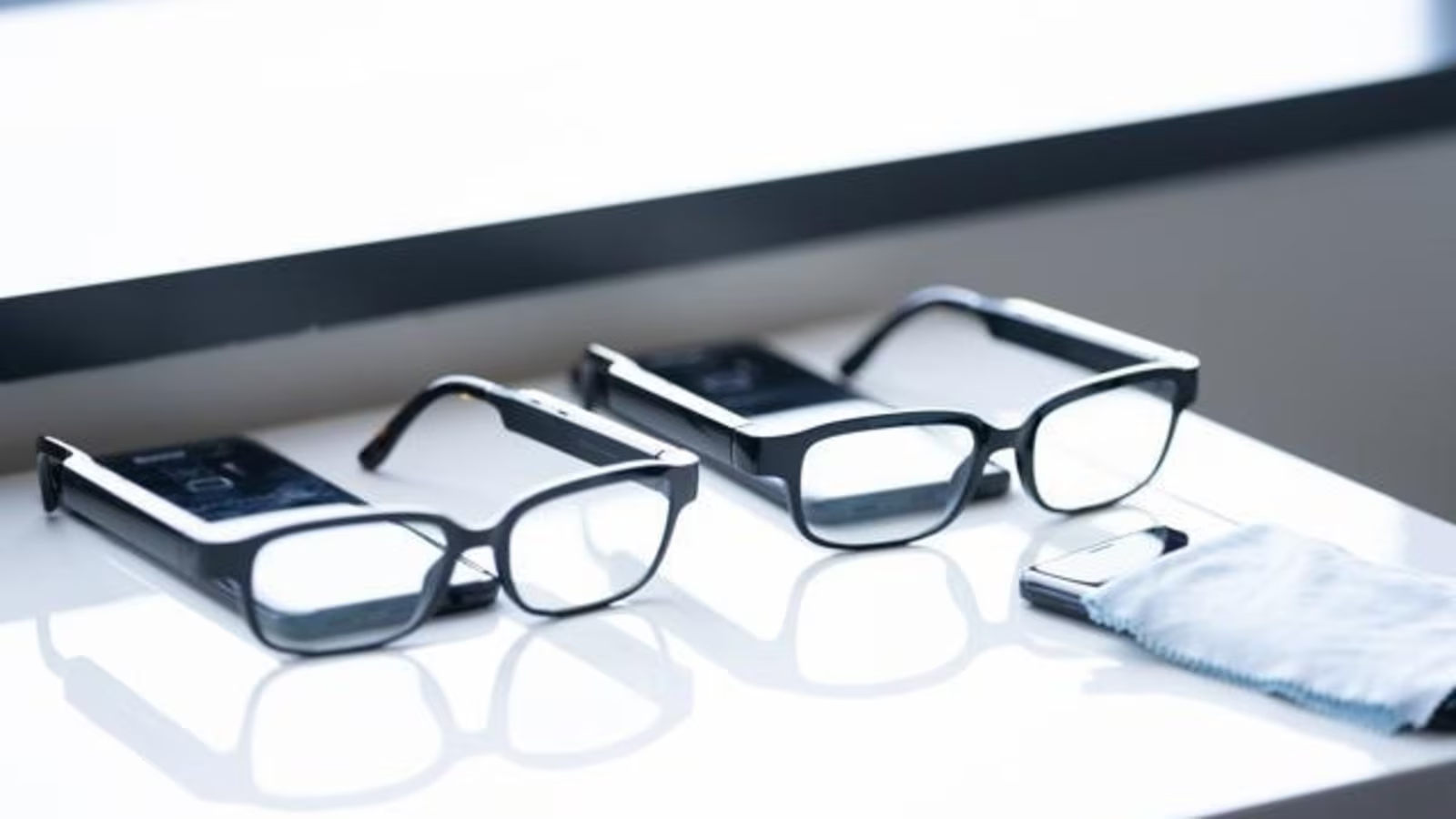
The most anticipated product on Apple’s near-term roadmap appears to be a pair of “Ray-Ban-like” smart glasses, set for mass production in the second quarter of 2027. These glasses are designed to be more discreet and focused on ambient intelligence rather than immersive visual experiences. Kuo’s report suggests these smart glasses will not incorporate a display. Instead, their core functionalities will revolve around audio playback, camera capabilities for video recording, and advanced AI-powered environmental sensing.
The inclusion of AI environmental sensing suggests a deeper integration with Apple’s artificial intelligence initiatives, potentially allowing the glasses to understand context and provide relevant information or assistance without requiring a screen. Voice control and gesture recognition are expected to be the primary user interfaces for these glasses, allowing for natural and intuitive interaction. Apple is reportedly exploring multiple frame and temple material options, indicating a focus on design and personalization, similar to traditional eyewear. Initial shipment projections for these glasses are between 3 million and 5 million units, or more, in 2027, signaling Apple’s belief in their broad market appeal. These devices could potentially serve as a partial replacement for wireless earbuds and smartphone cameras in certain daily scenarios.
XR Glasses: The Augmented Vision
Further down the line, in the second half of 2028, Apple is expected to begin mass production of more sophisticated “XR Glasses.” Unlike their simpler counterparts, these glasses will feature a color display, utilizing Liquid Crystal on Silicon (LCoS) with waveguide technology. This display capability points to a true augmented reality experience, overlaying digital information onto the real world. Similar to the “Ray-Ban-like” glasses, the XR Glasses will also be controlled via voice and gesture recognition. A significant emphasis on AI functionality is highlighted as critical for the success of these display-equipped glasses, suggesting complex interactions and dynamic content presentation. Kuo also mentions the development of an additional variant of these XR Glasses, albeit with a later production timeline and less clear details at this stage.
Evolution of the Vision Series: Vision Air and Vision Pro 2nd Gen
While smart glasses represent a new direction, Apple is also continuing to refine its Vision series headsets. The report details two upcoming Vision products:
- Vision Air: Scheduled for mass production in the third quarter of 2027, the Vision Air is positioned as a substantially lighter and more affordable alternative to the current Vision Pro. Kuo estimates a weight reduction of over 40% compared to the Vision Pro, achieved through the use of plastic optics, extensive magnesium alloy in the construction (as opposed to the Vision Pro’s titanium alloy and glass), and a reduced sensor count. This model will be powered by Apple’s latest flagship iPhone processor, indicating a focus on efficiency and power while aiming for a lower price point to attract a broader consumer base. The Vision Air is a strategic move to make spatial computing more accessible.
- Vision Pro 2nd Generation: A successor to the original Vision Pro, featuring a completely new design, is projected for mass production in the second half of 2028. This second-generation model is expected to be significantly lighter, more affordable, and powered by a Mac-grade processor, suggesting enhanced capabilities for professional and power users. The progression from iPhone-grade to Mac-grade processors across the Vision series illustrates Apple’s tiered strategy for its spatial computing devices.
The Paused “Display Accessory”
Interestingly, the report also sheds light on a previously rumored “Display Accessory.” This product, intended as a tethered viewer for content from Apple devices like the iPhone, was originally slated for mass production in the second quarter of 2026. However, its development was paused in the fourth quarter of 2024 due to what Kuo describes as “insufficient competitive advantage,” specifically citing a weight issue (120-130g compared to sub-100g competitors). The project is currently under review for repositioning and specification refinement, with a potential for restart. This detail underscores the rigorous design and performance standards Apple applies to its products.
Competitive Landscape and Apple’s Strengths
Kuo emphasizes Apple’s strong hardware development capabilities and robust ecosystem integration as key competitive advantages in the head-mounted device market. The seamless interaction between Apple products—iPhones, Macs, and soon, these new wearables—is a recurring theme in the company’s strategy. However, the analyst points out that the biggest challenge for Apple remains the development of a robust, AI-powered operating system and software that can fully leverage the capabilities of these new devices. While other brands may introduce similar products earlier, Kuo believes they will remain niche offerings over the next two years due to existing limitations in technology and design. This suggests Apple is taking a measured approach, prioritizing a refined user experience and deep integration rather than rushing products to market.
Apple’s ambitious roadmap for smart glasses and Vision series headsets signals its long-term commitment to spatial computing as the “next major trend in consumer electronics.” The strategy appears to involve a gradual expansion, starting with more focused and accessible smart glasses, then evolving towards more capable augmented reality eyewear and refined mixed-reality headsets. The success of these products will depend not only on hardware prowess but also on Apple’s ability to deliver compelling AI-powered software and a vibrant ecosystem of applications that demonstrate tangible value to users. The 2027 timeframe for the initial smart glasses launch marks a pivotal moment, potentially setting the stage for a new cycle of hardware innovation and adoption in the consumer electronics market.
Public Discussions and User Expectations
Discussions on platforms like Reddit and technology forums often reveal a mix of excitement and skepticism regarding Apple’s ventures into augmented reality. Many users express a desire for “Apple Glass”—a true augmented reality experience in a conventional glasses form factor—but also voice concerns about battery life, design aesthetics, and the practical utility of such devices in daily life. The high price of the initial Vision Pro has been a common point of discussion, leading to a strong demand for more affordable alternatives.
The concept of smart glasses that replace or augment smartphone functions, particularly in areas like quick photo/video capture and ambient information, resonates with many. There’s also considerable interest in how Apple’s AI capabilities, particularly “Apple Intelligence,” will be integrated to provide truly smart and context-aware experiences through these wearables. Questions frequently arise about privacy implications, especially with cameras integrated into eyewear, and how Apple will address these concerns. Users also wonder about the potential for these devices to reduce screen time on smartphones by offering more natural, glanceable information. The roadmap shared by Ming-Chi Kuo directly addresses some of these public demands, particularly the focus on more discreet smart glasses and a more affordable Vision Air.
FAQs
Q1: What are Apple’s “Ray-Ban-like” smart glasses expected to do?
A1: These smart glasses are expected to offer audio playback, camera capabilities for video recording, and AI-powered environmental sensing. They will primarily use voice control and gesture recognition for interaction and will not feature a display.
Q2: When are Apple’s first smart glasses expected to be released?
A2: Apple’s initial “Ray-Ban-like” smart glasses are projected to begin mass production in the second quarter of 2027.
Q3: Will Apple’s smart glasses have a screen or display?
A3: The first “Ray-Ban-like” smart glasses are not expected to have a display. However, a more advanced “XR Glasses” model, anticipated in 2H 2028, will feature a color display using LCoS waveguide technology.
Q4: What is the “Vision Air” and when will it be available?
A4: The Vision Air is a lighter and more affordable version of the Apple Vision Pro headset. It is projected for mass production in the third quarter of 2027 and will be powered by an iPhone-grade processor.
Q5: How will Apple address the price point of its spatial computing devices?
A5: Apple is introducing the Vision Air, which is designed to be significantly lighter and more affordable than the current Vision Pro. Additionally, the second-generation Vision Pro, expected in 2H 2028, is also projected to be more affordable than its predecessor.
Q6: What is the difference between Apple’s smart glasses and the Vision Pro?
A6: Apple’s smart glasses are designed to be more lightweight, discreet, and focused on ambient intelligence for daily use, with the initial version not featuring a display. The Vision Pro is a more immersive mixed-reality headset primarily designed for spatial computing, entertainment, and productivity, featuring high-resolution displays.
Q7: Has Apple paused any AR/VR product development?
A7: Yes, a “Display Accessory” project, which was a tethered viewer for iPhone content, was paused in Q4 2024 due to concerns about its weight compared to competing products. Its status is currently under review for potential repositioning.
Q8: What are Apple’s main challenges in the AR/VR market?
A8: According to analyst Ming-Chi Kuo, Apple’s primary challenge lies in developing robust, AI-powered operating systems and software that can fully utilize the hardware capabilities of its head-mounted devices.
Q9: How many head-mounted devices does Apple have in development?
A9: Apple reportedly has at least seven head-mounted device projects in development, including three Vision series products and four smart glasses variants, with timelines confirmed for five of these.