

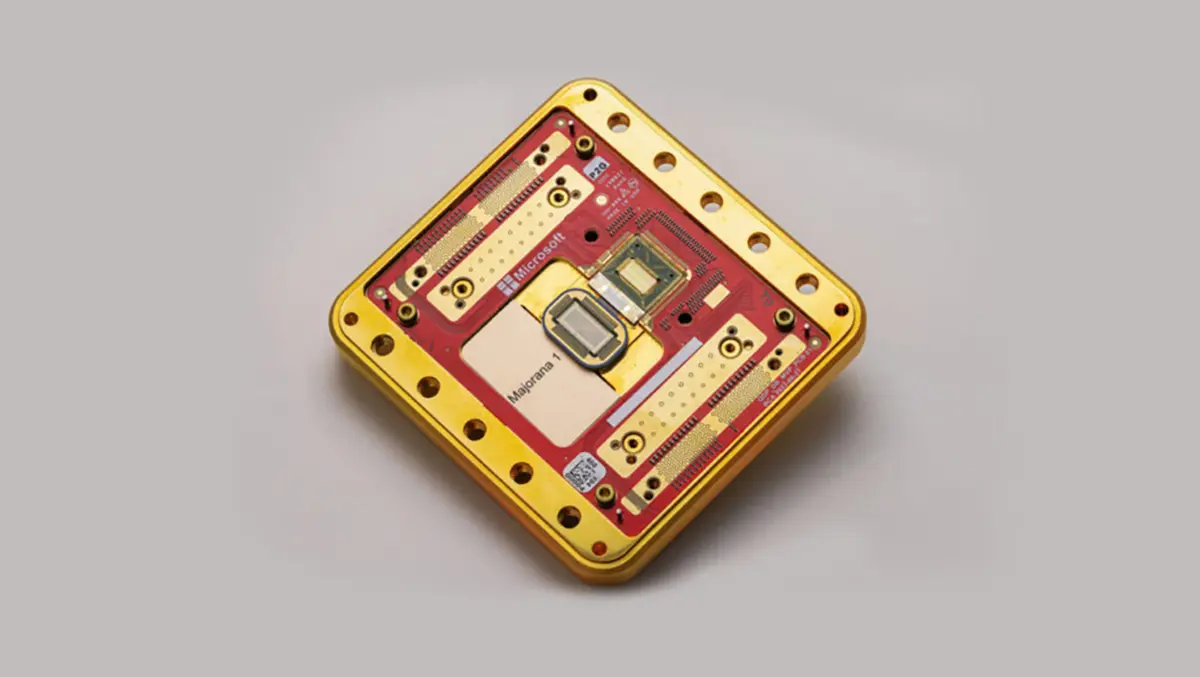
Microsoft announces Majorana 1. This device represents a significant step in the company’s efforts to create a stable, scalable quantum computer. The focus lies on developing topological qubits. These qubits, based on Majorana fermions, aim to reduce error rates.
The announcement draws attention to the ongoing race to build practical quantum computers. Companies and research groups worldwide pursue this goal. Microsoft’s approach centers on the creation of hardware capable of handling complex computations.
Majorana fermions are quasiparticles. They show promise for building qubits that are less susceptible to noise. Noise is a major obstacle in quantum computing. It causes errors and limits the usefulness of current quantum devices.
Microsoft’s team spent years researching and developing the technology behind Majorana 1. They focused on material science and quantum physics. The goal is to produce hardware that can maintain the delicate quantum states needed for computation.
The device uses specific materials and structures. These materials and structures allow for the creation and manipulation of Majorana fermions. The design aims to protect the quantum information stored in the qubits. This protection is key to achieving fault-tolerant quantum computing.
The company plans to use Majorana 1 as a foundation for future quantum systems. They aim to scale up the number of qubits and improve the performance of the hardware. The development marks progress towards a commercially viable quantum computer.
Microsoft’s research includes work on software and algorithms for quantum computers. They develop tools and programming languages to help developers use quantum hardware. This work is essential for making quantum computing accessible to a wider audience.
The announcement comes at a time of increased interest in quantum technology. Governments and private companies invest heavily in quantum research. They see potential for quantum computers to solve problems that are beyond the reach of classical computers.
Applications of quantum computing include drug discovery, materials science, and artificial intelligence. These applications could have a significant impact on various industries.
The company presents data showing the stability and performance of the Majorana qubits. This data provides evidence that the technology is progressing as planned. The data shows reduction in the decoherence rates of the qubits. Decoherence is a major problem in quantum computing.
Microsoft’s strategy involves a full-stack approach. They develop hardware, software, and cloud services for quantum computing. This approach aims to provide a complete solution for customers.
The company’s investment in quantum computing reflects its belief in the long-term potential of the technology. They aim to be a leader in the field and provide quantum computing services to businesses and researchers.
Researchers working on the project stress the challenges of building a stable quantum computer. They acknowledge that there is still much work to be done. They also express optimism about the progress made so far.
The announcement sparks discussion among experts in the field. They analyze the technical details of Majorana 1 and assess its potential impact. The experts are looking at the stability of the creation of the majorana fermions.
Microsoft’s work on Majorana 1 contributes to the global effort to advance quantum computing. The company’s commitment to research and development is seen as a positive sign for the future of the technology. This effort strengthens the hope to create a useful and stable quantum computer.