

The gaming world is buzzing with a monumental announcement that has redefined the trajectory of Xbox hardware. Microsoft and Advanced Micro Devices (AMD) have officially cemented a new, multi-year strategic partnership to co-engineer custom silicon, which will serve as the heart of the next generation of Xbox consoles and a wider portfolio of gaming devices. This agreement extends their deep-rooted collaboration, promising players more sophisticated graphics, intelligent gameplay powered by artificial intelligence, and a unified gaming experience that breaks free from the confines of a single device or storefront.
Key Takeaways:
- Microsoft and AMD have signed a multi-year deal for custom chips to power next-generation Xbox consoles and a broader range of devices, including handhelds.
- The partnership aims to push visual quality, enable AI-enhanced gameplay, and ensure backward compatibility with existing Xbox game libraries.
- Xbox’s vision extends beyond traditional consoles, focusing on a flexible, cross-device gaming ecosystem that supports multiple storefronts.
- This renewed collaboration builds on a long-standing history of AMD providing the core silicon for Xbox consoles, from the Xbox One to the current Series X|S.
- The agreement underscores Microsoft’s dedication to hardware innovation despite its growing multiplatform and cloud gaming strategies.
Xbox President Sarah Bond delivered the news, highlighting a vision for a gaming platform that is “always with you,” allowing players to access their games across various devices, wherever they choose to play. This signals a strategic evolution for the Xbox brand, moving towards a more interconnected and flexible ecosystem that embraces traditional consoles, portable gaming devices, PCs, and cloud-based services.
A Legacy of Partnership: AMD at the Core of Xbox
The relationship between Microsoft and AMD is far from new. For over a decade, AMD has been the exclusive provider of the custom Accelerated Processing Units (APUs) that power Xbox consoles. This partnership began with the Xbox One, launched in 2013, which utilized a custom AMD APU combining Jaguar CPU cores and Graphics Core Next (GCN) GPU architecture. This marked a significant shift from the Xbox 360’s IBM PowerPC CPU and ATI Xenos GPU. The move to a unified APU design simplified development for game creators and streamlined hardware architecture.
The current generation, the Xbox Series X and Series S, launched in late 2020, also features custom AMD silicon. The Xbox Series X boasts a Zen 2-based CPU with eight cores clocked at 3.8 GHz (3.66 GHz with SMT) and an RDNA 2-based GPU with 52 CUs (compute units) running at 1.825 GHz, delivering 12 teraflops of raw graphical power. The Xbox Series S, designed for 1440p gaming, also uses a Zen 2 CPU (eight cores at 3.6 GHz/3.4 GHz with SMT) and an RDNA 2 GPU with 20 CUs at 1.565 GHz, offering 4 teraflops. Both consoles leverage AMD’s RDNA 2 architecture for features like hardware-accelerated ray tracing and Variable Rate Shading (VRS), pushing visual boundaries in games.
This consistent reliance on AMD’s expertise demonstrates Microsoft’s confidence in the chipmaker’s ability to deliver high-performance, power-efficient, and customizable solutions tailored for gaming. The new multi-year agreement builds on this strong foundation, with both companies committing to push the boundaries of gaming silicon.
Beyond the Console: A Holistic Xbox Ecosystem
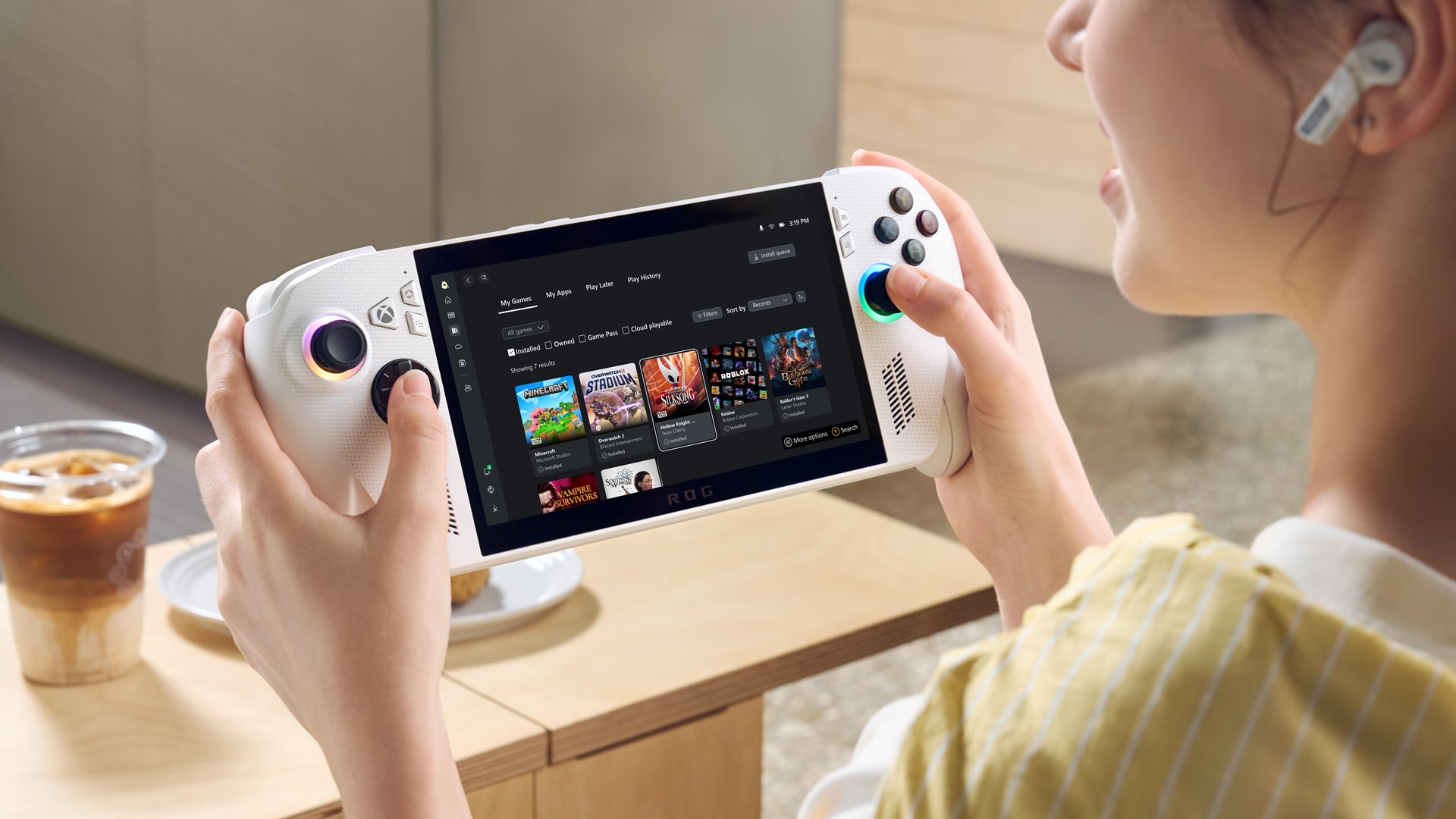
The scope of this renewed partnership extends beyond just the traditional living room console. Bond specifically mentioned “a portfolio of devices,” including next-generation Xbox consoles “in your living room and in your hands.” This clearly indicates Microsoft’s intent to broaden its hardware offerings, particularly in the burgeoning handheld gaming market. While Microsoft recently collaborated with ASUS on the Xbox Ally and the upcoming Ally X handhelds, which utilize AMD’s Ryzen Z1 Extreme processor, this new agreement suggests a deeper commitment to custom, first-party Xbox-branded portable devices.
This move aligns with Microsoft’s broader strategy to position Xbox as a platform that transcends individual hardware. The company’s investments in Xbox Game Pass, its subscription service, and its cloud gaming initiatives are central to this vision. By developing custom silicon with AMD for a diverse range of devices, Microsoft aims to offer a seamless and consistent Xbox experience, regardless of whether a player is on a console, a PC, a handheld, or streaming via the cloud. The goal is to allow players to start a game on one device and continue it on another, with their progress and saves seamlessly transferring.
Advanced Graphics and AI-Enhanced Experiences
A core focus of the multi-year deal is to “deliver the next generation of graphics innovation to unlock a deeper level of visual quality and immersive gameplay and player experiences enhanced with the power of AI.” This suggests that future Xbox hardware will leverage AMD’s advancements in graphics processing and integrate dedicated AI acceleration capabilities directly into the silicon.
For graphics, this could mean the adoption of AMD’s future RDNA architectures, potentially RDNA 4 or even RDNA 5, which are expected to bring significant improvements in areas like ray tracing performance, upscaling technologies (like FidelityFX Super Resolution, or FSR, with rumored FSR 4 on the horizon), and overall rendering efficiency. Higher visual fidelity, more realistic lighting, and complex environmental details will be key benefits for players.
The mention of “AI-enhanced gameplay” is particularly noteworthy. Artificial intelligence is rapidly becoming a cornerstone of modern computing, and its application in gaming is expanding. Dedicated AI hardware on the chip could be used for various purposes, such as:
- Improved Non-Player Characters (NPCs): More realistic and dynamic AI behaviors for enemies, allies, and environmental characters.
- Procedural Content Generation: AI could assist in creating vast and varied game worlds, reducing development time and enhancing replayability.
- Graphics Upscaling and Reconstruction: Beyond FSR, AI could power more sophisticated image reconstruction techniques, allowing games to run at lower internal resolutions while appearing sharp and detailed on higher-resolution displays.
- Performance Optimization: AI could dynamically adjust game settings in real-time to maintain smooth frame rates without compromising visual quality.
- Player Personalization: AI could learn player habits and preferences to tailor gameplay experiences, content delivery, and even in-game advertising.
The integration of AI at the silicon level would give Xbox a distinct advantage, enabling experiences that are simply not possible with current hardware.
Backward Compatibility: A Commitment to Players
Crucially, Microsoft has reiterated its commitment to backward compatibility with this new generation of hardware. Bond emphasized that the new chips will allow players to maintain compatibility with their existing library of Xbox games. This is a significant aspect for consumers, as it protects their past investments in games and ensures a smooth transition to new hardware without losing access to beloved titles.
This commitment to backward compatibility has been a hallmark of the Xbox ecosystem for several generations. The Xbox One was eventually made backward compatible with a growing library of Xbox 360 and original Xbox games, and the Xbox Series X|S fully supports all Xbox One games. Maintaining this across future generations, especially with potentially new architectures and AI integration, is a complex engineering feat that AMD’s custom silicon expertise will be vital in achieving.
The Competitive Landscape and Future Implications
This multi-year deal solidifies AMD’s position as a dominant force in the console chip market. AMD also supplies the custom silicon for Sony’s PlayStation consoles, making them a central player in the console wars. This continued partnership with Microsoft suggests that AMD offers a compelling combination of performance, customizability, and cost-effectiveness that other chipmakers, like Intel or Nvidia, have not been able to match for console designs. While Intel has expressed interest in the console space, and Nvidia has a strong partnership with Nintendo for its Switch line, AMD’s established history and expertise in semi-custom solutions for Xbox and PlayStation appear to be a decisive factor for console manufacturers.
The implications for the broader gaming industry are substantial. Microsoft’s push towards a more open and device-agnostic Xbox experience, coupled with advanced hardware capabilities, could influence how other platform holders approach their strategies. The emphasis on AI-enhanced experiences might also accelerate the adoption of AI in game development across the industry.
As the lines between traditional consoles, PCs, and mobile gaming blur, Microsoft’s move with AMD positions Xbox to adapt and thrive in an evolving market. The focus on a cohesive ecosystem, where games are accessible across various devices and not tied to a single storefront, reflects a broader industry trend towards player choice and flexibility. While the exact specifications and launch timelines for the next-generation Xbox consoles remain under wraps, this partnership assures that AMD’s innovative silicon will remain at the forefront of powering Microsoft’s gaming ambitions for years to come. The promise of richer visuals, smarter gameplay, and seamless access across devices is a tantalizing prospect for gamers worldwide.
FAQ Section
Q1: What exactly is this multi-year chip deal between Microsoft and AMD about?
A1: The deal is a long-term agreement for AMD to design and supply custom chips for Microsoft’s next-generation Xbox consoles and other Xbox-branded devices, including potential new handheld gaming systems. It extends their existing partnership.
Q2: What improvements can gamers expect from this new chip deal?
A2: Gamers can expect significant advancements in visual quality, more immersive gameplay through AI enhancements, and continued backward compatibility, meaning their existing Xbox game libraries will still work on new hardware.
Q3: Does this mean Microsoft is moving away from traditional consoles?
A3: No, Microsoft is not abandoning consoles. Instead, this deal highlights their strategy to broaden the Xbox experience beyond traditional living room consoles, creating a flexible gaming ecosystem that includes handhelds, PCs, and cloud gaming, all powered by a consistent hardware foundation.
Q4: Has AMD supplied chips for Xbox before?
A4: Yes, AMD has been the exclusive chip provider for Xbox consoles since the Xbox One, including the current Xbox Series X and Series S models. This new deal is a continuation and expansion of that long-standing collaboration.
Q5: What does “AI-enhanced gameplay” mean for future Xbox games?
A5: AI-enhanced gameplay means that dedicated AI hardware within the new chips could power more realistic non-player characters, assist in generating dynamic game environments, improve graphics upscaling techniques, and potentially optimize game performance in real-time.