

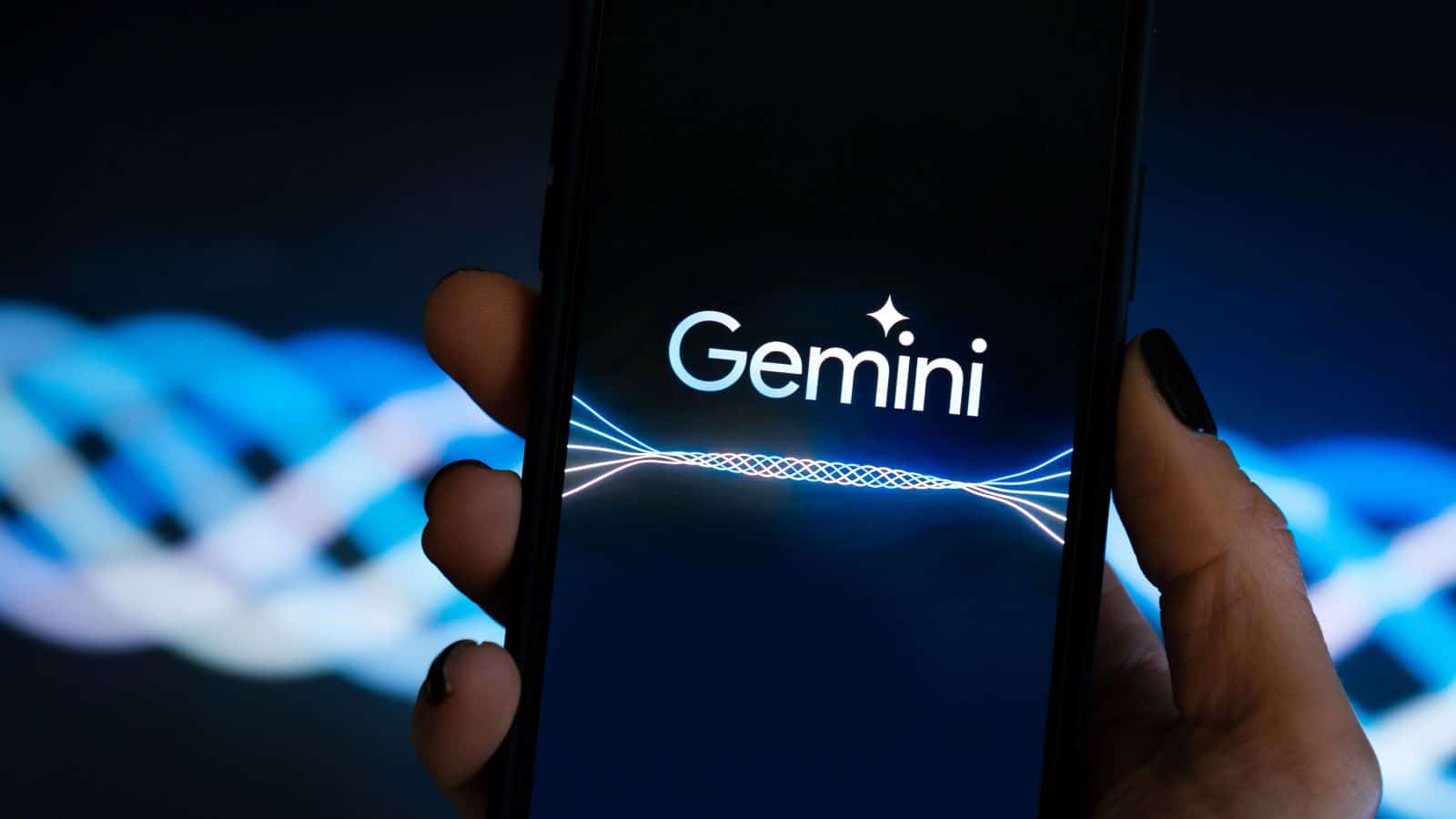
Google’s artificial intelligence advancements continue to send ripples across the technology sector. The company has announced a significant expansion of its Gemini 2.5 family of models, moving Gemini 2.5 Pro and Gemini 2.5 Flash to general availability while also introducing a new, more cost-efficient and faster version: Gemini 2.5 Flash-Lite. This move marks a important step in making powerful AI capabilities more accessible and practical for a broader array of developers and businesses.
- Key Takeaways:
- Gemini 2.5 Pro: The Powerhouse for Complex Tasks
- Core Capabilities of Gemini 2.5 Pro:
- Gemini 2.5 Flash: Speed and Cost-Efficiency at Scale
- Key Features of Gemini 2.5 Flash:
- Introducing Gemini 2.5 Flash-Lite: The Most Accessible Gemini Yet
- Distinct Advantages of Gemini 2.5 Flash-Lite:
- Accessibility and Developer Experience
- The Broader Context: Google’s AI Journey
- The Impact on Industries and Everyday Life
- A Future Built with AI
- Frequently Asked Questions (FAQs)
Key Takeaways:
- Google has made Gemini 2.5 Pro and Gemini 2.5 Flash generally available.
- A new, highly cost-efficient and faster model, Gemini 2.5 Flash-Lite, is now in public preview.
- These models offer extended context windows, allowing them to process vast amounts of information, including code, video, and audio.
- Developers can access Gemini 2.5 models through Google AI Studio and Vertex AI, with enhanced features like “Thinking Budgets” and improved tooling.
- The expansion signifies Google’s ongoing commitment to building responsible and capable AI for a wide range of uses.
The Gemini 2.5 family represents Google’s commitment to creating a suite of AI models that deliver strong performance while balancing cost and speed. These models are designed to handle diverse tasks, from intricate reasoning and advanced code generation to high-volume, latency-sensitive operations like translation and classification.
Gemini 2.5 Pro: The Powerhouse for Complex Tasks
Gemini 2.5 Pro, previously introduced and refined through developer feedback, is now a stable and generally available model. It is designed for highly complex reasoning, advanced code generation, and deep multimodal understanding. This model excels in scenarios demanding a thorough grasp of large datasets.
Core Capabilities of Gemini 2.5 Pro:
- Extended Context Window: Gemini 2.5 Pro maintains its impressive 1 million-token context length. This allows it to process and understand enormous amounts of information within a single prompt, equivalent to analyzing entire codebases, lengthy videos, or extensive documents. This capacity is a game-changer for developers working on complex projects where understanding a broad context is crucial. For instance, it can review tens of thousands of lines of code or nearly an hour of video content.
- Superior Coding Performance: Developers report that Gemini 2.5 Pro offers strong coding capabilities. It excels at tasks such as transforming and editing code, creating sophisticated agentic workflows, and providing insightful suggestions for architectural design. It has shown leading performance on coding benchmarks like WebDev Arena and LiveCodeBench, which evaluate a model’s ability to build functional web applications and generate correct code for competitive programming problems.
- Advanced Multimodal Understanding: The model’s native multimodal design allows it to seamlessly integrate and reason across different data types, including text, code, images, audio, and video. This means developers can feed it a YouTube video and ask it to generate an interactive learning application based on the content, or analyze medical records from free-text entries.
- Deep Research and Analysis: With its large context window, Gemini 2.5 Pro can analyze hundreds of sources in real-time to generate comprehensive research reports, from competitive deep dives to industry overviews. This capability helps users save time typically spent on manual information gathering.
- Deep Think (Experimental): Google is testing an experimental reasoning mode called “Deep Think” for Gemini 2.5 Pro. This mode uses new research techniques to allow the model to consider multiple hypotheses before responding, leading to more accurate solutions for highly complex math and coding prompts. Early results show impressive performance on challenging benchmarks like the USAMO (United States of America Mathematical Olympiad) and LiveCodeBench.
Gemini 2.5 Flash: Speed and Cost-Efficiency at Scale
Alongside Pro, Gemini 2.5 Flash has also reached general availability. Flash is engineered for high-throughput enterprise tasks where speed, efficiency, and cost-effectiveness are paramount. It is a workhorse model, designed for applications requiring rapid responses and large-scale processing.
Key Features of Gemini 2.5 Flash:
- Optimized for Speed and Efficiency: Gemini 2.5 Flash is built for scenarios demanding low latency, such as responsive chat applications, real-time summarization, and efficient data extraction from vast datasets. It processes information quickly, making it suitable for applications where rapid turnaround is critical.
- Cost-Effective for High Volume: Its design prioritizes cost-efficiency, making it a practical choice for high-volume tasks that might otherwise become expensive with more resource-intensive models.
- Multimodal Input Support: Similar to Pro, Flash supports multimodal inputs (text, images, audio, video), allowing for diverse applications where speed is key.
- Thinking Capabilities: Gemini 2.5 Flash is one of the first “Flash” models to feature “thinking capabilities,” offering transparency into the model’s reasoning process. This allows developers to better understand how the model arrived at its response, aiding in prompt refinement and error identification.
- Supervised Fine-Tuning (SFT): SFT for Gemini 2.5 Flash is now generally available. This feature allows businesses to tailor the model to their specific enterprise data, industry terminology, and brand voice, leading to higher accuracy for specialized tasks.
Introducing Gemini 2.5 Flash-Lite: The Most Accessible Gemini Yet
The newest addition to the family, Gemini 2.5 Flash-Lite, is currently in public preview. This model is positioned as the most cost-efficient and fastest Gemini 2.5 model. It is designed for high-volume, latency-sensitive tasks where minimal cost is a priority.
Distinct Advantages of Gemini 2.5 Flash-Lite:
- Unmatched Cost-Effectiveness: Flash-Lite offers an even lower cost per token compared to its siblings, making advanced AI capabilities more accessible for budget-sensitive projects and applications with massive scale requirements.
- Exceptional Speed: It boasts lower latency than previous Flash models, delivering quicker responses for tasks like classification and translation.
- Enhanced Quality over Predecessors: Despite its focus on speed and cost, Flash-Lite delivers higher quality across various benchmarks, including coding, math, science, reasoning, and multimodal understanding, when compared to the earlier Gemini 2.0 Flash-Lite and 2.0 Flash models.
- Broad Capabilities: It retains key Gemini 2.5 capabilities, including the ability to manage “thinking budgets,” connect to tools like Google Search and code execution, and handle multimodal inputs with a 1 million-token context length.
Accessibility and Developer Experience
Google is making the Gemini 2.5 family of models widely available through Google AI Studio and Vertex AI. Google AI Studio serves as a web-based developer tool that provides a way to prototype and build with Gemini models, while Vertex AI offers a comprehensive machine learning platform for enterprises, enabling them to train, deploy, and scale their AI applications.
Developers are seeing tangible benefits. Companies like Spline, Rooms, Snap, and SmartBear have already integrated the latest Gemini 2.5 versions into production, reporting improvements in efficiency and capability. The availability of stable versions for Pro and Flash means developers can build production applications with confidence, knowing they have a reliable and performant AI foundation.
Furthermore, Google continues to refine the developer experience by introducing features such as “Thought Summaries” in the Gemini API and Vertex AI, offering greater transparency into the models’ reasoning. “Thinking Budgets” allow developers to control the computational resources allocated to a model’s thought process, balancing performance, latency, and cost.
The Broader Context: Google’s AI Journey
The expansion of the Gemini 2.5 family is a continuation of Google’s long-standing journey in artificial intelligence. From its early use of machine learning for spell check and Google Translate to the development of foundational models like the Transformer architecture and the introduction of AI-powered features across its products, Google has consistently invested in advancing AI.
The Gemini series, first introduced to unify Google’s diverse AI efforts, aims to provide a versatile and powerful set of models that can understand and generate various forms of information. This includes not just text, but also images, audio, and video, mimicking a more human-like understanding of the world. The iterative releases and continuous improvements to the Gemini models reflect a strategy of rapid development and deployment, driven by real-world developer feedback and a commitment to responsible AI practices.
Google’s responsible AI principles, which emphasize social benefit, fairness, safety, accountability, privacy, and scientific excellence, guide the development and deployment of these models. This approach seeks to ensure that as AI capabilities grow, they are developed and used in ways that benefit society and mitigate potential risks.
The Impact on Industries and Everyday Life
The advanced capabilities of the Gemini 2.5 models hold the potential to reshape various industries. In healthcare, models like Gemini 2.5 Flash can extract vital information from unstructured medical records, speeding up data analysis and potentially improving patient outcomes. In software development, Gemini 2.5 Pro acts as a powerful co-developer, generating code, reviewing pull requests, and debugging complex systems, freeing human developers to focus on higher-level design and creativity.
For creative professionals, Gemini models can accelerate content creation, from generating comprehensive blog posts and social media captions to drafting scripts and even helping with video production through integration with tools like Veo. The ability to process and reason over large context windows means these models can understand nuanced inputs and produce more relevant and sophisticated outputs.
The introduction of Gemini 2.5 Flash-Lite also democratizes access to advanced AI. Its cost-efficiency means smaller businesses and individual developers can leverage sophisticated AI for high-volume tasks that were previously cost-prohibitive. This could spur a wave of new AI-powered applications and services across different sectors.
A Future Built with AI
The continued growth of the Gemini 2.5 family underlines Google’s vision for a future where AI is deeply integrated into how we work, learn, and create. By providing a spectrum of models optimized for different needs — from the raw power of Pro to the rapid efficiency of Flash and the accessibility of Flash-Lite — Google is empowering developers to build the next generation of AI-powered applications. As these models become more refined and widely adopted, their influence will likely expand, leading to new possibilities and solutions across nearly every domain.
Frequently Asked Questions (FAQs)
Q1: What is the main difference between Gemini 2.5 Pro and Gemini 2.5 Flash?
A1: Gemini 2.5 Pro is designed for complex reasoning, advanced code generation, and deep multimodal understanding, making it suitable for tasks requiring detailed analysis and a broad context. Gemini 2.5 Flash is optimized for speed, efficiency, and cost-effectiveness, ideal for high-volume, latency-sensitive tasks like summarization and classification.
Q2: What is Gemini 2.5 Flash-Lite, and what are its main advantages?
A2: Gemini 2.5 Flash-Lite is a new model in public preview, offering the most cost-efficient and fastest performance within the Gemini 2.5 family. Its main advantages are its affordability and high speed, making advanced AI more accessible for large-scale, budget-conscious applications.
Q3: Can Gemini 2.5 models process non-textual information like images or videos?
A3: Yes, all models in the Gemini 2.5 family are multimodal, meaning they can understand and reason across various data types, including text, code, images, audio, and video. They can process video URLs, image uploads, and audio inputs.
Q4: What is the “context window” in Gemini 2.5, and why is it important?
A4: The context window refers to the amount of information an AI model can process and retain in a single interaction. Gemini 2.5 models boast a 1 million-token context length, which is crucial because it allows them to understand and reason about very large documents, entire codebases, or extended video and audio segments, leading to more coherent and accurate responses.
Q5: How can developers access the Gemini 2.5 models?
A5: Developers can access Gemini 2.5 Pro, Flash, and Flash-Lite through Google AI Studio for prototyping and building, and via Vertex AI for enterprise-grade deployment, training, and scaling of AI applications.
Q6: What are “Thinking Budgets” in Gemini 2.5?
A6: “Thinking Budgets” allow developers to control the computational resources a Gemini model uses for its internal thought processes. This feature helps balance performance, latency, and cost, allowing developers to optimize the model’s behavior for specific application needs.
Q7: How does Google ensure responsible AI development with Gemini?
A7: Google adheres to its responsible AI principles, which prioritize social benefit, fairness, safety, accountability, privacy, and scientific excellence. These principles guide the development and deployment of Gemini models to ensure they are used ethically and safely.