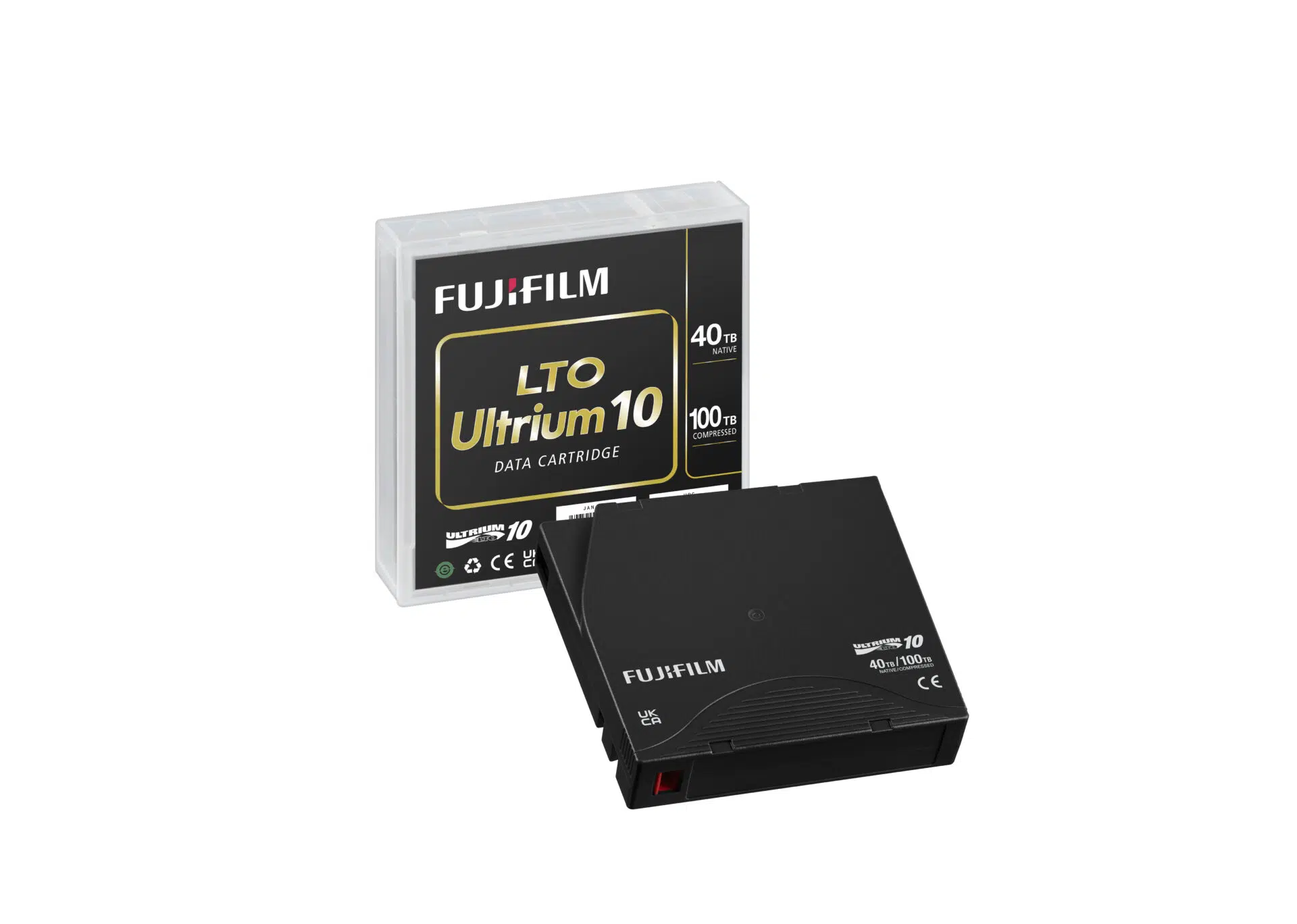
Fujifilm Corporation has officially launched its latest LTO Ultrium 10 data cartridge in India, bringing a native storage capacity of 40TB for uncompressed data. With compression, this figure goes up to an impressive 100TB per cartridge. The timing feels deliberate, perhaps even necessary, as Indian enterprises continue to grapple with rapidly expanding AI workloads and data intensive applications. According to the company, shipments of the new cartridge will begin in January 2026.
This release builds on Fujifilm’s earlier LTO 10 cartridge, which offered 30TB of native capacity. While the previous version is still relevant, the jump to 40TB represents a clear step forward, especially for organizations that are already struggling to balance storage scale, security, and long term costs. On paper it is a significant upgrade, but in practice, it also reflects how fast data requirements are changing across industries.
Key Takeaways
- The new LTO 10 cartridge delivers 40TB of native storage and up to 100TB when data is compressed.
- Fujifilm uses a newly developed aramid film, making the tape thinner and allowing 30 percent more tape length in the cartridge.
- The operating temperature range has been expanded to between 15 degrees Celsius and 35 degrees Celsius.
- Offline tape storage creates an air gap, reducing exposure to ransomware and cyber intrusions.
- The 40TB cartridge is fully compatible with existing LTO 10 drive hardware.
At the technical level, the LTO 10 40TB cartridge relies on advanced magnetic particle technology to increase recording density without changing the physical size of the cartridge. Fujifilm has combined different types of ultra fine magnetic particles to achieve this. The use of aramid film is particularly important here. By reducing the tape thickness, Fujifilm managed to fit 30 percent more tape length into a single cartridge. These changes together result in a 33 percent increase in storage capacity compared to the 30TB model that was introduced in mid 2025.
Cybersecurity concerns are also shaping storage decisions in India. Many businesses and data centers are facing a steady rise in ransomware attacks and data breaches. Magnetic tape addresses this issue in a fairly straightforward way by remaining offline when not in use. This physical separation, commonly referred to as an air gap, means that the data cannot be accessed remotely by hackers. As a result, it cannot be encrypted, deleted, or held hostage over a network.
Mr. Koji Wada, Managing Director of Fujifilm India, highlighted India’s importance as a rapidly growing AI market. He stated that the company’s objective is to offer storage technology that balances security and affordability. It is not just about higher capacity, I think, but also about giving enterprises a practical way to manage risk without driving up operational costs.
The new tape has also been designed with India’s diverse environmental conditions in mind. Fujifilm has strengthened the base film to improve durability in both heat and humidity. The cartridge supports humidity levels of up to 80 percent, which makes it suitable for a wide range of operational environments across the country. Unlike hard disk drives, magnetic tape does not require continuous power to retain data. Over long periods, this leads to a noticeably lower total cost of ownership. Industry reports indicate that tape shipments have grown by about 10 percent annually since 2020, largely due to rising demand for AI ready archival storage.
From an enterprise perspective, the LTO 10 40TB cartridge fits well into long term backup strategies and disaster recovery planning. It offers a raw data transfer speed of 400 MB per second, which can increase to 1,000 MB per second when working with compressed data. Fujifilm continues to be a major global supplier of tape media, and with this launch, it appears focused on helping organizations cope with the relentless surge of data generated by AI, analytics, and digital transformation initiatives.
Related FAQs
Q1: What is the capacity of the new Fujifilm LTO 10 tape?
A1: The new cartridge supports 40TB of uncompressed data and up to 100TB when data compression is applied.
Q2: Is the 40TB tape compatible with existing LTO 10 drives?
A2: Yes, the cartridge is designed to work with the same LTO 10 drive hardware used for the earlier 30TB version.
Q3: When will the 40TB LTO 10 tape be available in India?
A3: Fujifilm plans to begin shipping the 40TB LTO 10 cartridges in India starting January 2026.
Q4: Why is tape storage preferred over hard drives for AI data?
A4: Tape offers lower long term storage costs and provides an air gap, which helps protect data from ransomware and other cyber threats.