

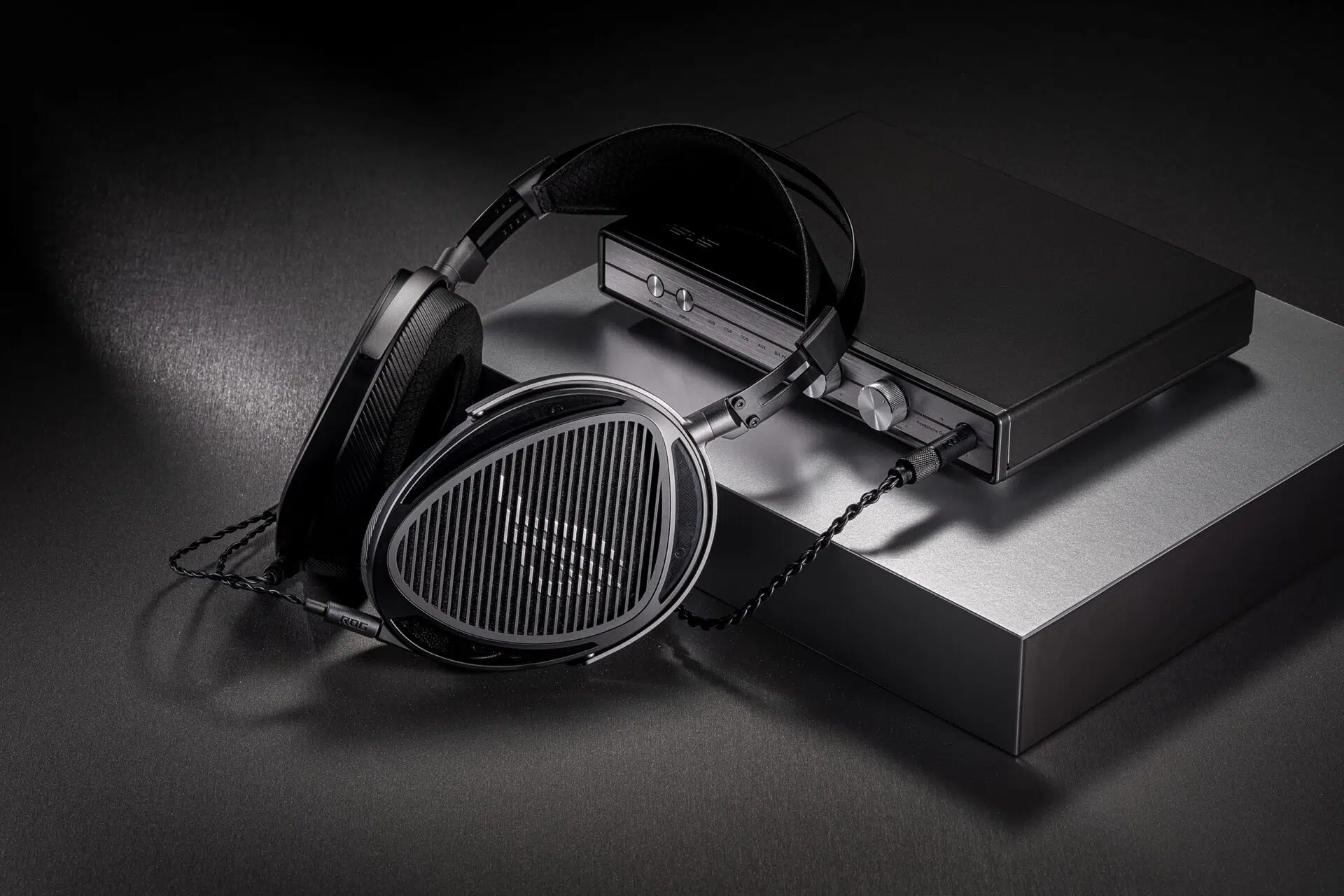
ASUS Republic of Gamers has officially unveiled the ROG Kithara, a new high-fidelity gaming headset that leans heavily into audiophile territory. The announcement was made on January 6, 2026, at CES, and it marks a notable collaboration between ASUS and HIFIMAN, a brand long respected in high-end audio circles. With this headset, ASUS appears to be targeting gamers who care just as much about sound accuracy as they do about performance, which, honestly, feels like a growing crowd these days.
At the heart of the ROG Kithara are its large 100mm planar magnetic drivers, developed with input from HIFIMAN’s audio engineers. The idea here is fairly simple but ambitious: bring the kind of sound quality usually reserved for premium audiophile headphones into a gaming-focused product. Thanks to these oversized drivers, the headset delivers a broad frequency range and a level of clarity that makes small in-game details stand out. Subtle environmental cues, distant movement, and layered sound effects are easier to pick apart, which can make a real difference during intense gameplay.
Key Takeaways
- The headset features 100mm planar magnetic drivers designed by audio experts at HIFIMAN.
- An open-back design creates a wide soundstage for better spatial awareness in competitive games.
- It includes a high-quality MEMS boom microphone that captures clear voice with low background noise.
- Users get multiple swappable plugs, including 4.4mm balanced and standard 3.5mm options.
- The build uses a metal frame and adjustable headband for comfort during long gaming sessions.
The planar magnetic drivers are really the core selling point here. Unlike traditional dynamic drivers that rely on cone-shaped diaphragms, planar magnetic technology uses a thin, flat diaphragm that moves more evenly across its surface. This approach significantly reduces distortion and allows the headset to cover an impressive frequency response from 8Hz all the way up to 55kHz. For Indian gamers playing titles like Battlegrounds Mobile India or Valorant, this translates into sharper footsteps, clearer gunfire, and more precise directional audio. In practice, it means you are less likely to second-guess where a sound is coming from, which, I think, can be a quiet but meaningful advantage in competitive matches.
Another notable design choice is the open-back construction. Most gaming headsets stick to closed-back designs to isolate sound, but the Kithara goes the other way. By allowing air and sound to pass through the earcups, the headset avoids internal sound reflections and delivers a more natural, spacious presentation. This wider soundstage helps with imaging, or the ability to accurately locate sounds in three-dimensional space. That said, there is a trade-off. Because the headset is open-back, sound does leak out, and external noise can creep in. It feels best suited for a quiet room rather than a noisy shared environment.
Connectivity is an area where ASUS seems to have been quite thorough. The ROG Kithara ships with an Oxygen-Free Copper cable that supports swappable plugs. Users can switch between a 4.4mm balanced plug for high-end DACs and amplifiers, a standard 3.5mm plug for PCs and consoles, and a 6.3mm option for more traditional audio equipment. There is also a USB-C adapter included for compatibility with modern laptops and smartphones. This flexibility makes it easy to use the headset across different devices without hunting for extra accessories.
For communication, ASUS has equipped the headset with a MEMS boom microphone integrated into the cable. With a frequency response ranging from 20Hz to 20kHz, it captures a wider range of vocal detail than most typical gaming microphones. It also uses separate signal channels to reduce crosstalk, which helps prevent game audio from bleeding into voice chat. The end result is a cleaner, more natural-sounding voice, something teammates will probably appreciate during long sessions.
Comfort has not been overlooked either. The Kithara features a sturdy metal frame paired with an eight-way adjustable headband, allowing users to fine-tune the fit. ASUS includes two sets of ear cushions in the box, one made of velour and another using leatherette with mesh fabric. This gives users some choice depending on personal comfort preferences and how long they plan to wear the headset in a single sitting.
Related FAQs
Q1: What makes planar magnetic drivers better for gaming?
A1: Planar magnetic drivers use a thin, flat film to produce sound. This allows them to respond faster to audio signals, resulting in clearer details and less distortion compared to regular dynamic drivers.
Q2: Does the ROG Kithara require an amplifier?
A2: While you can plug it into a standard PC or console, planar magnetic headsets often benefit from extra power. Using a dedicated DAC or amplifier will help you get the best sound quality possible from the 100mm drivers.
Q3: Can people around me hear the sound from this headset?
A3: Yes, because it has an open-back design, sound will leak out of the earcups. It is not ideal for use in loud public places or shared offices where you might disturb others.
Q4: What is the benefit of a 4.4mm balanced plug?
A4: A balanced connection helps reduce electrical noise and can provide more power to the headset. This results in a cleaner audio signal and better overall performance when used with compatible audio gear.