

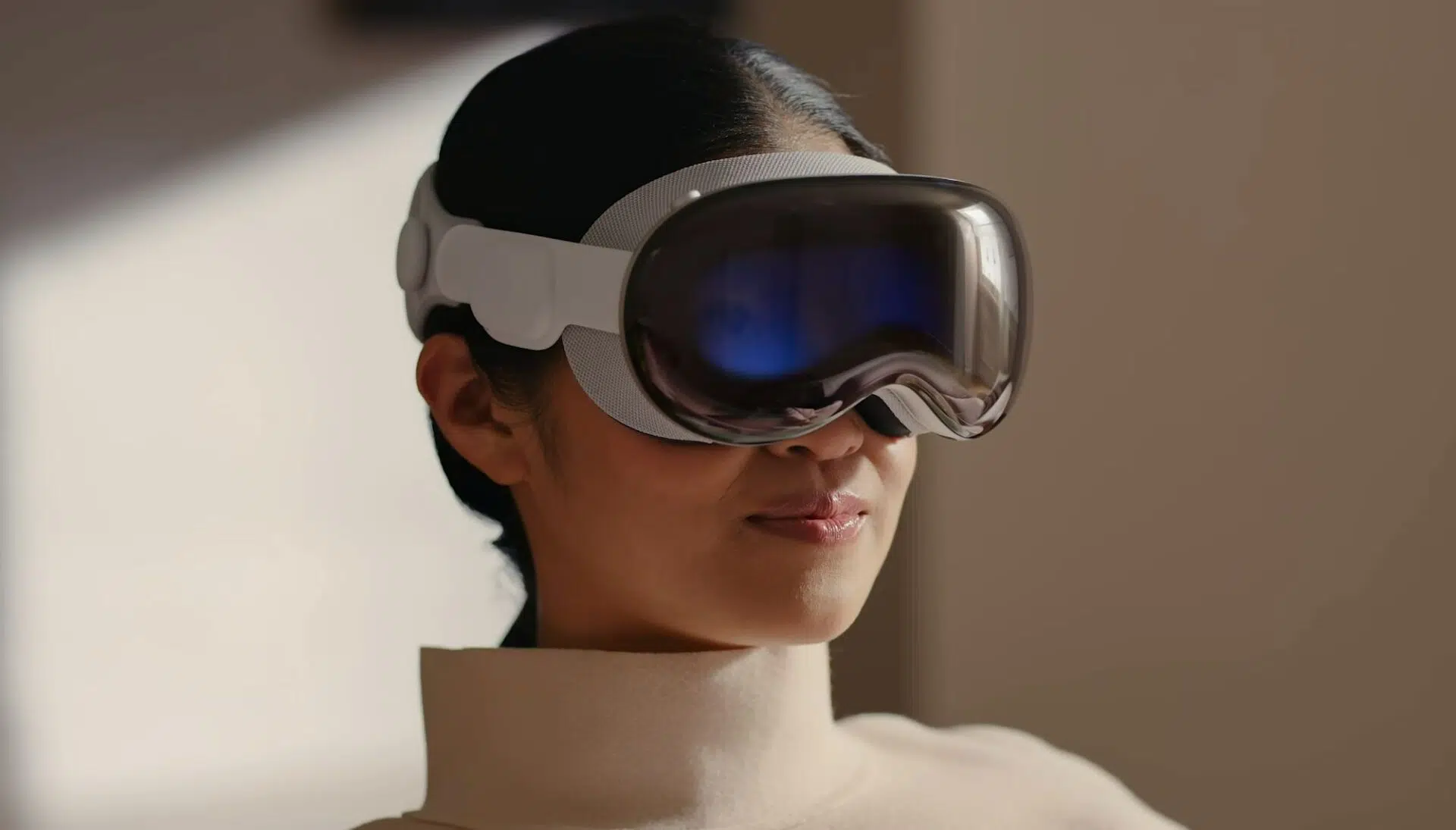
Apple appears to be quietly pressing pause on the production of its Vision Pro mixed-reality headset, a move that reflects just how challenging it has been to turn “spatial computing” into a mainstream product. Launched with considerable ambition and confidence, the Vision Pro was meant to introduce an entirely new computing category. Instead, it has largely remained a curiosity for developers, tech enthusiasts, and early adopters willing to experiment at a very high price point.
According to multiple industry reports, sales never quite matched Apple’s internal expectations. While the device impressed reviewers with its engineering and display quality, it struggled to establish everyday relevance for a broader audience. As demand softened, Apple reportedly began reallocating resources toward more practical wearable concepts, including AI-powered smart glasses. This shift comes at a time when the wider virtual and mixed-reality market itself is showing clear signs of fatigue.
Key Takeaways
- Production Halt: Manufacturing partner Luxshare reportedly stopped assembling the Vision Pro in early 2025 after inventory began piling up faster than expected.
- Low Sales Volume: Analysts estimate that only around 45,000 units shipped in the final quarter of 2025, a tiny figure when placed next to Apple’s core products like the iPhone.
- Marketing Withdrawal: Apple has reduced its digital advertising spend for the Vision Pro by more than 95 percent in both the US and UK, a strong signal that near-term growth is no longer a priority.
- Strategic Pivot: Internal development efforts are said to be shifting toward lighter AI-enabled smart glasses and a lower-cost Vision headset that could arrive sometime in 2026.
Market Context: Meta continues to dominate the category, holding close to 80 percent of the global market share with its more affordable Quest lineup.
Disappointing Sales Data and Market Fatigue
Apple has never publicly shared Vision Pro sales figures, which in itself feels telling. Estimates from the International Data Corporation (IDC), however, offer a fairly sobering snapshot. Total shipments in 2024 reportedly reached around 390,000 units. That number alone suggested a niche product, but the real concern emerged in 2025, when momentum dropped sharply.
During the critical holiday quarter of 2025, shipments are estimated at just 45,000 units. This slump mirrors a broader trend, with the global virtual and mixed-reality headset market contracting by roughly 14 percent year-on-year. In other words, Apple was trying to grow a premium new product in a market that was already shrinking.
At $3,499, roughly ₹2.9 lakhs, the Vision Pro also sits far outside impulse-buy territory. Competing devices like Meta’s Quest 3 and Quest 3S cost a fraction of that price. Even though Apple’s hardware is widely seen as more advanced, Meta’s lineup has captured a dominant 74.6 percent market share. For many buyers in India and elsewhere, it is hard to justify paying such a steep premium for a device that does not yet fit naturally into daily life.
Challenges with Comfort and Content
Feedback from users and reviewers has been fairly consistent, and not especially flattering. One major issue is comfort. The Vision Pro weighs over 600 grams, and many users report fatigue during extended sessions. An updated version featuring the M5 chip, released in late 2025 to improve performance, actually increased the weight to around 750 grams. That change, while technically impressive, arguably made the problem worse.
The second challenge lies in software. Apple often highlights that the Vision Pro supports more than 3,000 native apps, but the absence of dedicated applications from major platforms like Netflix and YouTube remains glaring. Relying on browser-based versions works, but it feels like a compromise, especially at this price level.
Then there are the design choices that divide opinion. The external battery pack and the “Eyesight” feature, which displays the user’s eyes on the front of the headset, are clever solutions on paper. In practice, some users see them as awkward or unnecessary, adding complexity without clearly improving everyday usability.
Shifting Focus to AI Smart Glasses
As Vision Pro production slows, Apple appears to be redirecting its attention toward something more lightweight and, perhaps, more realistic. Reports suggest the company is now prioritizing AI-enabled smart glasses, broadly similar in concept to the Ray-Ban Meta collaboration. These glasses would focus on audio assistance, contextual AI features, and subtle haptic feedback rather than full visual immersion.
This direction fits neatly with Apple’s broader push around Apple Intelligence and on-device AI. Less intrusive wearables could appeal to users who found the Vision Pro isolating, cumbersome, or simply too expensive. There is still talk of a cheaper Vision headset arriving in 2026, but expectations are that it would rely on lower-resolution displays and more affordable materials to keep costs down.
Whether that will be enough to reignite interest is an open question. For now, Apple seems content to step back, reassess, and explore where mixed reality and AI can intersect in a more approachable way.
Frequently Asked Question
Q1: Is Apple discontinuing the Vision Pro entirely?
A1: Apple has not officially ended the Vision Pro product line. Current reports suggest a halt in production of the high-end model, while development continues on a more affordable version and AI-focused wearables.
Q2: Why are Vision Pro sales so low compared to the iPhone?
A2: The $3,499 price positions the Vision Pro as a niche luxury product rather than a mass-market device. Limited everyday use cases, a relatively thin app ecosystem, and the headset’s weight have all restricted its appeal.
Q3: Can I still buy a Vision Pro in 2026?
A3: Yes, the Vision Pro remains available in select markets, including the US, UK, and China. That said, Apple has significantly reduced marketing activity, and no major updates to the current high-end model are expected this year.
Q4: How does the Vision Pro compare to the Meta Quest 3?
A4: The Vision Pro offers higher display resolution and a more advanced operating system through visionOS. The Meta Quest 3, however, is much lighter, costs roughly one-tenth as much, and benefits from a far larger library of games and social applications.