

The Anker 140W Charger, which has been known for delivering an unusually high amount of power in a compact form, is now sitting at one of the lowest prices it has ever reached. It feels like one of those moments when a product that usually sits in the premium corner suddenly becomes easier for more people to pick up. This particular model combines an all-in-one layout with advanced GaN technology, and it manages to offer fast charging for everything from Apple’s power-hungry laptops to Samsung’s flagship phones and plenty of other everyday devices. The timing of the price drop, tied in with seasonal promotions, puts it in direct competition with single-port OEM chargers such as Apple’s own 140W adapter, which can feel limiting if you juggle several devices. For many users, this charger may end up replacing a handful of slower bricks they’ve been carrying around out of habit.
Key Takeaways
- The Anker 140W Charger has reached its lowest-ever price point during a recent sale event.
- It supports the USB Power Delivery (PD) 3.1 protocol, allowing a single port to deliver the full 140W output.
- The charger uses GaN technology for a smaller, more heat-efficient design compared to traditional silicon chargers.
- It features three USB-C ports and one USB-A port for charging up to four devices simultaneously.
- It is fully compatible with popular devices, including MacBook Pro, iPhone series, Samsung Galaxy S series, and Google Pixel phones.
Powering Multiple Devices with GaN Technology
The Anker 140W Charger, sometimes labeled under model numbers like A2697 or B2697 depending on the region or package, stands out because of how effectively it handles high-demand charging. At the core of its performance is Gallium Nitride, a material that has gradually become the preferred choice for modern power adapters. It helps keep the charger smaller and, in my experience at least, noticeably cooler than the older silicon-based designs.
This model includes four ports in total: two high-speed USB-C ports, one standard USB-C port, and one USB-A port. When you plug into just one port, either of the main USB-C connections can deliver the full 140W output, which is enough to charge a 16-inch MacBook Pro at its maximum supported speed. Apple’s lighter laptops benefit as well. For instance, the 15-inch MacBook Air can reach around 50 percent in roughly half an hour, which is always handy when you’re trying to get out the door.
If you end up charging several devices at once, the charger uses intelligent power distribution to divide the 140W safely. It can split the power evenly, such as sending 70W to each of the main USB-C ports when two high-demand devices are connected. Even with all four ports occupied, it maintains a balanced output that keeps everything charging steadily, though naturally at lower speeds. I think most people will appreciate that they don’t have to micromanage which port does what.
Universal Compatibility for Major Brands
One of the most appealing parts of this charger is its broad compatibility. It supports USB PD 3.1 along with PPS, and PPS tends to matter more than people realize when it comes to maximizing charging speeds on many Android phones. This wider standards support means the charger doesn’t feel tied to a single ecosystem, which is something I personally find important now that so many of us use a mix of devices.
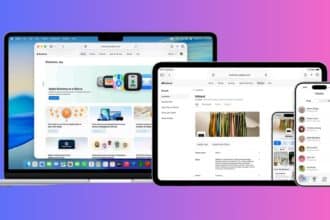
For Apple devices, it supports fast charging for MacBook Pro and MacBook Air models, along with the latest iPhones and iPads. The charger only delivers what each device can safely accept. For example, an iPhone still pulls roughly 27W even if the charger can supply much more.
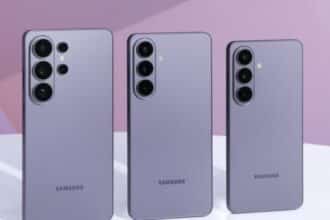
Samsung users benefit from PPS support, as phones like the Galaxy S24 and S23 Ultra can charge at their top supported speeds, which usually land around 45W. Other devices, including laptops like the Dell XPS and Lenovo ThinkPad, as well as gaming handhelds like the Steam Deck, work just as seamlessly.
Anker also integrates its ActiveShield 4.0 protection system. This setup monitors the temperature continuously and performs millions of checks throughout the day. It’s the kind of behind-the-scenes work that you generally don’t notice unless something goes wrong, although knowing it’s there does bring a bit of reassurance. It helps safeguard your devices from issues like overcurrent or short circuits, and it keeps the charger operating within safe limits.
Overall, with the current price drop, the Anker 140W Charger becomes a compelling option for anyone wanting a single, powerful charger that can handle just about everything without taking up much space.
Frequently Asked Questions
Q. Is the Anker 140W charger safe for charging my smartphone?
A. Yes, the Anker 140W charger is safe for smartphones, including iPhones and Samsung Galaxy devices. All certified USB Power Delivery (PD) chargers, including this Anker model, automatically communicate with the connected device to negotiate and deliver only the wattage the phone’s battery can safely accept. The phone controls the power draw, not the charger’s maximum output.
Q. What is GaN technology in a charger?
A. GaN stands for Gallium Nitride. It is a semiconductor material used instead of traditional silicon. GaN allows chargers to operate at higher voltages and temperatures, resulting in much smaller, lighter, and more heat-efficient chargers that can still deliver a very high-power output.
Q. Can this charger charge a laptop at 140W and a phone simultaneously?
A. The charger intelligently distributes power. If you charge a laptop demanding 140W using one port, the remaining ports will have little to no power available. For instance, if you use two main USB-C ports, the power splits to $70\text{W} + 70\text{W}$. If you want to charge a laptop near its maximum speed and a phone simultaneously, the laptop power will be reduced to make room for the phone’s draw.