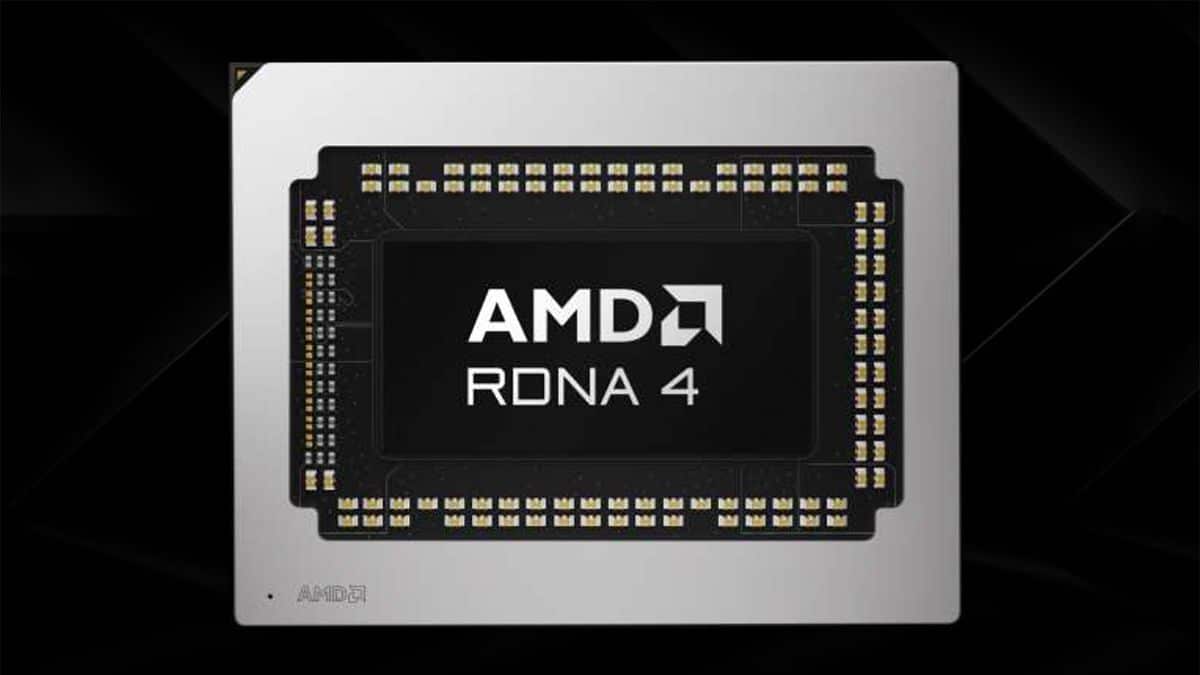
AMD releases its Radeon RX 9000 series graphics cards. The new cards feature the AMD RDNA 4 architecture. This architecture represents the next generation of AMD graphics processing. The company targets improved performance and new features for gamers and content creators.
The Radeon RX 9000 series aims to provide a significant performance boost over previous generations. AMD focuses on delivering better frame rates and enhanced visual fidelity. The RDNA 4 architecture includes changes to the core design. These changes support increased processing power.
AMD details the RDNA 4 architecture. It includes advancements in ray tracing capabilities. Ray tracing allows for more realistic lighting and reflections in games. The new architecture also features updates to its AI acceleration. These updates support tasks such as image upscaling and frame generation.
The company provides information regarding the specific models within the RX 9000 series. The lineup includes cards designed for various performance levels. The top-tier models offer the highest performance. Lower-tier models provide more affordable options.
AMD states the new cards support the latest display technologies. This includes support for high refresh rates and high resolutions. The cards also support the latest versions of DirectX and other graphics APIs. This ensures compatibility with current and future games.
AMD discusses the power consumption of the new cards. The company aims to provide good performance while maintaining reasonable power usage. The RDNA 4 architecture includes power management features. These features help to balance performance and power consumption.
The company outlines the availability of the Radeon RX 9000 series. The cards will launch in phases. The top-tier models will release first. Lower-tier models will follow. Retailers and online stores will sell the cards.
AMD reveals data related to performance benchmarks. The data shows performance gains compared to previous generation cards. Specific game titles and benchmark tools test the cards. The results indicate improvements in frame rates and overall performance.
The new cards feature updated display outputs. This includes DisplayPort 2.1 and HDMI 2.1a. These outputs support high-resolution displays and high refresh rates. Users can connect multiple displays.
AMD includes software features with the new cards. The AMD Software: Adrenalin Edition provides controls for graphics settings. It also includes features for performance monitoring and game recording. The software allows users to customize their graphics experience.
The company provides information regarding the manufacturing process. The RDNA 4 architecture uses an advanced process node. This process node allows for increased transistor density. Increased transistor density leads to improved performance and power efficiency.
AMD details the memory configuration of the RX 9000 series. The cards use GDDR7 memory. GDDR7 memory offers higher bandwidth compared to previous generations. Higher bandwidth allows for faster data transfer. Faster data transfer improves performance in memory-intensive tasks.
The company discusses the cooling solutions for the new cards. AMD designs the cards with effective cooling systems. These cooling systems help to maintain stable performance under load. The cooling systems include fans and heat sinks.
AMD releases pricing information for the Radeon RX 9000 series. The pricing varies depending on the model. The company aims to provide competitive pricing in the graphics card market.
The company explains the target audience for the new cards. The RX 9000 series targets gamers and content creators. Gamers benefit from improved frame rates and visual fidelity. Content creators benefit from faster rendering and encoding.
AMD provides details on the hardware ray tracing units within the RDNA 4 architecture. These units handle ray tracing calculations. Dedicated hardware units improve ray tracing performance.
The company states the new cards support variable refresh rate technology. This technology synchronizes the display refresh rate with the graphics card output. This synchronization reduces screen tearing and stuttering.
AMD releases driver updates for the Radeon RX 9000 series. These driver updates provide performance improvements and bug fixes. The company commits to ongoing driver support.