


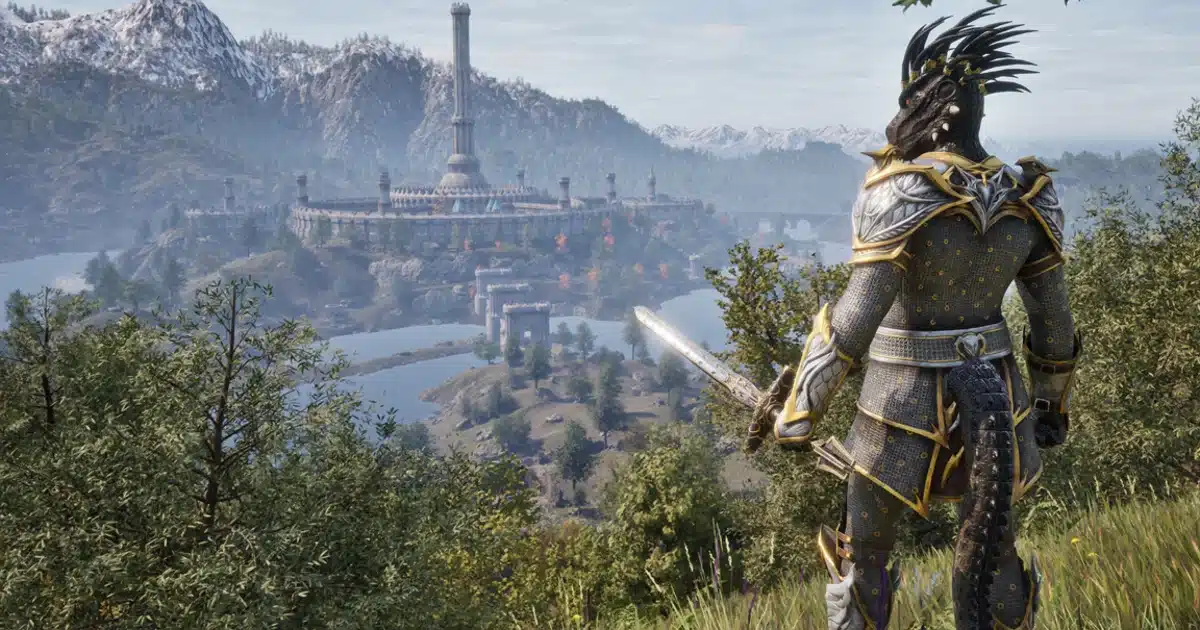
For years, fans of The Elder Scrolls IV: Oblivion have dreamed of revisiting the sun-drenched fields of Cyrodiil with modern graphical fidelity. While Bethesda Game Studios has not released an official remaster, the dedicated PC modding community has taken up the mantle, transforming the 2006 role-playing epic into something visually spectacular. These ambitious community projects layer high-resolution textures, intricate 3D models, advanced lighting effects, and even new gameplay systems onto the aging game engine. The results can look breathtaking, truly giving players a glimpse of what a modern Oblivion could be. Yet, this impressive modernization often comes with a significant cost: performance problems so severe they can turn exploration into a frustrating slideshow.
Exploring a heavily modded Oblivion feels like stepping into a different game entirely. The muddy textures of yesteryear are replaced with crisp, detailed surfaces. Character models gain complexity, shedding their blocky appearance for more natural forms. Distant landscapes, once a blurry mess, render with surprising clarity and depth thanks to enhanced draw distances and improved LOD (Level of Detail) systems. Modders have painstakingly overhauled everything from the bark on trees and the cobblestones in cities to the intricate details on armor and weaponry. Walking through the Market District of the Imperial City with a suite of graphical overhauls applied is a revelation; the architecture pops, the lighting casts realistic shadows, and the sheer level of detail is staggering compared to the vanilla game. Similarly, venturing into a dungeon or a dark ruin feels more atmospheric and immersive when dynamic lighting and shadow mods are at play, casting eerie glows and deep, foreboding darkness.
Beyond visuals, some modernization efforts introduce new gameplay mechanics, refine existing systems, or integrate massive amounts of new content, breathing fresh life into a game many have played for hundreds, if not thousands, of hours. These total overhaul projects aim to fix long-standing bugs, improve AI behavior, or even completely reimagine certain quests or locations. The ambition within the community is undeniable, driven by a deep love for the world of Cyrodiil and a desire to see it reach its full potential on modern hardware.
However, achieving this level of visual and systemic modernization within the confines of Oblivion’s original engine presents a formidable technical challenge. The game was built on a technology stack from the mid-2000s, not designed to handle the demands of 4K textures, complex shader effects, or thousands of simultaneously active scripts. Modding, by its nature, is layering new instructions and assets onto this foundation, often pushing it far beyond its intended limits.
The most immediate and impactful problem users encounter is performance degradation. Frame rates plummet in areas with dense foliage, complex geometry, or multiple dynamic light sources. Cities, especially the Imperial City, become notorious performance sinks as the engine struggles to render the sheer volume of updated assets and process background scripts. Players report significant stuttering, where the game briefly freezes before catching up, completely breaking immersion. This is particularly noticeable when moving between exterior and interior cells or during combat when multiple effects are firing off.
Loading times, already present in the original game due to cell transitions, can become significantly longer with high-resolution texture packs and increased asset counts. The engine has to load much more data, leading to frustrating pauses that disrupt the flow of gameplay. Moreover, engine stability becomes a major concern. While community patches exist to fix core bugs, layering dozens or even hundreds of mods introduces a complex web of potential conflicts. Mods that alter the same game records or scripts can clash, leading to unpredictable behavior, questलाइन breaking bugs, or frequent crashes to the desktop. Debugging a heavily modded Oblivion setup can become a hobby in itself, requiring hours of troubleshooting, installing compatibility patches, and managing load orders.
The memory management of the original Oblivion engine is another bottleneck. It was designed for systems with significantly less RAM than modern gaming PCs. While community-developed memory patches exist, they can only mitigate, not entirely eliminate, the inherent limitations of the 32-bit engine architecture, which struggles to address more than 4GB of RAM effectively. This can lead to crashes, particularly in long gaming sessions or in areas with high memory usage.
Achieving a stable and performant heavily modded Oblivion experience requires powerful hardware, a deep understanding of modding tools and best practices, and a great deal of patience. Users often spend days or weeks curating their mod lists, resolving conflicts, and tweaking configuration files to find a balance between visual fidelity and playability. Even then, perfection remains elusive, and occasional stutters or inexplicable crashes can still occur.
The situation highlights the double-edged sword of community-driven modernization. On one hand, it allows fans to keep beloved older games visually competitive and introduce desired features that developers might never implement. The passion and skill of these modders are truly remarkable, creating experiences that feel fresh and exciting. On the other hand, they are working against the fundamental limitations of the original game engine, leading to performance struggles that can significantly detract from the overall enjoyment.
So, while the dream of a truly modern, smooth-running Oblivion with all the visual bells and whistles remains, the reality for those who venture into the deepest realms of Oblivion modding is a trade-off. You can have breathtaking visuals and expanded content, but be prepared for a fight with frame rates and stability. It’s a testament to the enduring quality of Oblivion itself that so many players are willing to undertake this technical challenge, all for the chance to experience Cyrodiil anew, even if the path is paved with performance frustrations. The community’s work is undeniably impressive, pushing the boundaries of what was thought possible with the game, but the dire performance issues serve as a constant reminder of the technical debt inherited from a different gaming era.