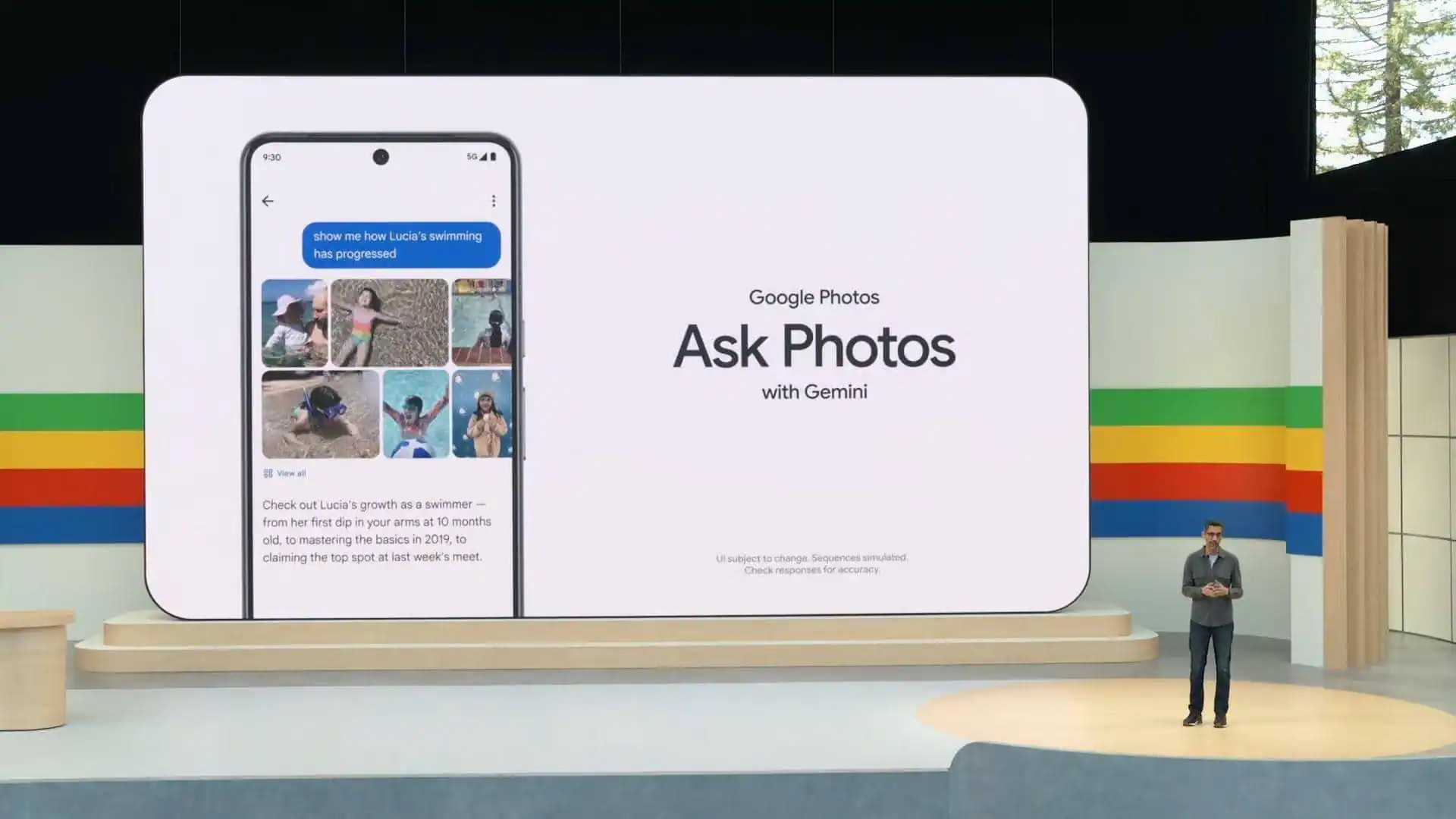
Google has begun rolling out an updated version of its AI-powered Ask Photos feature within Google Photos, following a series of refinements. This new rollout reflects the company’s ongoing commitment to enhancing its photo management service with cutting-edge AI, offering users a more intuitive way to interact with their photo libraries. The initial rollout faced challenges, prompting Google to pause its release for significant improvements before bringing it back to a wider audience.
- Key Takeaways:
- The Genesis of Ask Photos: A Vision for Intuitive Photo Management
- The Initial Pause and Its Rationale
- The Refined Approach: What’s New?
- How Ask Photos Works
- The Technology Behind the Smarts
- Addressing User Concerns: Privacy and Data
- The Broader Impact on Photo Management
- Rollout and Availability
- Frequently Asked Questions
Key Takeaways:
- Google has relaunched its AI-powered Ask Photos feature in Google Photos.
- The initial rollout was paused to address performance issues, including inaccuracies and “hallucinations.”
- The refined version promises improved accuracy, stronger safety measures, and better contextual understanding.
- Ask Photos allows users to search, retrieve, and organize photos using natural language queries, like “show me photos of my dog at the beach last summer.”
- The feature leverages Google’s advanced Gemini multimodal AI models to process complex queries.
- The phased rollout begins in specific regions and user groups, across various devices.
- Google prioritizes privacy and control, assuring users that data will not be used for advertising.
The Genesis of Ask Photos: A Vision for Intuitive Photo Management
Google Photos has long been a favorite for organizing and sharing images, relying on AI for basic tasks like categorizing photos by objects, people, or locations. However, the Ask Photos feature marks a bold step forward. Unveiled during Google’s developer conferences, Ask Photos was designed to enable users to ask natural language questions and retrieve specific memories or details from their vast image libraries. The goal? To make searching through endless photos more intuitive by moving beyond basic tagging to create a more conversational experience.
Instead of scrolling through years of memories or relying on keyword searches, users can simply ask questions like “Find all my photos of the family at the beach last summer.” This deeper approach could unlock new insights and facilitate easier photo recall, providing users with a more fluid, search-driven experience.
The Initial Pause and Its Rationale
After a limited initial release, Ask Photos encountered what Google referred to as “early challenges.” Early testers, and the broader tech community, reported issues such as the AI misinterpreting queries, providing inaccurate descriptions, or even generating “hallucinations.” This term refers to when AI generates information that appears plausible but is actually incorrect or inconsistent with reality. While these issues weren’t widespread, they were significant enough for Google to halt the broader rollout temporarily.
This pause gave the company time to refine the AI models and ensure the feature met its standards for both accuracy and safety. It also highlighted the challenges of applying advanced generative AI to sensitive personal data like photos. Google’s main goal during this time was to fine-tune the system, especially when it came to ensuring factual correctness and implementing appropriate content moderation.
The Refined Approach: What’s New?
According to Google, the revamped Ask Photos feature has undergone several key improvements, focusing on three main areas: enhanced accuracy, strengthened safety measures, and improved contextual understanding.
The refined system now delivers more accurate responses to user queries. Through further training of its underlying models—especially Google’s Gemini models—Google has improved its ability to interpret complex requests. The Gemini system is multimodal, meaning it can understand text, images, and audio, enabling it to process both natural language queries and the visual content within photos.
On the safety front, Google has added stronger filters and content moderation to ensure that the AI avoids generating harmful or inappropriate content. These measures are crucial for a feature that deals with highly personal media. Moreover, Ask Photos now shows better contextual understanding. It can more effectively interpret the intent behind a user’s query, going beyond simple keywords to understand broader themes or relationships in the photos. For instance, it can now identify pictures of kids in blue clothing, even if the shades vary or other colors dominate the frame.
How Ask Photos Works
Ask Photos allows users to interact with their photo libraries using natural, conversational language. Instead of manually searching through years of photos, users can type or speak their requests. Here are a few examples of what Ask Photos can do:
- Specific Object/Activity Retrieval: “Show me all photos of my cat playing with the red ball.” The AI identifies both the cat, the red ball, and the activity of playing.
- Contextual Event Search: “Find all pictures from my trip to the mountains last fall.” This involves using location, date, and visual cues (like autumn colors) to narrow down results.
- Information Extraction: “How many birthday cakes have I photographed this year?” The AI can tally specific items across a timeline.
- Identification of Text/Details: “Show me photos of receipts from my vacation in July.” The AI can extract text from images and link it to specific documents.
- Summarization/Thematic Grouping: “Create a collage of my family gatherings this past year.” The AI groups relevant images based on specific events or themes.
The feature analyzes user queries, cross-references them with metadata and image data, and presents the most relevant results. This goes beyond basic tagging, allowing the AI to recognize and understand more complex nuances in both visual content and user requests.
The Technology Behind the Smarts
At the heart of Ask Photos is Google’s Gemini AI family. These large multimodal models are designed to interpret various types of data—text, images, and even audio. When a user submits a query, Gemini processes the natural language and uses its visual recognition capabilities to scan through photos, identifying objects, scenes, and even emotions. The system then delivers the most relevant photos based on its understanding of the request.
The continuous refinement of Gemini’s training allows it to recognize a growing number of visual elements and contextual relationships, resulting in better performance and more accurate responses for users.
Addressing User Concerns: Privacy and Data
As with any AI tool handling personal data, privacy is a major concern. Google assures users that Ask Photos queries and the content of their photo libraries are not used for advertising. All data processing occurs within the Google Photos environment and adheres to the company’s privacy policies.
Google also emphasizes that users retain full control over their data, including the ability to delete photos and manage settings. The feature is also designed with robust content moderation policies to ensure responses remain safe and respectful. Users can also view and manage how their information is used, providing transparency and building trust with the service.
The Broader Impact on Photo Management
Ask Photos represents a significant shift in how users interact with their photo libraries. Managing extensive photo collections can be overwhelming, but this AI-powered feature transforms the experience. Instead of relying on folders and manual organization, Ask Photos allows users to search their memories through natural language queries, which makes finding specific images far easier. It can help users rediscover old memories and even create new content from their photos.
In a sense, Ask Photos turns your photo library from a static archive into a dynamic, responsive tool for rediscovery. It changes the way we interact with our personal histories, offering a more intelligent, personalized approach to photo management.
Rollout and Availability
Google’s refined Ask Photos feature is being rolled out in phases. This gradual rollout allows Google to monitor performance, gather feedback, and make adjustments in real-time. It will be available across multiple platforms, including Android and iOS devices, as well as through the web interface.
The feature is being launched initially in select regions and user groups, with a wider rollout expected over the coming weeks and months. As the feature becomes available, users will notice an “Ask Photos” prompt or dedicated search function within the Google Photos app. Continued updates and refinements are expected as Google learns from the user experience during this new phase.
Frequently Asked Questions
Q1: What is Google Ask Photos?
A1: Ask Photos is an AI-powered feature within Google Photos that lets you search and interact with your photo library using natural language queries, like “show me pictures of my dog at the park.”
Q2: Why was Ask Photos paused after its initial release?
A2: The initial release of Ask Photos faced issues such as inaccurate search results and AI “hallucinations.” Google paused the feature to address these problems before a wider rollout.
Q3: What improvements have been made in the re-launched Ask Photos?
A3: The re-launched version includes better accuracy, enhanced safety measures, and improved contextual understanding of photo content.
Q4: Which AI technology powers Ask Photos?
A4: Ask Photos is powered by Google’s Gemini multimodal AI models, which allow it to interpret both text and visual data within images.
Q5: Is my photo data used for advertising when I use Ask Photos?
A5: No, Google has confirmed that your photo library data is not used for advertising. It remains subject to Google Photos’ privacy policies.
Q6: On what devices will Ask Photos be available?
A6: Ask Photos will be available on Google Photos across Android and iOS devices, as well as on the web. The rollout is phased by region and user group.
Q7: Can Ask Photos help me organize my photos better?
A7: Yes, Ask Photos enables dynamic, query-driven searches, helping you quickly find and categorize your photos based on complex criteria that would be hard to manage manually.
Ask ChatGPT