

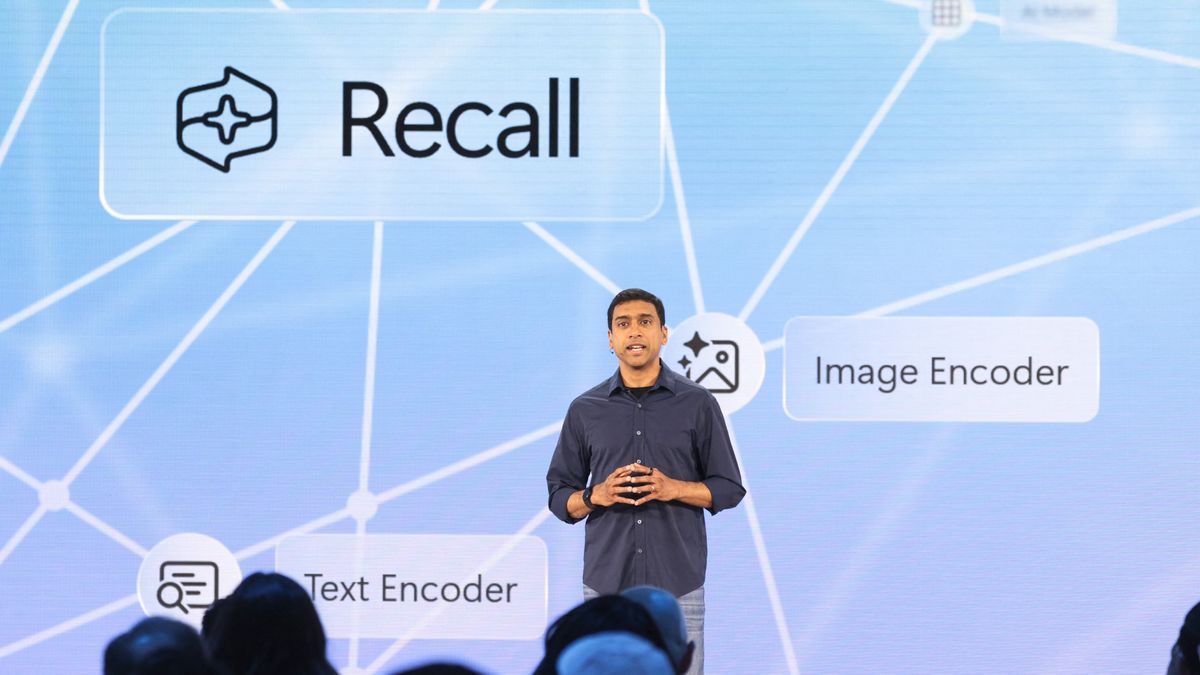
After a period of anticipation and multiple delays, Microsoft’s AI-powered Recall feature is beginning its rollout to Copilot+ PCs. This marks a significant step for Microsoft’s vision of AI deeply integrated into the Windows experience, allowing users to effortlessly search and retrieve past activity on their computers. However, the journey to this release has been anything but smooth, marked by considerable privacy concerns that forced Microsoft to re-evaluate and redesign key aspects of the feature.
Initially announced as a flagship capability for the new Copilot+ PCs in May 2024, Recall promised a “photographic memory” for your digital life. The idea was simple yet powerful: by periodically taking snapshots of your screen, Recall would create a searchable timeline of everything you’ve seen and done on your PC. Imagine easily finding that webpage you visited last week, the document you worked on days ago, or even a specific chat message, simply by describing what you remember seeing. The potential for boosting productivity seemed immense.
However, the initial unveiling was met with immediate and intense scrutiny from privacy advocates and security researchers. Concerns were quickly raised about the sheer volume of data being captured and stored, and the potential for this information to be vulnerable to unauthorized access or malicious attacks. The thought of a comprehensive record of your on-screen activity, including potentially sensitive information like passwords or financial details, stored locally, sent shivers down the spine of many. The backlash was swift and significant, prompting Microsoft to pump the brakes on the planned wider release.
Following the strong reaction, Microsoft made the decision to delay Recall’s general availability. This delay, which stretched for months, was dedicated to addressing the critical privacy and security concerns raised by the public and experts. Microsoft engineers went back to the drawing board, focusing on implementing safeguards designed to build trust and give users greater control over their data.
The most significant change resulting from this re-evaluation is that Recall is now an opt-in feature. During the setup process for new Copilot+ PCs, users will be explicitly asked if they want to enable Recall. If you choose not to, snapshots will not be taken or saved. This moves away from the initial perception that the feature might be enabled by default, a point of major contention for many.
Furthermore, Microsoft has emphasized that all snapshots and the associated data are stored and processed entirely locally on the user’s device. This data is not sent to Microsoft’s cloud or shared with third parties. To protect this local data, Microsoft has implemented encryption for the snapshot database. Accessing the Recall timeline and its contents requires authentication using Windows Hello Enhanced Sign-in Security, meaning you typically need to verify your identity through facial recognition, a fingerprint, or a PIN linked to your Windows account before you can view your past activity. This adds a layer of security, aiming to prevent unauthorized access to your stored snapshots even if your device falls into the wrong hands.
Microsoft also highlights that Recall includes filters designed to avoid capturing sensitive information, such as passwords and certain financial data, though the effectiveness and scope of these filters remain an area of ongoing interest. Users also have granular control over what gets captured. You can exclude specific applications or websites from being included in the snapshots, and you have the ability to delete specific snapshots, time ranges, or even the entire Recall history. The company has also confirmed that users can fully uninstall the Recall feature if they decide they do not want it on their PC.
The rollout of Recall is happening gradually, starting with Copilot+ PCs through a Windows 11 non-security preview update in late April 2025. This phased approach allows Microsoft to monitor the feature’s performance and gather further feedback from a wider user base before a potentially broader release. It is important to note that Recall remains exclusive to Copilot+ PCs, which require specific hardware capabilities, including a Neural Processing Unit (NPU) with at least 40 Tera Operations Per Second (TOPS), 16GB of RAM, and 256GB of storage with a minimum of 50GB free space for the feature to function. This means that older PCs, even those running Windows 11, will not be able to utilize Recall.
For those who choose to enable it, Recall appears as an icon on the taskbar, providing a visual indicator that the feature is active. Opening Recall presents a timeline that you can scroll through to revisit past moments. The AI capabilities allow you to use natural language queries to search for specific content within these snapshots, making it easier to locate information without remembering exactly where you saw it.
The delayed release and the subsequent security and privacy enhancements demonstrate Microsoft’s response to the intense public scrutiny. Whether these measures are sufficient to alleviate user concerns and build confidence in a feature that inherently records significant personal activity remains to be seen. The success of Recall will likely depend on how well these safeguards perform in real-world usage and whether users feel genuinely in control of their digital history.
As Recall makes its way to the first wave of Copilot+ PC owners, the conversation around its utility versus its potential privacy implications will undoubtedly continue. For now, the choice rests with the user: will you enable this AI-powered memory and potentially change how you interact with your PC, or will the lingering privacy worries keep you from embracing Recall?