

OpenAI has introduced a new feature that brings Shazam-powered music recognition directly into the ChatGPT app. Instead of switching between different apps to identify a song, users can now ask the AI to recognize music playing around them.
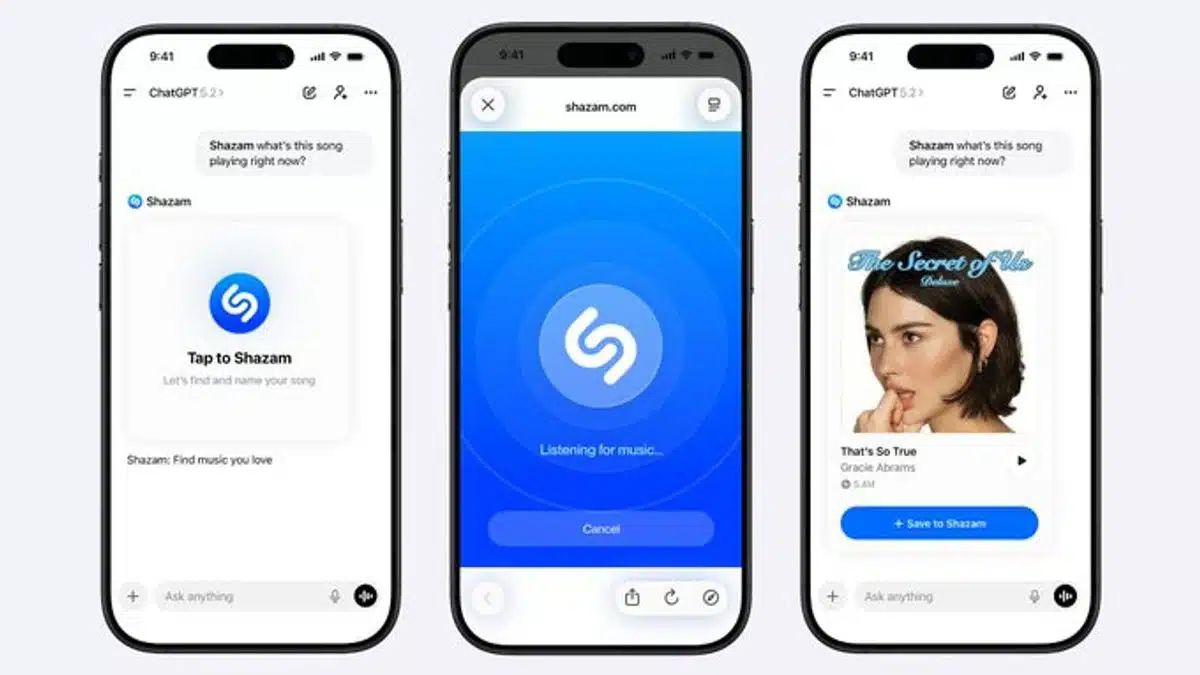
The update rolled out globally on March 9, 2026, enabling ChatGPT to listen to ambient audio and identify songs in real time. Once recognized, the AI displays the song title, artist name, and a short audio preview, making it easier for users to quickly discover or confirm the track they are hearing.
To trigger the feature, users simply need to type or say a command like “Shazam, what is this song?” within the chat interface.
Key Takeaways
- Direct Integration: Shazam technology is now embedded directly inside the ChatGPT application.
- Global Availability: The feature is rolling out worldwide across mobile devices.
- Audio Previews: Users can listen to short snippets of the identified song directly in chat.
- Library Sync: Identified tracks automatically appear in the Shazam app library if it is installed.
- Standalone Support: The feature works even if the separate Shazam app is not installed on the device.
How the Music Recognition Works
The integration relies on the same acoustic fingerprinting technology that powers Shazam on Apple devices.
When a user asks ChatGPT to identify a song, the application activates the device’s microphone to capture a short audio sample. That audio sample is then converted into a unique digital fingerprint and compared with a large global music database.
If the system finds a match, ChatGPT displays the track title, artist name, and listening options. In many cases, users can also play a short preview clip directly inside the chat interface.
To enable this feature, users need to activate it in the settings:
Open ChatGPT Settings.
- Navigate to the Apps or Integrations section.
- Select Shazam from the list of available tools.
- Grant microphone permission if prompted.
Once enabled, any command that includes the word “Shazam” followed by a music query will trigger song recognition
A Shift in Digital Habits
This integration reflects a broader trend in how people interact with mobile technology. In the past, identifying a song meant quickly unlocking a phone, launching a music recognition app, and hoping the track was still playing.
By bringing Shazam functionality directly into ChatGPT, OpenAI is gradually turning its chatbot into a central hub for everyday tasks, from answering questions to recognizing music in real time.
Shazam itself has long been the leading platform for song identification. Apple acquired the service in 2018, and its technology has since been embedded into multiple ecosystems.
For users in India, where AI apps are increasingly used for both productivity and entertainment, this feature could make the ChatGPT mobile experience more convenient. Instead of juggling multiple apps, music discovery now becomes part of the same conversational interface.
Frequently Asked Questions
Q1: Do I need a paid ChatGPT subscription to use Shazam?
A1: No. The music recognition feature is being rolled out to both free and paid ChatGPT users, although usage limits may depend on the account tier.
Q2: Will ChatGPT store my voice recordings?
A2: ChatGPT only accesses the microphone when the Shazam command is used to identify a song. Users can manage microphone permissions through their phone’s privacy settings.
Q3: Can ChatGPT identify hummed or whistled songs?
A3: Shazam technology primarily recognizes recorded music tracks. While it works very well for songs playing from speakers or radio, it may struggle to identify tunes based only on humming or whistling.
Q4: Does this feature work on Android and iOS?
A4: Yes. The integration is available on the ChatGPT mobile app for both Android and iOS, provided the app is updated to the latest version.