

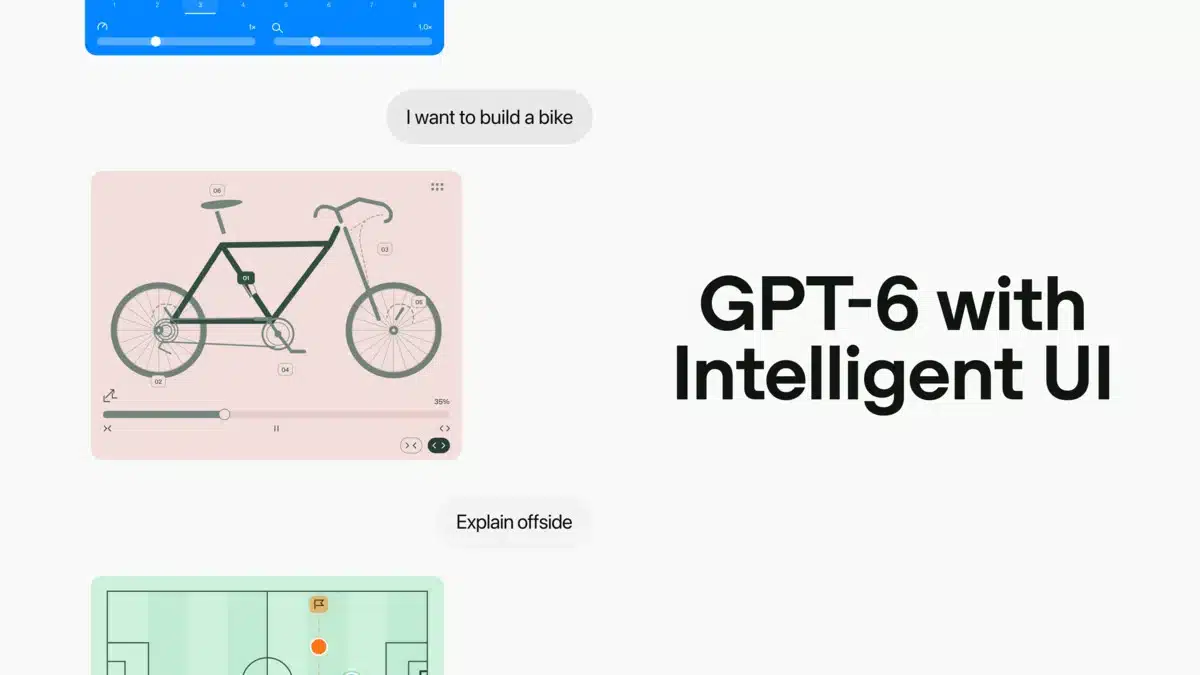
OpenAI released GPT-6 across ChatGPT on Oct. 7, 2026, pairing the model with an Intelligent UI that turns text outputs into interactive buttons, calculators, dynamic charts, and forms. The launch covers ChatGPT Plus, Pro, Business, and Enterprise members right away, while Free and Go tier accounts receive access starting Oct. 8. With this change, the chatbot moves away from plain text walls, allowing the system to choose how to present data based on individual prompts.
Key Takeaways
- Paid users receive the GPT-6 Sol model, while Free and Go subscribers run on GPT-6 Luna.
- The Intelligent UI creates widgets inside chat conversations, such as bill splitters, savings calculators, interactive maps, and learning charts.
- GPT-6 Instant begins outputting responses 44 percent faster on web search queries compared to GPT-5.6 Instant.
- The model streams components gradually, letting readers see interface parts appear while internal reasoning continues.
- Codex and ChatGPT Work tools remain on earlier model versions and do not feature this interface.
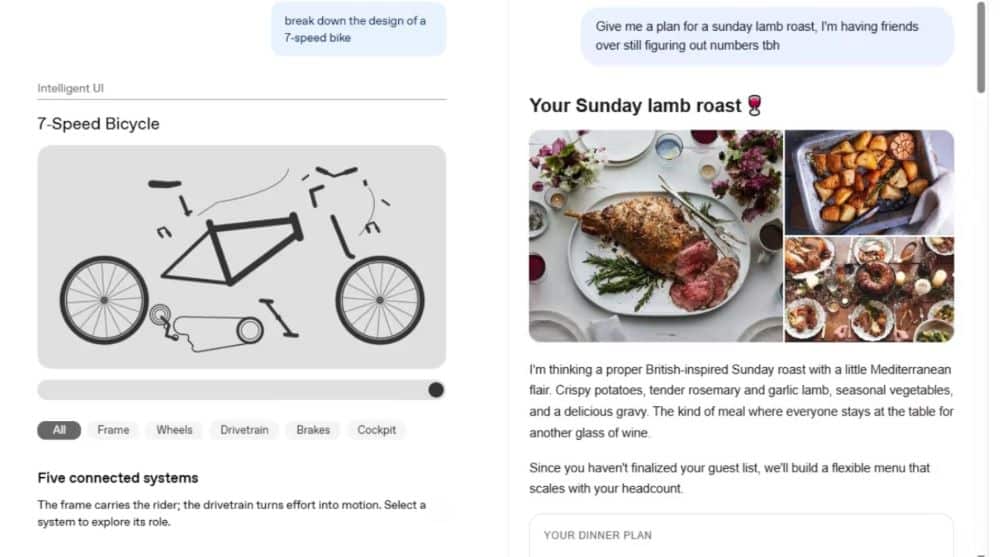
Interactive Elements Replace Plain Text
Artificial intelligence company OpenAI, based in San Francisco, designed Intelligent UI to give ChatGPT a dynamic layout. Rather than delivering standard text blocks, the model determines whether an answer works best as a table, a visual guide, or a functioning tool.
For instance, when users ask to calculate returns on an investment plan, the chat produces an adjustable calculator. Moving sliders for interest rates or deposit amounts updates figures instantly on screen. Similarly, travel queries can surface visual itineraries with stops laid out on interactive maps rather than bullet lists. OpenAI relies on a native streamable compiler that draws these components line by line as the output develops.
Speed and Model Allocation Across Tiers
OpenAI separated the deployment across two October builds. Plus and Pro tiers run GPT-6 Sol, while Free and Go tiers receive GPT-6 Luna. The Pro reasoning mode relies on GPT-6 Astra, which stays focused on text-based processing without interface controls.
The company claims GPT-6 responds earlier during complex tasks. When searching web links, GPT-6 Instant starts writing answers 44 percent sooner than the earlier GPT-5.6 Instant model. The model also writes visible lines while background thinking progresses, avoiding long pauses before any output appears.
Safety documents released alongside the update state that Sol achieves 97.13 percent robustness against indirect prompt injections, with Luna scoring 95.80 percent. Factuality scores improved, though internal benchmarks note room to refine model judgment on when a widget helps more than standard prose.
Frequently Asked Questions
Q1. Which ChatGPT accounts can use GPT-6 and Intelligent UI?
A1. All ChatGPT users can access the update. Paid subscribers (Plus, Pro, Business, Enterprise) gained access on Oct. 7, 2026, on GPT-6 Sol, while Free and Go users access GPT-6 Luna starting Oct. 8, 2026.
Q2. What types of interactive widgets does Intelligent UI generate?
A2. The interface builds functional calculators, dynamic graphs, forms, route maps, and data tables directly inside chat conversations.
Q3. Does the GPT-6 update apply to ChatGPT Work and Codex?
A3. No, OpenAI left ChatGPT Work and Codex on existing September builds, keeping the Intelligent UI limited to the primary Chat interface.