

Samsung has officially announced its premium home audio lineup for 2026, and this year’s approach feels a little more thoughtful than just pushing bigger numbers. The new range is led by the flagship HW-Q990H soundbar, alongside a designer-focused Music Studio speaker series. Both are scheduled to be showcased at CES 2026 in Las Vegas.
What stands out immediately is the emphasis on artificial intelligence, not as a buzzword, but as a practical tool to improve everyday listening. Samsung seems especially focused on two things: making dialogue easier to hear and ensuring all audio devices in a home work together more smoothly. It is not a radical reinvention of home audio, but rather a careful refinement that, on paper at least, feels well considered.
Key Takeaways
- Flagship Performance: The HW-Q990H delivers an 11.1.4-channel system with new Sound Elevation and Auto Volume features.
- All-in-One Design: The HW-QS90H packs 7.1.2-channel audio into a single soundbar using a Quad Bass Woofer system.
- Music Studio Series: New Wi-Fi speakers designed by Erwan Bouroullec support spatial audio and high-resolution playback.
- Expanded Q-Symphony: Samsung TVs can now sync with up to five audio devices at the same time.
- AI Tuning: Features like AI Dynamic Bass Control aim to reduce distortion at higher volumes.
The New Flagship HW-Q990H Soundbar
The HW-Q990H takes over as Samsung’s top-tier soundbar for 2026, replacing the 2025 Q990F. At first glance, the specifications look familiar. It keeps the same expansive 11.1.4-channel configuration, made up of 11 surround channels, one subwoofer, and four up-firing channels for height effects. The physical setup includes the main soundbar, a wireless subwoofer with dual 8-inch drivers, and two wireless rear speakers.
Where things start to feel different is in how Samsung is using those channels. The headline addition this year is Sound Elevation. This feature uses the up-firing drivers to subtly lift dialogue so voices appear to come from the center of the TV screen itself. Instead of voices sounding anchored to the soundbar below, dialogue feels more naturally placed, which is something many setups struggle with, even at this price level.
Samsung has also introduced Auto Volume, a feature that addresses a familiar frustration. Sudden jumps in loudness, especially when switching between content and advertisements, are smoothed out automatically. It is not flashy, but it is the kind of quality-of-life improvement that most people notice quickly once it is gone.
Versatile Audio with the HW-QS90H
For users who prefer a cleaner, less cluttered setup, Samsung is offering the HW-QS90H. This is positioned as a premium all-in-one soundbar, and it manages to deliver a 7.1.2-channel sound field from a single unit. Inside are 13 built-in drivers, working together without the need for a separate subwoofer.
Low-end performance comes from the Quad Bass Woofer system, which uses four dedicated bass drivers to move enough air for a convincing sense of depth. While it is realistic to assume it will not fully replace the impact of a standalone 8-inch subwoofer, Samsung is clearly targeting balanced, distortion-free bass that works well in typical living rooms.
One of the more practical features here is Convertible Fit. A built-in gyro sensor detects whether the soundbar is placed flat on a surface or mounted on a wall. Once it knows its orientation, the system automatically adjusts the audio channels so left, right, and height effects remain properly aligned. It is a small detail, but it removes a layer of setup guesswork that many users quietly dislike.
Music Studio Speaker Series
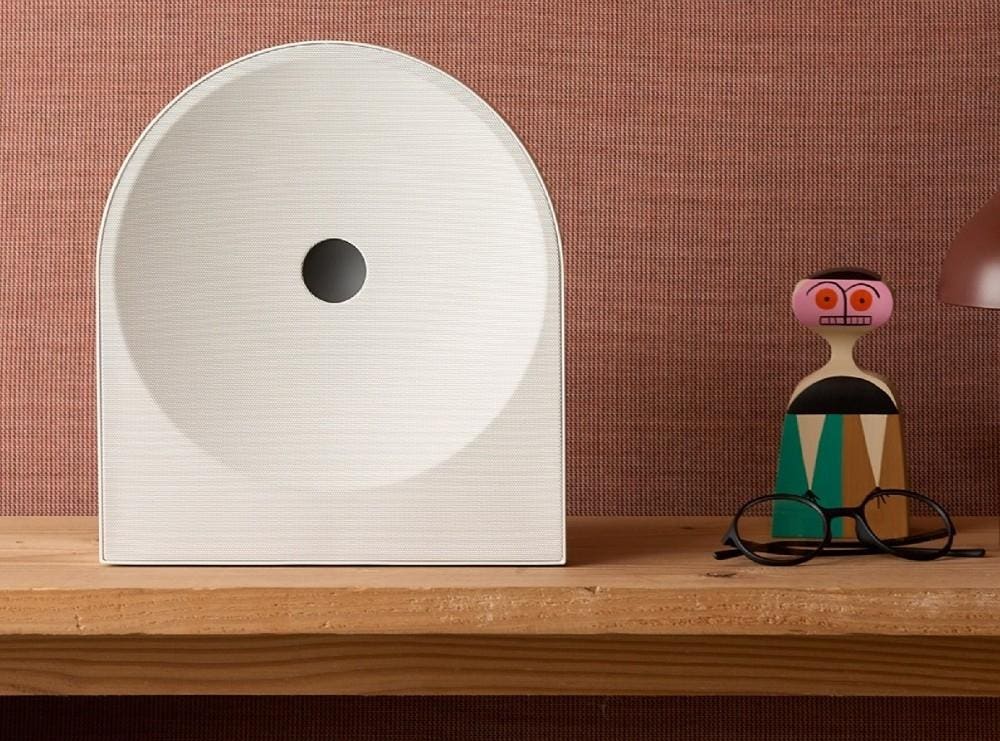
Beyond soundbars, Samsung is also expanding into more design-forward audio with the Music Studio series. This includes the Music Studio 5 (LS50H) and Music Studio 7 (LS70H). Both are Wi-Fi speakers created in collaboration with French designer Erwan Bouroullec, and they feature a distinctive dot-inspired design that feels closer to modern art than traditional audio equipment.
The Music Studio 7 sits at the top of the range and offers a 3.1.1-channel spatial audio configuration. It supports High-Resolution Audio up to 24-bit/96kHz and includes a super tweeter capable of reaching frequencies as high as 35kHz. That level of extension is aimed at listeners who care about fine detail, even if some of it sits beyond what most people consciously hear.
Both Music Studio models use AI Dynamic Bass Control. This system actively manages bass output to keep it clean and controlled, even at higher volume levels. The idea is to avoid the muddiness and distortion that often creep in when compact speakers are pushed hard.
A Smarter Ecosystem
The broader 2026 lineup benefits from an upgraded version of Samsung’s Q-Symphony technology. In previous generations, there were limits to how many devices could be synchronized. The new system removes many of those restrictions, allowing a compatible Samsung TV to work in harmony with up to five separate audio devices at once.
AI plays a role here as well. The system analyzes the room layout and adjusts how sound is distributed across all connected speakers. In theory, this should create a more cohesive and immersive experience, especially in larger or irregularly shaped rooms. It is ambitious, and perhaps a little optimistic, but it shows where Samsung sees the future of home audio heading.
Frequently Asked Questions
Q1: What is the main advantage of the HW-Q990H over last year’s model?
A1: While the overall channel count remains the same, the HW-Q990H introduces Sound Elevation for more natural dialogue placement and Auto Volume to keep loudness consistent across different types of content.
Q2: Can the Music Studio speakers be used as rear speakers for my TV?
A2: Yes. Using the SmartThings app and Q-Symphony technology, Music Studio speakers can be paired with compatible Samsung TVs and soundbars to function as rear or additional surround channels.
Q3: Does the HW-QS90H really provide enough bass without a separate subwoofer?
A3: The HW-QS90H relies on its Quad Bass Woofer system, which uses four dedicated bass drivers. While it may not match the raw output of a standalone 8-inch subwoofer, it is designed to deliver deep, controlled bass suitable for most living spaces.
Q4: What is the Convertible Fit feature in the QS90H?
A4: Convertible Fit allows the soundbar to be placed either flat on a shelf or mounted on a wall. A built-in gyro sensor detects the position and automatically adjusts the audio processing so all channels remain correctly oriented.