

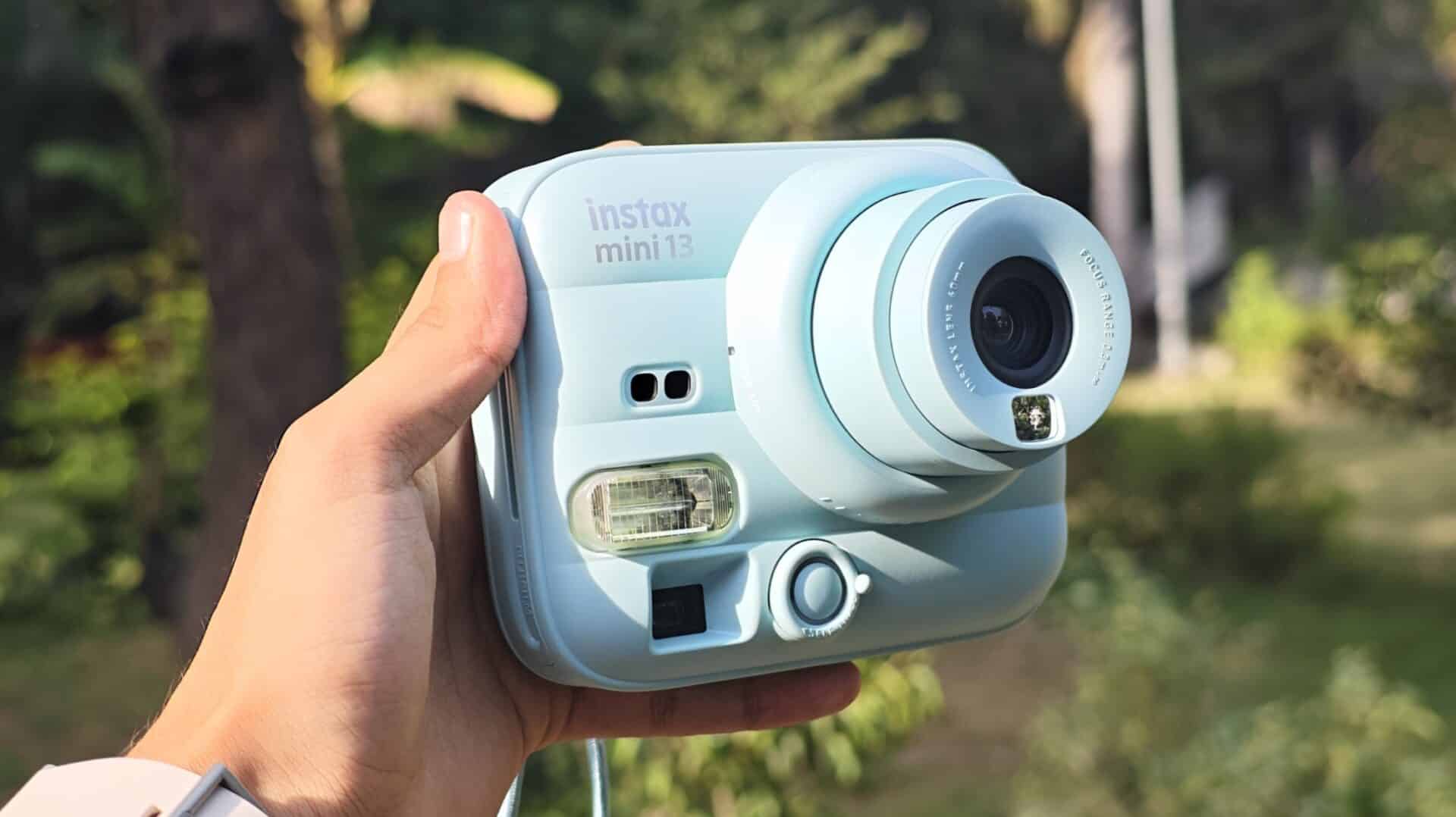
I bought the Fujifilm Instax Mini 13 in its Blue finish to evaluate how Fujifilm updated its primary instant camera formula. Over 2 months of continuous usage, I tested this unit across family gatherings, evening street markets, and outdoor weekend trips in Delhi. Instant film has seen steady growth across India, particularly among young photography enthusiasts and partygoers who want physical prints immediately.
Key Takeaways
- Simple twist-lens mechanism powers on the camera and switches directly to Close-Up mode.
- Built-in automatic exposure and constant flash manage light without requiring manual adjustments.
- Close-Up mode uses parallax correction to align the viewfinder with the physical camera lens.
- Powered by two standard AA alkaline batteries that last for approximately 100 shots.
- Retains the classic 62 x 46 mm instant film format with traditional white borders.
- Costs ₹7,999 in India, providing an accessible entry point into physical photography.
Fujifilm holds a prominent position in the analog photography space with its Instax series. The company started its imaging business in Japan back in 1934 and introduced the Instax line in 1998. The system relies on self-developing chemical prints that form an image right before your eyes within minutes. The Instax Mini 13 builds on this legacy, aiming for ease of use while attempting to fix common framing mistakes that affected older versions.
Design, Build, and Handling
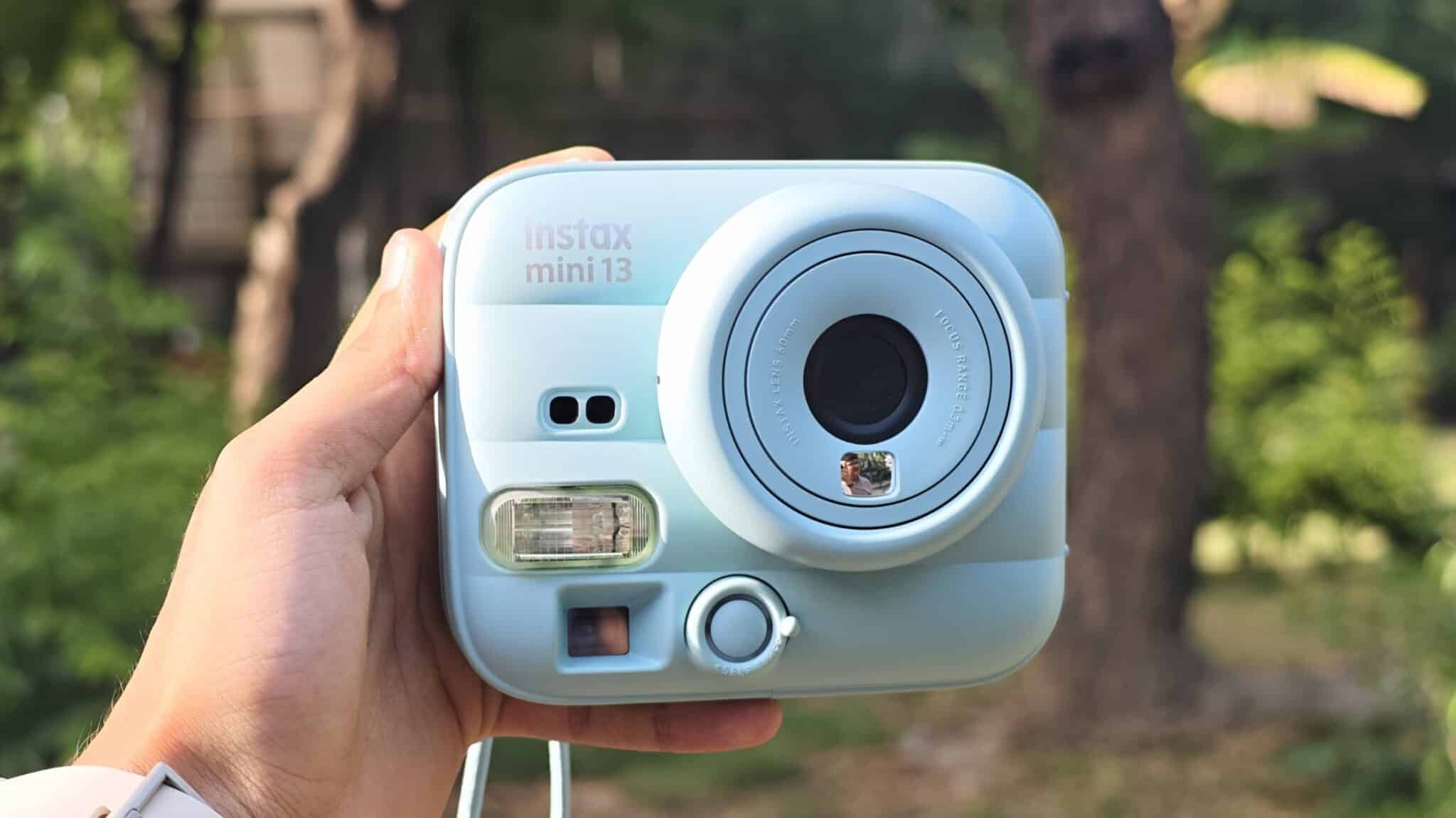
The Instax Mini 13 Blue unit features a smooth pastel shade with rounded edges throughout its body. The shell uses hard matte plastic that resists fingerprints reasonably well during long photo sessions. It weighs 327 grams without batteries or a film pack loaded. Adding the two AA batteries and a 10-shot cartridge brings the weight close to 380 grams, which sits comfortably in your hands during handheld shooting.
The front grip area gives your right hand a secure holding surface. Turning on the camera does not require a dedicated power button. You twist the lens ring from the OFF position to ON, and twisting the lens ring a second step shifts the internal optics into CLOSE-UP mode. This physical action feels firm, though the mechanical plastic click can sound a bit hollow in quiet rooms.
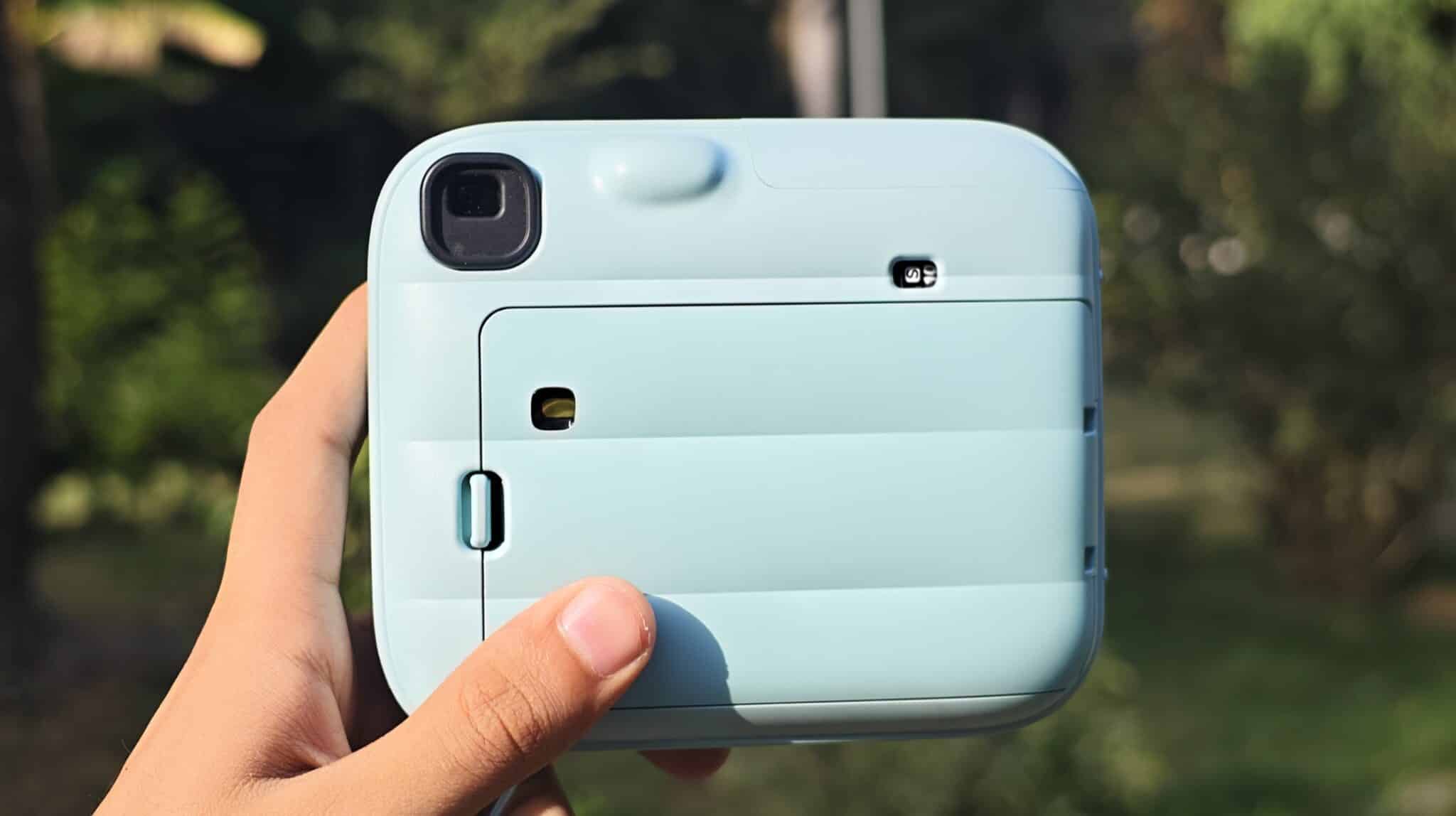
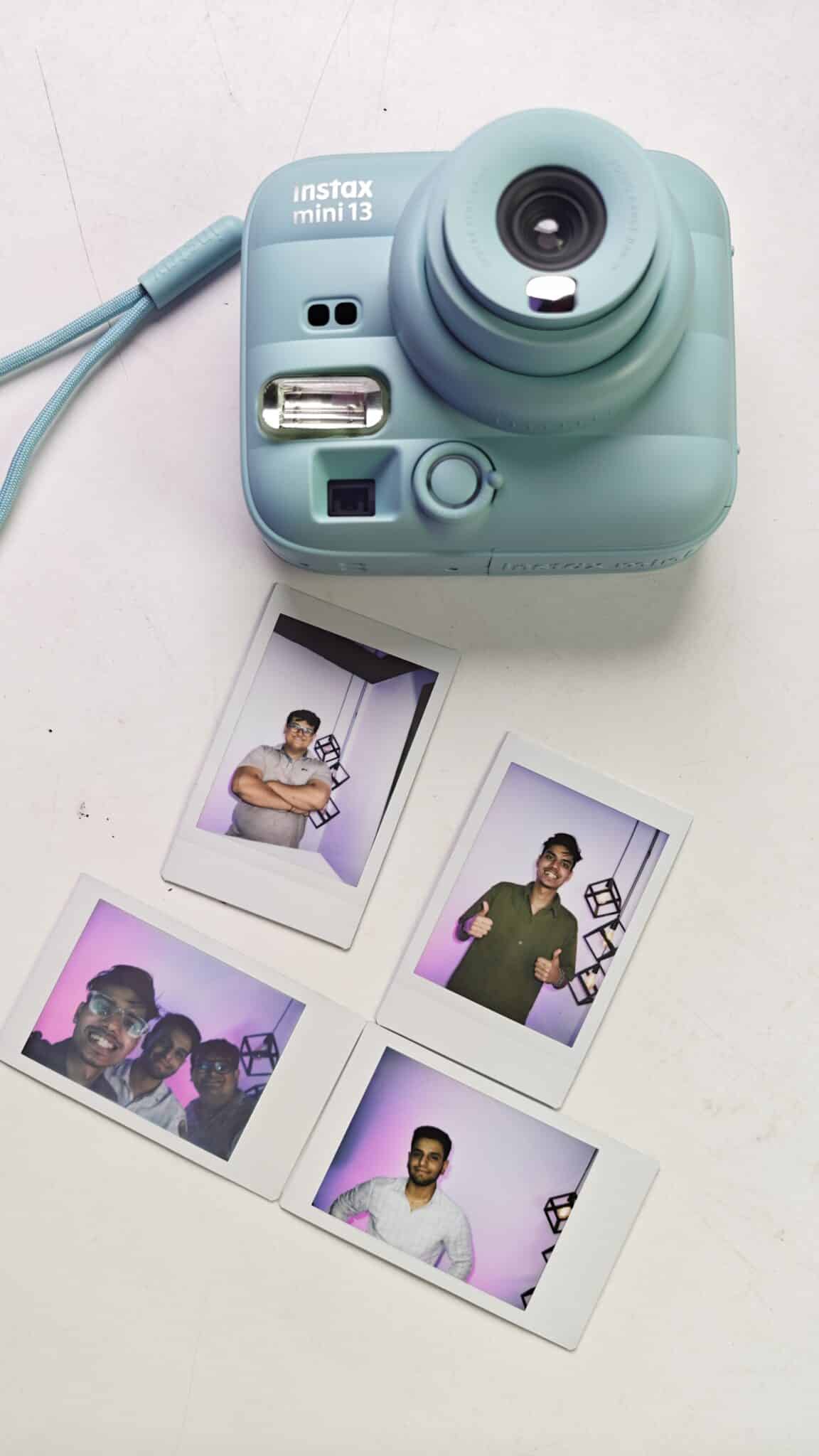
The rear panel keeps controls extremely simple. You find a mechanical film door latch, a clear counter window showing remaining shots, and a small transparent rectangle that lets you verify if a film pack is loaded. A wrist strap mounts on the side lug. I strongly recommend attaching this strap immediately, as the smooth plastic exterior can slip if your fingers get sweaty in warm Indian summers.
Viewfinder and Close-Up Alignment
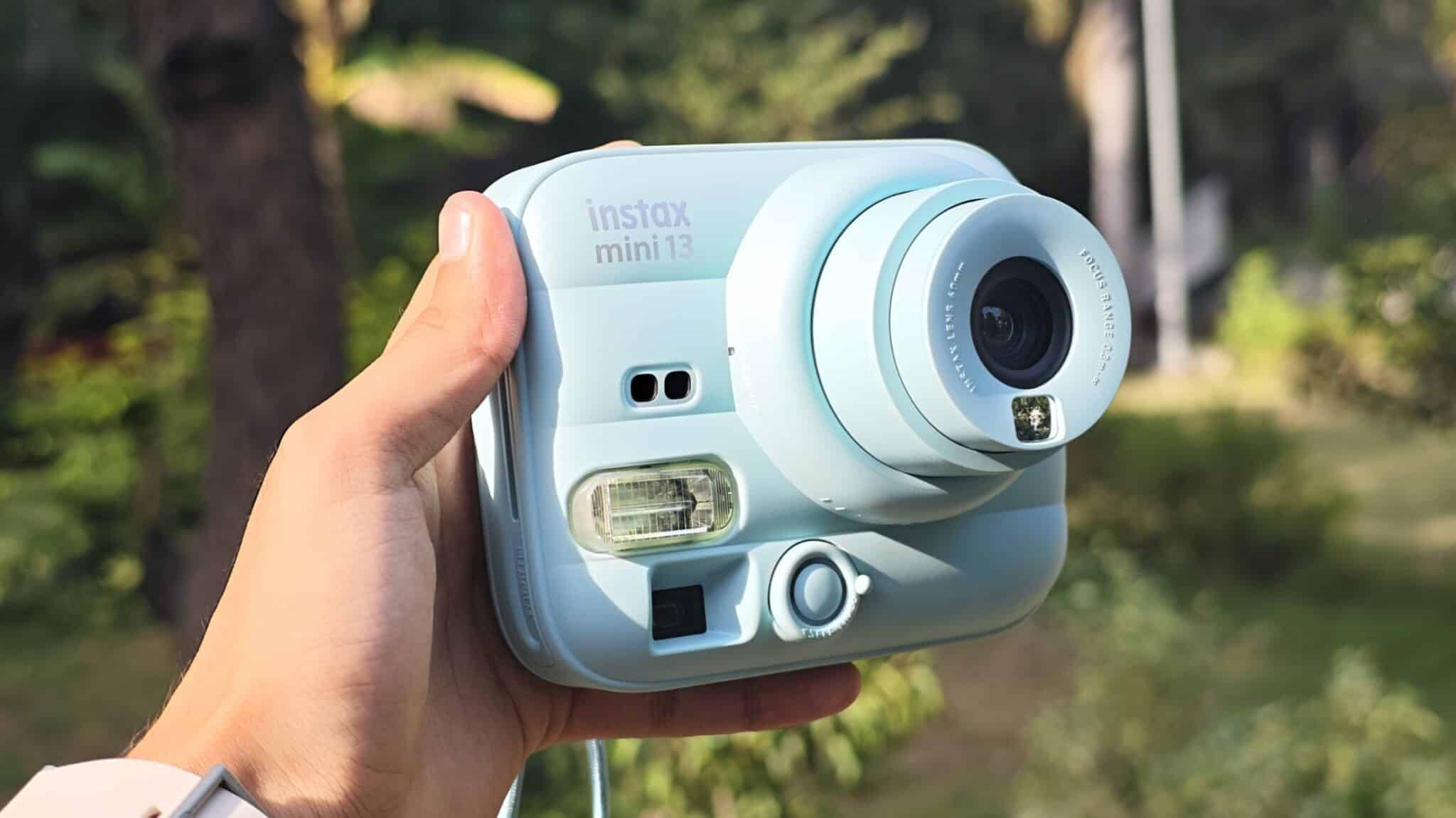
Older budget instant cameras frequently suffered from viewfinder alignment offset, technically known as parallax error. Because the viewfinder sits higher and slightly to the left of the actual camera lens, what you see through the glass is not exactly what the lens captures at close distances.
Fujifilm addresses this issue in the Mini 13 by adding mechanical parallax correction inside the viewfinder system. When you twist the lens into Close-Up mode, internal optical elements shift to realign the target mark directly with the physical lens path.
During my indoor testing on small decorative objects and close portraits from 40 cm away, the subject stayed centered in the final print. In previous models, subjects would drift slightly to the right if you did not manually compensate. This correction takes away guesswork for arm-length selfies and close-up portraits.
Flash Control and Exposure Performance
The electronic shutter operates between 1/2 second and 1/250 second. The camera measures light continuously across an exposure range of Lv 5.0 to 14.5 using an ISO 800 baseline. You do not get manual aperture settings, shutter overrides, or flash defeat switches. The flash fires on every single shot, no matter how bright the environment is.
In direct sunlight outdoors, the automatic exposure system scales down ambient light absorption, using shutter speeds up to 1/250 second while firing a light fill flash. Outdoor bright portraits look sharp with balanced skin tones. However, high-contrast scenes with harsh shadows can result in blown-out highlights on light clothing or pale skin due to the fixed f/12.7 aperture limits.
In low-light indoor setups, the slow sync function drops the shutter speed down toward 1/2 second. This lets more background light sink into the image frame, preventing the black void background effect behind your subject. I shot several frames inside dimly lit restaurants in Delhi, where the backgrounds remained visible, though holding the camera perfectly steady during the longer exposure is critical to avoid background blur.
Self-Timer Functionality
The inclusion of a mechanical or electronic self-timer adds practical value for group pictures. You can toggle between a 2-second delay and a 10-second delay depending on your setup. I tested the 10-second timer by placing the camera on a flat wooden table during a family dinner.
Once activated, a small indicator light on the front body blinks to signal the countdown sequence. The 10-second option gives you plenty of time to walk back and settle into the frame comfortably. The 2-second setting works well when holding the camera resting on a surface to prevent hand tremor shutter shock during night shots.
One issue remains regarding mounting options. The camera lacks a standard threaded quarter-inch tripod socket on its bottom base. To mount it on a tripod, you need a third-party snap-on cradle adapter or a universal phone clamp big enough to grip the thick body. This omission feels like an unnecessary oversight given the addition of a self-timer feature.
Film Running Costs in India
The camera prints on standard Instax Mini film packs. The physical sheet measures 86 x 54 mm, while the active image area measures 62 x 46 mm. The chemical print takes about 90 to 120 seconds to fully develop after ejection, depending on ambient room temperature.
While the base camera costs ₹7,999 in India, you must calculate ongoing film costs before buying. A single pack of 10 exposures costs around ₹650 to ₹750, which translates to roughly ₹65 to ₹75 per photo. Twin packs containing 20 exposures cost between ₹1,200 and ₹1,400, bringing the cost down slightly to ₹60 per shot, while specialty border packs can cost up to ₹950 per 10 exposures.
Because every press of the shutter button costs roughly ₹65 to ₹70, you quickly learn to stop and think about composition before clicking. You cannot review photos on a screen or delete mistakes. Every print is final, making each shot a deliberate decision.
Real World Usage and Picture Quality
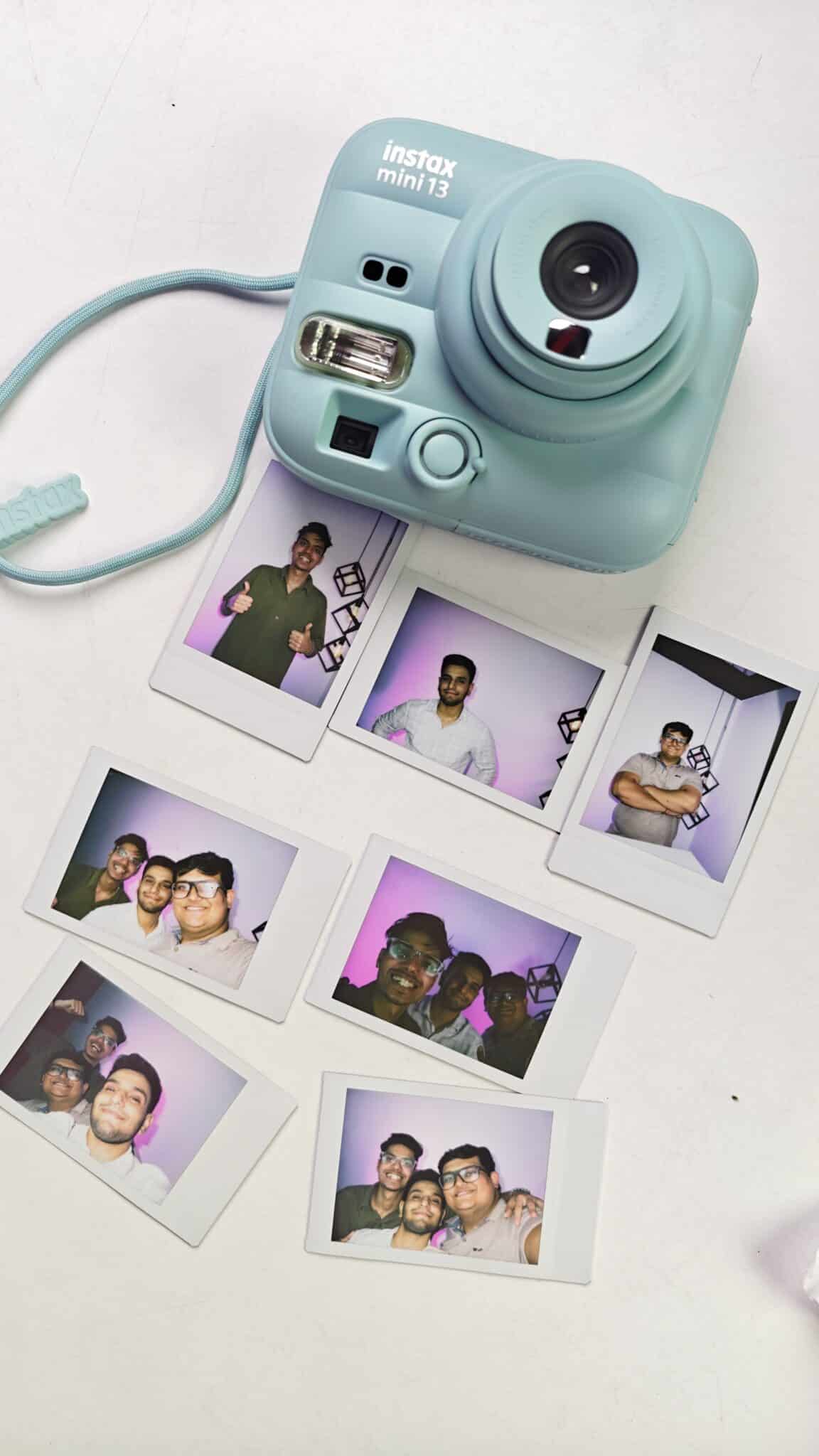
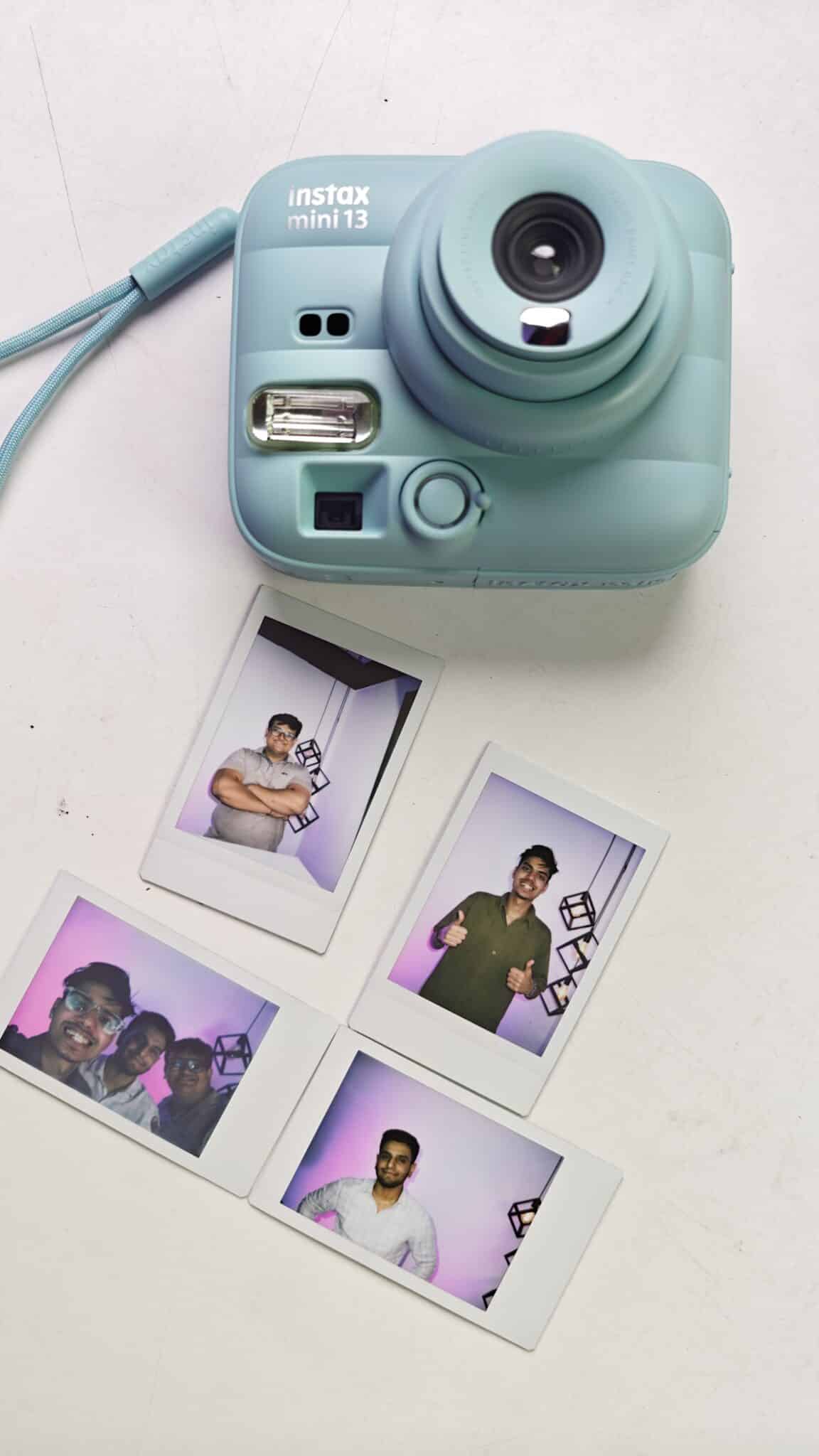
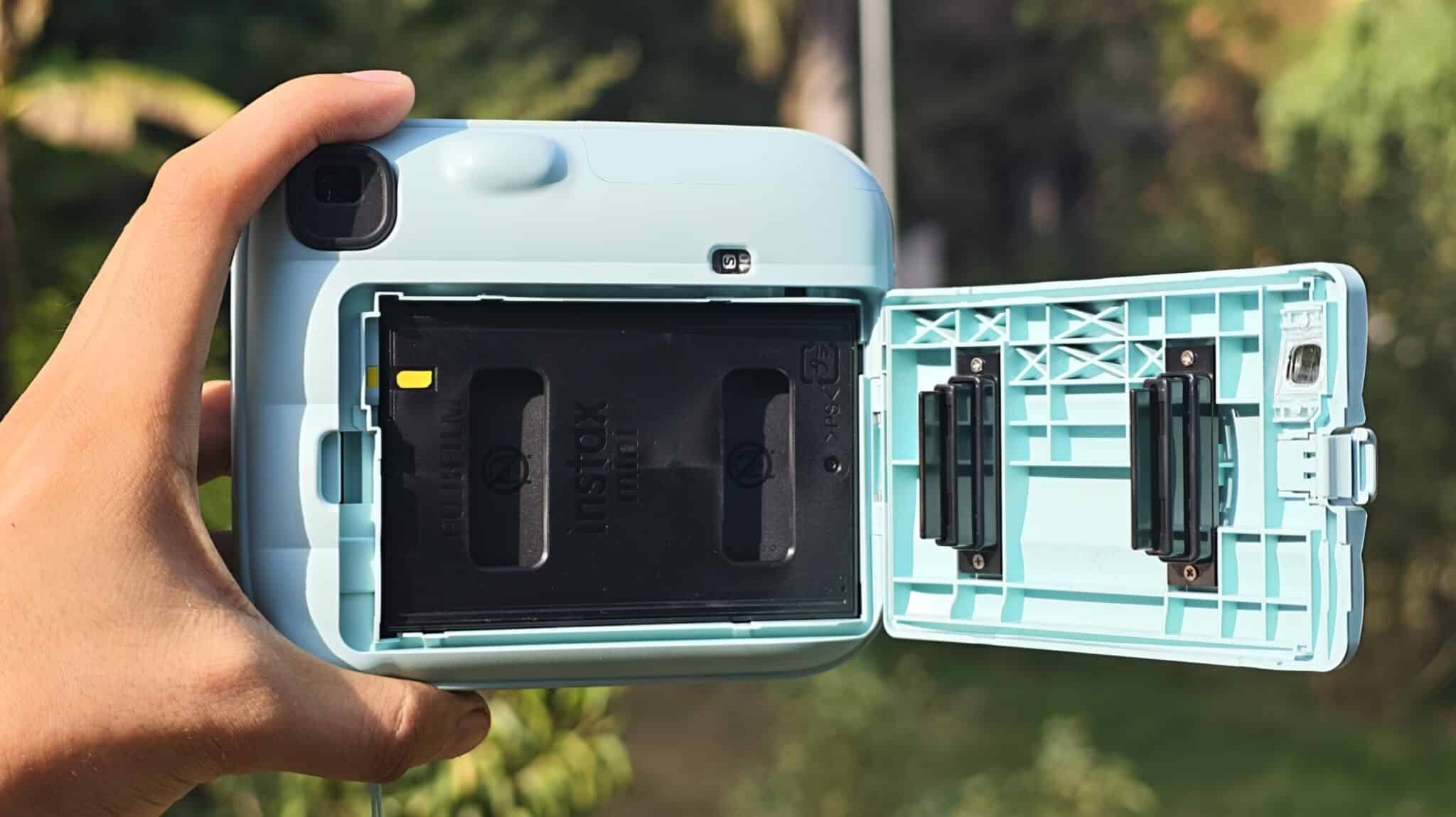
Under soft outdoor daylight, skin tones look pleasing with a slightly warm bias. Contrast is strong, giving prints a distinct analog character with deep shadows. Details on faces are clear when shot within the optimal distance of 1 to 2 meters from the target.
Swapping to Close-Up mode reduces the minimum focal distance down to 30 cm. A small convex mirror placed right beside the lens element helps you frame selfies without guessing. The parallax correction ensures your face stays centered in the frame. However, if you bring the camera closer than 30 cm, the fixed lens cannot focus, resulting in soft, blurry prints.
The flash manages exposure well between 0.5 meters and 1.5 meters indoors. Beyond 2.2 meters, the light falls off quickly, leaving far backgrounds dark. If you shoot too close to a reflective wall, the flash creates a bright hotspot behind the subject, meaning angles matter when shooting indoors. In terms of color accuracy, Instax film leans toward punchy greens and warm reds, giving physical prints a distinct tactile warmth that digital files lack.
Battery Life and Storage
The Mini 13 operates on two standard AA alkaline batteries (LR6). Fujifilm claims a fresh pair lasts for roughly 10 film packs, which equals 100 shots. During my tests across 60 shots, the battery indicator showed no sign of weakness, and the flash recycled promptly within 3 to 5 seconds after each frame.
I recommend avoiding rechargeable NiMH AA batteries or heavy-duty zinc-carbon cells, as their voltage curves differ from standard alkaline options and can cause slower flash recharge cycles. If you plan to store the camera away for months between trips or events, pop the AA batteries out of their compartment to prevent accidental acid leaks from ruining the internal contacts.
Key Product Specifications
- Film Type: FUJIFILM instax mini Instant Film (sold separately)
- Picture Size: 62 mm × 46 mm
- Lens Assembly: 2 components, 2 elements, f = 60 mm, 1:12.7
- Viewfinder: Real image finder, 0.37X with target spot and parallax correction for Close-Up Mode
- Shooting Range: 0.3 m to infinity (Close-Up Mode covers 0.3 m to 0.5 m)
- Shutter System: Programmed electronic shutter, 1/2 to 1/250 sec with slow sync for low light
- Exposure Control: Automatic, Lv 5.0 to 14.5 (ISO 800)
- Flash System: Constant firing flash with automatic light adjustment, range from 0.3 m to 2.2 m
- Battery Requirements: 2 × AA alkaline batteries (LR6), rated for roughly 10 film packs
- Self Timer: Selectable 2 seconds or 10 seconds delay
- Dimensions and Weight: 105.5 × 124.7 × 67.6 mm, 327 g (without batteries, film, or strap)
Verdict
The Fujifilm Instax Mini 13 Blue delivers a reliable, no-nonsense analog experience. The additions of true parallax correction in Close-Up mode and a selectable self-timer fix two key flaws that affected earlier entry-level cameras. It eliminates complicated menus, letting anyone pick it up and print a memory within seconds.
At a price point of ₹7,999 in India, the initial cost remains reasonable for birthdays, weddings, travel, and creative gifting. However, you must factor in the running cost of film over time. If you want a fun, physical camera that produces charming retro prints without technical hassle, the Instax Mini 13 stands out as a solid choice.
Frequently Asked Questions
Q1: Does the Instax Mini 13 require an internet connection or app to work?
A1: No. The camera operates completely analog without Bluetooth, Wi-Fi, or smartphone apps. You insert a film pack, power on the lens, and shoot.
Q2: Can I turn off the flash when taking photos through a glass window?
A2: No, the flash fires automatically on every frame. To reduce reflection off glass, hold the lens flat against the surface at a slight angle or shade the surrounding area.
Q3: What kind of batteries does the Instax Mini 13 use?
A3: It uses two standard AA alkaline batteries (LR6). A fresh pair lasts for around 100 exposures (10 film packs).
Q3: How long does an Instax Mini picture take to develop after shooting?
A3: The chemical development process takes approximately 90 to 120 seconds. Keep the photo out of harsh direct sunlight while it develops, and do not shake or bend the print.
Q4: Is the film included in the box with the camera?
A4: No. FUJIFILM instax mini Instant Film packs are sold separately. You will need to purchase at least one film pack to start taking photos.