

Canon has officially secured the number one position in the global interchangeable-lens digital camera market for the 23rd consecutive year. This leadership spans from 2003 through 2025, covering both digital SLR and mirrorless camera sales worldwide. It is a long run by any standard, and not something that happens by accident.
The milestone arrives at a time when the company continues to expand its EOS R system, which has become a preferred choice for professional photographers, content creators, and hobbyists in India and across global markets. If anything, the momentum seems to be building rather than slowing down.
Key Takeaways
- Canon has held the largest global market share in interchangeable-lens digital cameras since 2003.
- The company currently offers 113 RF and EF lenses, including four types of extenders.
- Recent growth is powered largely by the EOS R mirrorless series, including the flagship EOS R1.
- In 2025, Canon launched the EOS R50 V and the EOS R6 Mark III.
- The brand continues to focus on speed, comfort, and high image quality as its core philosophy.
How Canon Built a 23-Year Leadership Streak
Canon’s rise to the top dates back to 2003, when it introduced the EOS 300D, known in some regions as the Digital Rebel. At the time, digital SLR cameras were still seen as premium tools meant mostly for professionals. The EOS 300D changed that perception. It made DSLR photography accessible to everyday users, and that shift arguably reshaped the market.
Since then, Canon has maintained its lead by developing critical components in-house, including CMOS image sensors and DIGIC image processors. These technologies work together to deliver fast performance and consistent image clarity. It sounds technical, and it is, but in practical terms it simply means photographers can rely on their cameras to respond quickly and capture sharp results.
There is also something to be said about continuity. Canon did not reinvent itself every year. Instead, it steadily refined what already worked, which perhaps made its progress feel less dramatic but more dependable.
The Mirrorless Shift and the Rise of the EOS R System
A major driver of Canon’s recent success has been its transition toward mirrorless technology. In October 2018, the company introduced the EOS R System. This marked a significant shift away from traditional DSLR design. Mirrorless cameras are typically smaller, lighter, and more capable when it comes to advanced video features.
Then in July 2020, the EOS R5 made headlines as the first digital interchangeable-lens camera to offer 8K video recording. That move positioned Canon strongly in the hybrid photo and video segment. It was not just about resolution, but about signaling where the industry was headed.
The momentum continued with the release of the EOS R1 in November 2024. Built for demanding professional users, the flagship model focuses on fast autofocus performance, durability, and high-end image quality. For sports, wildlife, and press photographers who cannot afford to miss a shot, those factors matter deeply.
Canon’s 2025 Camera and Lens Launches
Canon did not ease up in 2025. In May, it launched the EOS R50 V, an APS-C mirrorless camera tailored for creative video users. This model clearly targets a new generation of content creators who need compact equipment but still expect serious performance.
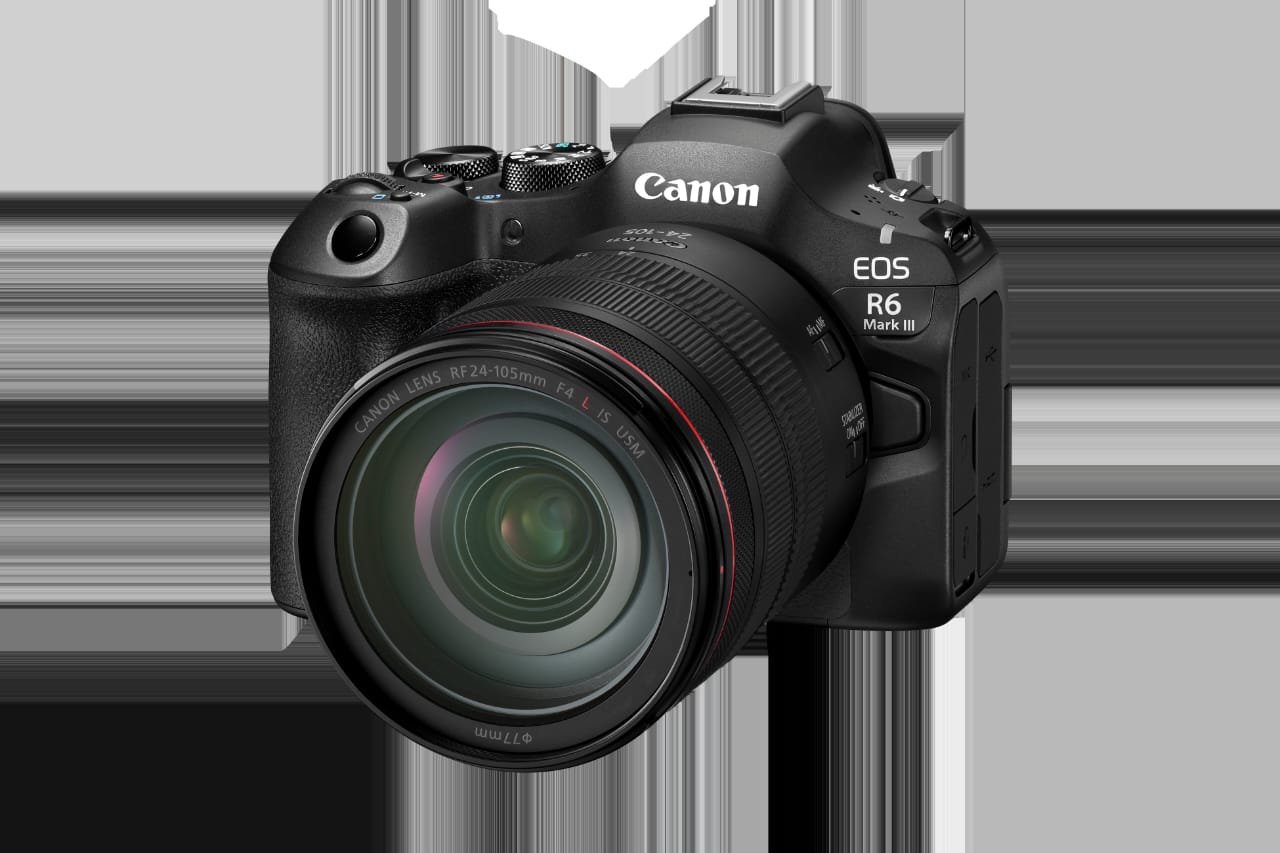
Later in November 2025, the EOS R6 Mark III was introduced. Designed for advanced amateurs, it delivers professional-level performance in a more compact and approachable body. It sits comfortably between entry-level and flagship models, which feels like a smart positioning strategy.
On the lens front, Canon added seven new RF lenses to its catalog in 2025 alone. Among them were specialized options such as the RF85mm F1.4 L VCM and the RF16-28mm F2.8 IS STM. As of February 2026, the company’s total lineup includes 113 RF and EF lenses, along with four types of extenders. That breadth gives users flexibility across genres, from portrait and landscape to sports and cinema production.
Global Presence and Financial Strength
Canon’s leadership is not only about products. The company operates with a global workforce of approximately 165,000 employees and reported sales of 29.5 billion dollars for the 2025 fiscal year. Those figures reflect both scale and stability.
The broader strategy seems consistent: develop tools that make capturing photos and videos easier, faster, and more reliable. From entry-level cameras for beginners to high-end cinema systems for professionals, Canon maintains a product range that covers nearly every segment. That diversity, combined with ongoing technological investment, is likely a key reason the brand has stayed at the top for more than two decades.
Whether the next decade will look the same is difficult to predict, especially in a fast-evolving imaging industry. Still, 23 consecutive years of market leadership suggest a company that understands not just technology, but also its users.
FAQs
Q1: How long has Canon been the market leader in digital cameras?
A1: Canon has held the number one global market share for interchangeable-lens digital cameras for 23 consecutive years, beginning in 2003 and continuing through 2025.
Q2: What is the latest Canon mirrorless cameras released in 2025?
A2: In 2025, Canon released the EOS R50 V in May and the EOS R6 Mark III in November. Both models are part of the EOS R mirrorless system.
Q3: How many lenses does Canon offer for its cameras?
A3: As of February 2026, Canon offers 113 types of RF and EF lenses, including four types of extenders.
Q4: What makes the EOS R1 camera special?
A4: The EOS R1, released in November 2024, is a flagship mirrorless camera designed for professional users. It features advanced autofocus, high reliability, and top-tier image quality.
Q5: What was the first camera that helped Canon secure the top market position?
A5: The EOS 300D, also known as the EOS Digital Rebel, launched in September 2003. It played a crucial role in making digital SLR cameras accessible to a broader audience and helped Canon establish its long-standing market leadership.