

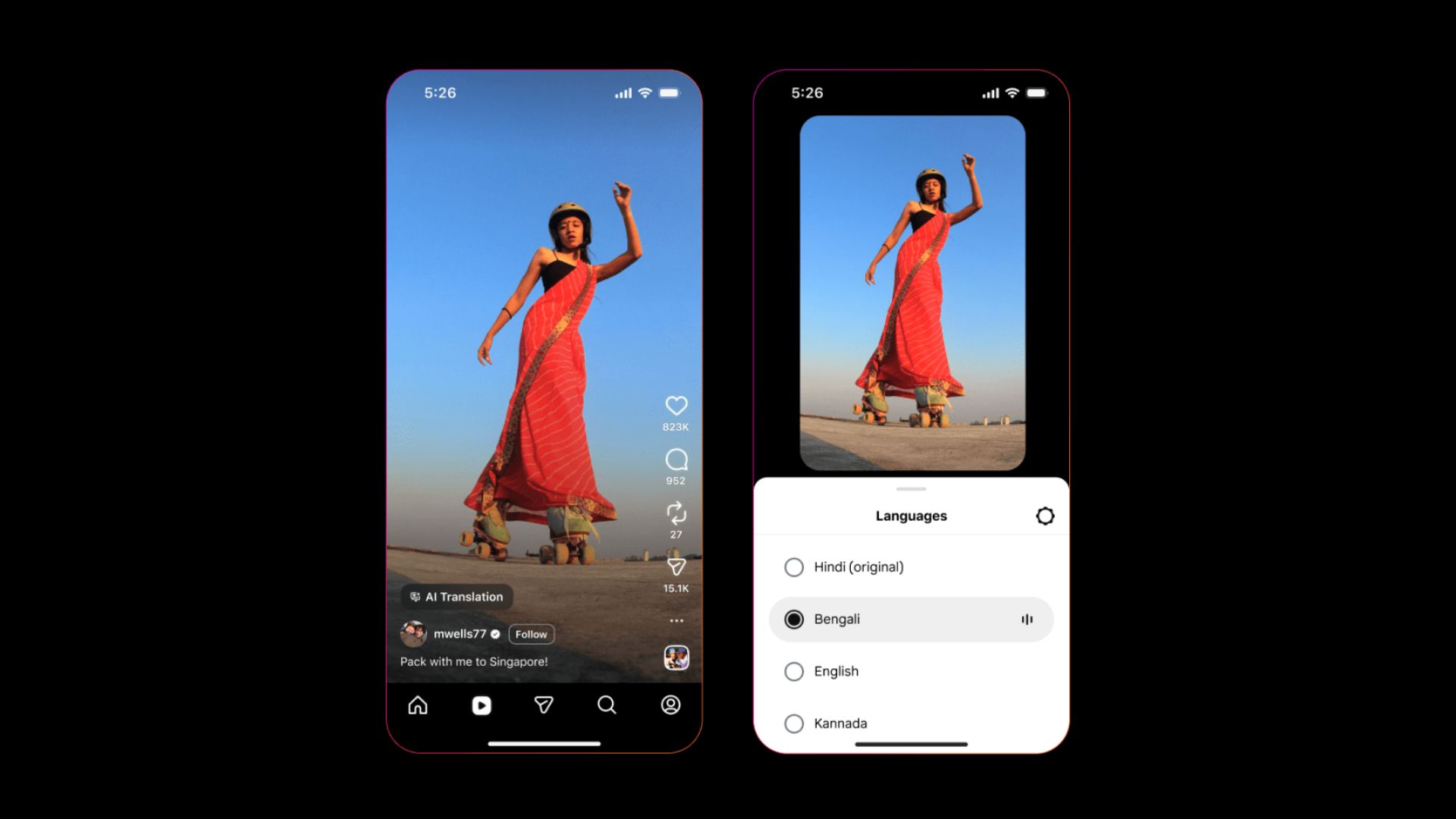
Instagram announced a significant update for Indian users at its “House of Instagram” event held in Mumbai today. The platform is expanding its Meta AI powered translation and dubbing tools to include five additional regional Indian languages. From today onward, creators can translate, dub, and even lip-sync their Reels into Bengali, Tamil, Telugu, Kannada, and Marathi. This builds on an earlier rollout from late 2025, when Instagram first introduced AI dubbing support for Hindi and English. Along with audio translation, the company has also added new Indian script fonts to the editor, making it easier for creators to publish content in their native languages.
Taken together, these updates feel like a clear signal that Instagram is investing more deeply in India’s multilingual creator ecosystem, not just at a surface level, but across both audio and visual tools.
Key Takeaways
- New Languages Supported: Meta AI can now translate and dub Reels into Bengali, Tamil, Telugu, Kannada, and Marathi.
- Lip-Sync Technology: The system aligns the speaker’s lip movements with the translated audio for a more natural viewing experience.
- Voice Preservation: Instead of a generic AI voice, the tool attempts to retain the creator’s original tone, pitch, and speaking style.
- New Fonts: Devanagari and Bengali Assamese script fonts are now available directly inside the Instagram editor.
- Availability: Translation and dubbing are rolling out today, while the new fonts will reach Android devices soon.
Meta AI Dubbing and Lip-Sync Features
At its core, this update is about reducing language barriers for creators. Until now, someone creating content in Tamil or Telugu might have found it difficult to connect with audiences in other parts of the country without re-recording the same Reel multiple times. This new system changes that workflow quite a bit.
When uploading a Reel, creators can use Meta AI to generate translated audio tracks in supported languages. The process is largely automated, which probably matters more than anything else for creators who post frequently. Instead of manually dubbing or relying on subtitles alone, the AI handles translation, voice generation, and syncing in one flow.
What stands out here is that the technology goes beyond simple text to speech translation. The AI analyzes the original voice and tries to replicate its pitch, emotion, and cadence. The goal is for the translated version to sound like the same person speaking another language, not like a flat, robotic overlay. In practice, results may vary a bit depending on the clip, but the intent is clear.
The optional lip-sync feature adds another layer. When enabled, the system adjusts video frames so the speaker’s mouth movements line up with the translated audio. This small detail makes a noticeable difference, especially for close-up talking head videos, where mismatched audio and visuals can be distracting. Over time, this could help creators reach audiences across different states without needing to reshoot content, which is a real time saver.
Local Fonts for Better Editing
Instagram has also paid attention to the visual side of multilingual content. The app now supports Indian script fonts directly in the text editor, including Devanagari and Bengali Assamese scripts. This makes it easier to add on-screen text, captions, or callouts that actually feel native rather than improvised.
To access these fonts, users can open the editing timeline and tap the “Text” tool. If the phone’s system language is already set to one of the supported scripts, the fonts appear automatically. Otherwise, they can be found by filtering through the font list manually. It is a small change on paper, but for creators who regularly post in regional languages, it removes a lot of friction.
Why This Matters for Indian Creators
India remains one of Instagram’s largest and most diverse markets. By adding support for languages like Kannada, Telugu, and Marathi, Meta is acknowledging that a huge portion of its audience lives outside the Hindi and English bubble. These tools make it easier for a creator in Mumbai to connect with viewers in Chennai, Hyderabad, or Kolkata without changing their entire content strategy.
This update also fits into a broader pattern. Instagram has recently rolled out features like bulk caption editing and AI powered photo restyling, all aimed at speeding up the creation process. Taken together, it feels like the platform is trying to lower technical barriers so creators can focus more on ideas and less on logistics.
Frequently Asked Questions
Q1: How do I turn on the Reel translation feature?
A1: After uploading a Reel, you can find the option in the advanced settings or within the audio editing section. Look for “Translate and Dub,” which is powered by Meta AI.
Q2: Does the AI change my voice completely?
A2: No. The system uses voice preservation technology, meaning it samples your original voice and attempts to recreate it in the translated language.
Q3: Is this feature available for private accounts?
A3: At launch, the rollout focuses on creators and public accounts aiming to expand their reach. Availability may vary initially depending on region and account type.
Q4: Will the lip-sync feature work on old videos?
A4: The feature is designed for new uploads, where the AI can process both video and audio together during editing.