

AMD CEO Dr. Lisa Su opened the CES 2026 keynote with a clear message. Artificial intelligence is no longer confined to one corner of the tech industry. It is spreading everywhere, and AMD wants its hardware to be part of that shift at every level. From data centers to personal laptops and even classrooms, the company outlined a product roadmap that felt both ambitious and, in some ways, inevitable.
One of the most striking ideas shared during the keynote was AMD’s long term outlook. According to the company, global computing demand is expected to increase by 100 times over the next five years, reaching what it calls the yotta scale. That prediction framed the entire presentation. Everything AMD announced, from massive AI racks to local AI PCs, seemed built around preparing for that future.
Key Takeaways
- AMD Helios rack scale platform delivers 3 exaflops of AI performance for training large models.
- The new Ryzen AI 400 series for laptops features a 60 TOPS NPU for local AI tasks.
- AMD Instinct MI440X GPU launched for private business AI networks.
- A $150 million pledge was announced to improve AI access in schools and colleges.
- Future MI500 GPUs are expected to provide 1,000 times more performance than the 2023 models.
New hardware for massive AI systems
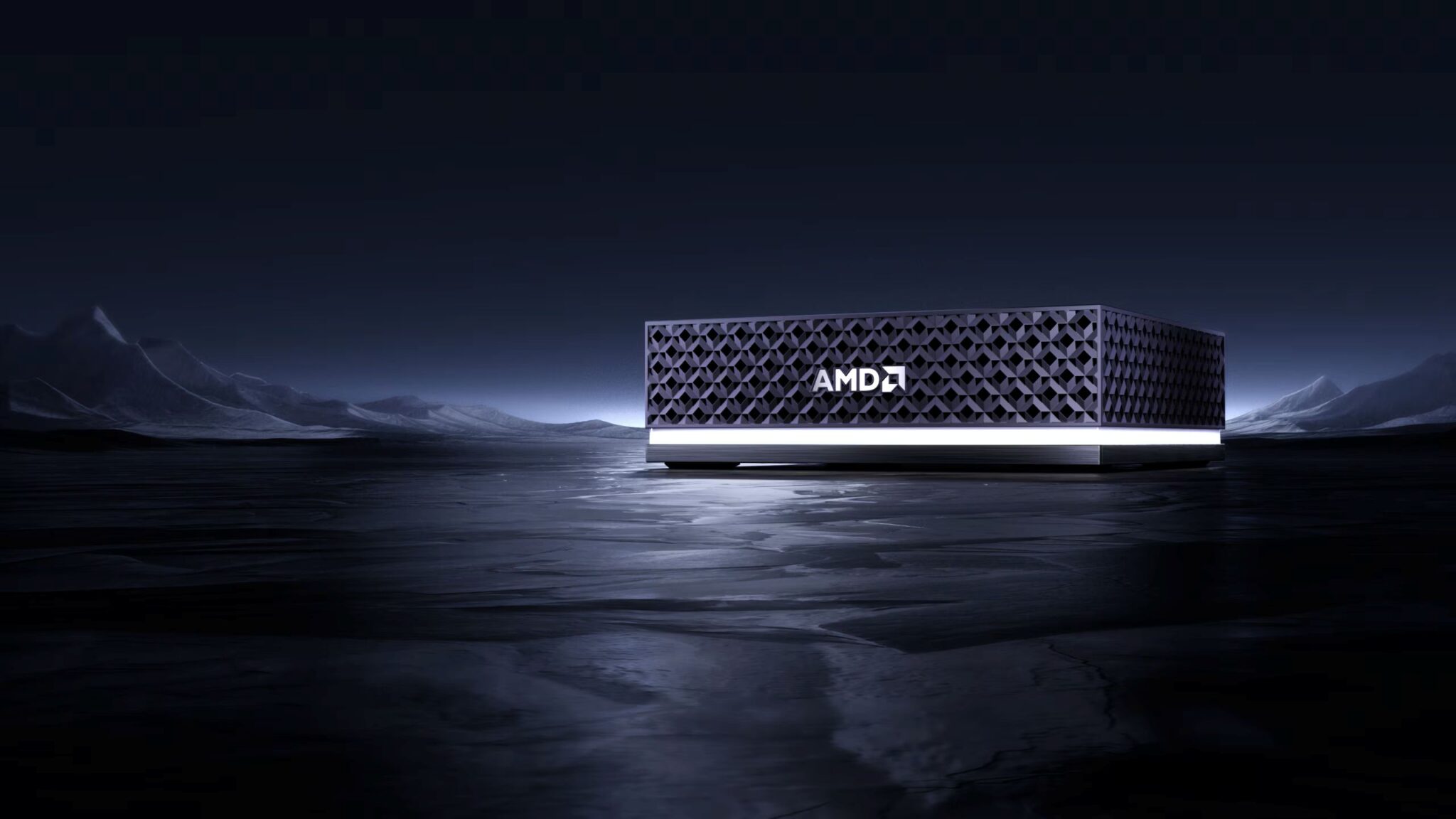
At the center of AMD’s data center strategy is the newly revealed Helios rack scale platform. This system brings together Instinct MI455X GPUs with EPYC Venice processors into a single, tightly integrated rack. AMD says one Helios rack can deliver up to 3 exaflops of AI performance, enough to train models with trillions of parameters. That kind of scale is clearly aimed at the largest AI workloads being developed today.
The Helios platform also reflects how much attention is now being paid to efficiency. Liquid cooling and high speed networking are built into the design, not as optional extras but as core requirements. The idea, at least as AMD presented it, is to keep performance high without letting power consumption spiral out of control. It sounds straightforward, although in practice this is where many large systems tend to struggle.
For organizations that prefer to keep AI workloads on their own premises, AMD introduced the Instinct MI440X GPU. This card is designed to fit into existing server environments and handle tasks such as fine tuning models or running everyday AI inference. It feels like a practical option for enterprises that are not ready to build massive racks but still want serious AI capability.
Looking further ahead, AMD offered a preview of its MI500 GPU series planned for 2027. These chips will be built on a 2nm process and use HBM4E memory. According to AMD, the MI500 family is expected to deliver up to 1,000 times the performance of its 2023 counterparts. That number is bold, maybe even a little hard to fully visualize right now, but it signals just how aggressive AMD’s roadmap has become.
AI PCs and local computing
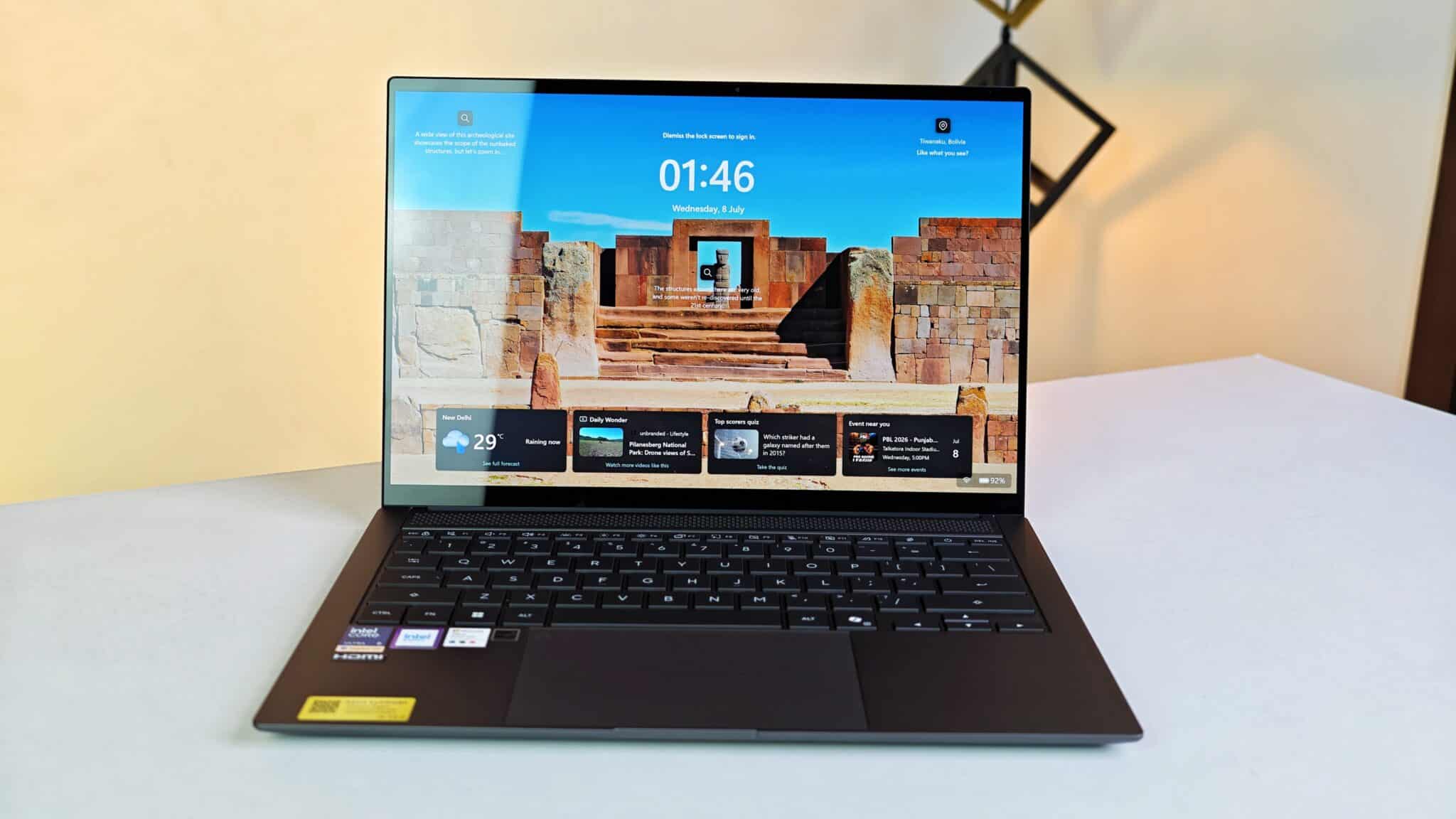
AI was not just a data center story at CES. AMD also spent time on local AI computing, particularly with the launch of the Ryzen AI 400 and Ryzen AI PRO 400 series. These processors include a Neural Processing Unit capable of 60 trillion operations per second. In simple terms, that means laptops can run advanced AI features directly on the device, without constantly relying on cloud services.
The first systems powered by these chips are expected to ship in January 2026, with more models arriving through the first quarter. For everyday users, this could change how AI tools feel in daily use. Tasks like image generation, language processing, or smart editing can happen instantly and privately, which is something many people have been asking for.
AMD also pushed into the high end mobile space with the Ryzen AI Max+ 392 and 388. These processors support up to 128GB of shared memory, allowing them to run models with as many as 128 billion parameters. That is a level of capability that starts to blur the line between laptops and desktops. Video editors, developers, and even gamers who rely on heavy workloads may find this particularly appealing, assuming thermals and battery life hold up in real world use.
Social impact and future projects
Beyond performance numbers and hardware launches, AMD also highlighted its broader role in the AI ecosystem. Dr. Su discussed the company’s involvement in the Genesis Mission, a U.S. government project focused on building next generation supercomputers. Two new systems, Lux and Discovery, will rely on AMD technology to support advanced scientific research across multiple fields.
Perhaps the most human moment of the keynote came with the announcement of a $150 million pledge aimed at expanding AI access in education. The funding is intended to bring AI hardware, tools, and training into schools and colleges. The goal is to give students hands on experience with AI development early on, which could have long term benefits for both the workforce and innovation as a whole.
Related FAQs
Q1: What is yotta scale computing?
A1: Yotta scale refers to a level of computing power that is 1,000 times greater than the current zetta scale. AMD believes this level of performance will be necessary within the next five years to support future generations of advanced AI models.
Q2: When will the Ryzen AI 400 laptops be available?
A2: The first laptops featuring Ryzen AI 400 processors are scheduled to begin shipping in January 2026, with additional models launching throughout the first quarter.
Q3: What is the Helios rack used for?
A3: The Helios rack is a pre built data center system that combines GPUs, CPUs, and networking into a single unit. It is designed to train extremely large AI models, including those used by organizations such as OpenAI and Luma AI.
Q4: How does the $150 million pledge help students?
A4: The funding will support access to AI hardware and educational resources in schools and local communities. This gives students more opportunities to learn how to use and build AI technologies early in their academic and professional journeys.