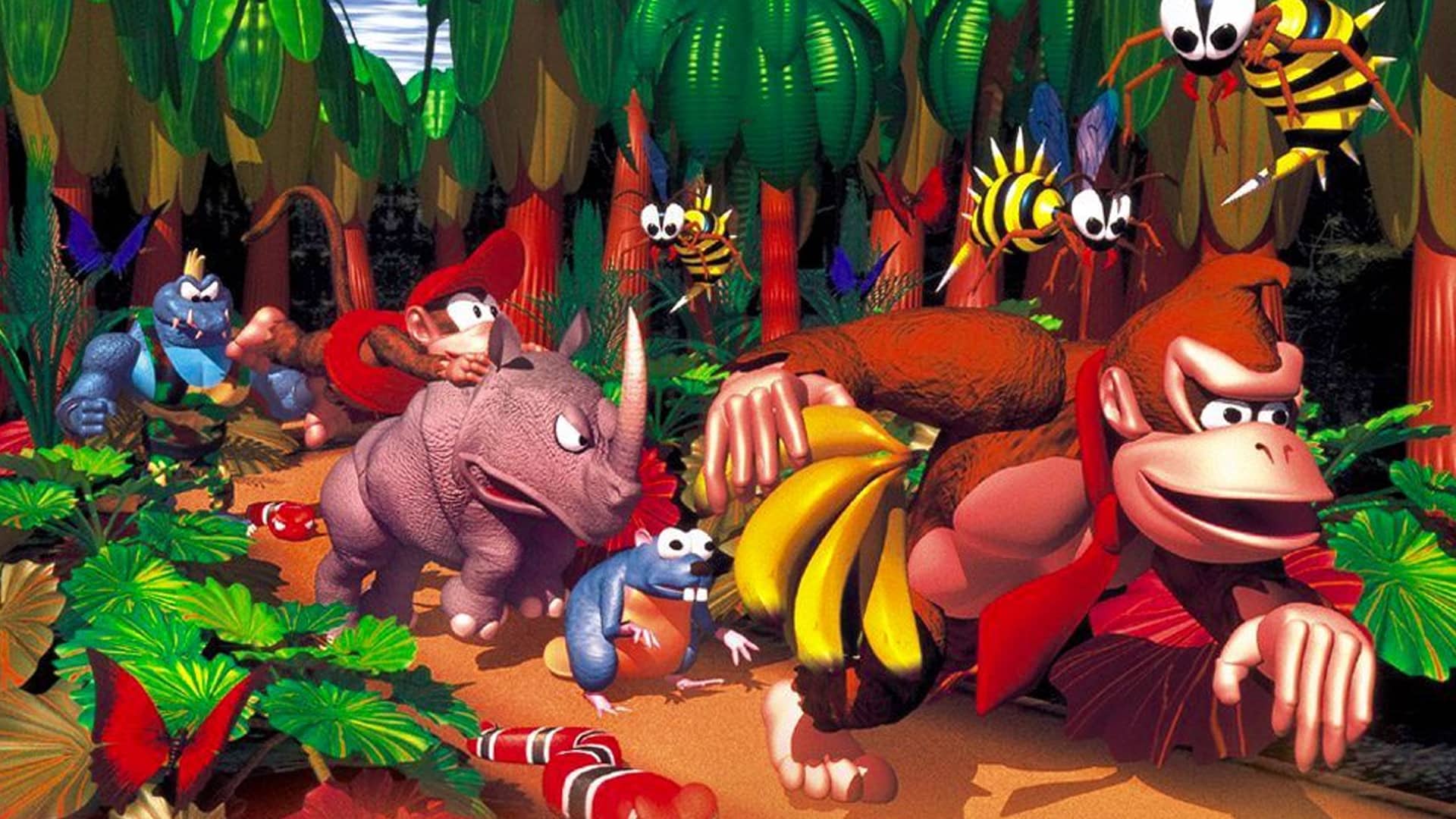
Donkey Kong Country, released in November 1994 for the Super Nintendo Entertainment System (SNES), was more than just a hit—it became a defining moment for the 16-bit era. Developed by the British studio Rare and published by Nintendo, the game stunned players with its then-revolutionary pre-rendered 3D visuals. But it wasn’t just about looks. The responsive controls, cleverly layered level design, and tight gameplay loop gave it serious staying power. What many fans may not realize, though, is just how pivotal Nintendo’s early faith in Rare’s technology was in making all of it possible.
Key Takeaways:
- Donkey Kong Country was developed by Rare, a British studio, and published by Nintendo.
- The game featured groundbreaking pre-rendered 3D graphics on the 16-bit SNES.
- Nintendo’s early investment in Rare’s tech capabilities was essential to the game’s creation.
- The game revived the Donkey Kong franchise and sold over 9 million copies.
- It played a critical role in helping Nintendo stay competitive against Sega in the ’90s.
Rare, co-founded by brothers Tim and Chris Stamper in 1985, had already built a solid relationship with Nintendo thanks to a string of NES titles. By the early ’90s, they took a big gamble: investing heavily in Silicon Graphics (SGI) workstations. Initially, their plan was to use these machines to prepare for the upcoming Nintendo 64. But they quickly realized that the same SGI hardware could be used to render highly detailed 3D models and convert them into 2D sprites using a method they called Advanced Computer Modelling (ACM). This wasn’t just clever—it was a game-changer.
That breakthrough got the attention of Nintendo of America chairman Howard Lincoln. At the time, Nintendo was under increasing pressure from Sega, whose Genesis console was making waves with its own graphical prowess. Rare’s demo—a boxing game rendered on SGI but running on SNES hardware—made waves internally. Even Genyo Takeda, Nintendo’s chief technology officer, flew out to see it in action.
Nintendo didn’t hesitate. They offered Rare the chance to breathe life into one of their dormant franchises. The Stampers, after some deliberation, chose Donkey Kong—a character who hadn’t starred in a mainline game since Donkey Kong 3 back in 1983. Shigeru Miyamoto, the character’s original creator, backed the decision, especially since his teams were busy with other flagship franchises like Mario and Zelda. For Nintendo to hand over a legacy character to an outside developer was practically unheard of, and it spoke volumes about their confidence in Rare.
Development on Donkey Kong Country lasted 18 months, with a relatively small team of around 20 people and a reported budget of $1 million. Rare even took a field trip to Twycross Zoo, where they studied gorillas up close, filming their movements to create more lifelike animations. That extra effort helped elevate the visual authenticity, making the game feel remarkably fresh and different, even on aging hardware.
When the game launched, the response was immediate and overwhelmingly positive. Critics praised its graphics, sound design, and tight platforming. Players were hooked. Donkey Kong Country went on to sell 9.3 million copies globally, making it the third best-selling SNES title ever. More importantly, it breathed new life into the Donkey Kong franchise and gave Nintendo a much-needed edge against Sega in the ongoing console wars.
This collaboration also set the stage for a fruitful relationship between Nintendo and Rare throughout the Nintendo 64 era. It paved the way for classics like GoldenEye 007, Banjo-Kazooie, and more. Looking back, Donkey Kong Country isn’t just a nostalgic favorite—it’s a case study in what happens when a publisher puts real trust in a studio’s vision.
Frequently Asked Questions
Q1: What made Donkey Kong Country’s graphics so special for its time?
A1: Donkey Kong Country used pre-rendered 3D models built with Silicon Graphics (SGI) workstations. These were converted into 2D sprites using a technique called Advanced Computer Modelling (ACM), giving the visuals a rich, dimensional feel rarely seen on the SNES.
Q2: Who developed Donkey Kong Country?
A2: The game was developed by Rare, a British video game studio, in close partnership with Nintendo.
Q3: How many copies did Donkey Kong Country sell?
A3: It sold 9.3 million copies worldwide, making it one of the Super Nintendo’s top-selling games.
Q4: Did Nintendo own Rare when Donkey Kong Country was made?
A4: Not entirely. Nintendo held a significant minority stake in Rare at the time, eventually owning up to 49%, which effectively made Rare a second-party developer during that era.
Q5: What was the Donkey Kong franchise like before Donkey Kong Country?
A5: The franchise had been mostly dormant since 1983’s Donkey Kong 3. Aside from the original arcade game in 1981, which was a massive hit, Donkey Kong had largely faded from the spotlight until Rare’s reboot reignited interest in the character.