
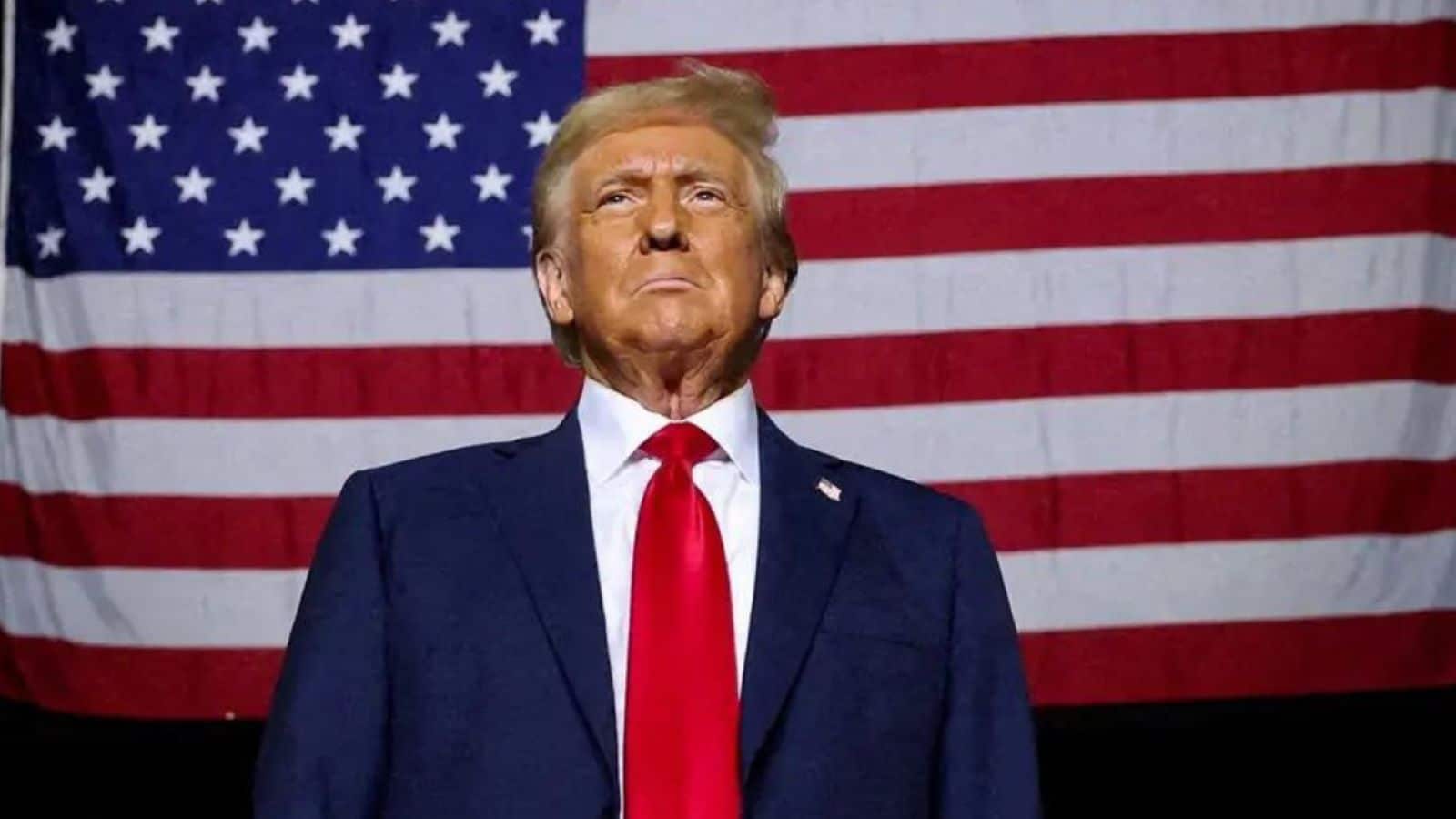
The world of cryptocurrency, once eyed warily by President Donald Trump, has found an unexpected — and somewhat surprising — advocate. What began as open skepticism has since evolved into a bold embrace, marked not only by public endorsement but also by personal ventures and sweeping policy shifts. The pivot has rippled through markets, reshaping investor sentiment and kicking off debates around regulation, innovation, and the always-thorny issue of potential conflicts of interest.
Key Takeaways:
- Donald Trump has made a notable turn from crypto critic to vocal supporter.
- His administration has introduced policies backing digital assets, including an executive order and a national Bitcoin reserve.
- A firm ban on the creation of a U.S. central bank digital currency (CBDC) has been enacted.
- The Trump family is now heavily involved in crypto, from meme coins to mining.
- These developments have drawn both enthusiasm from the industry and concerns over ethics.
- Crypto markets have responded visibly to Trump’s statements and initiatives.
Back in 2019, during his first term, Trump made no secret of his disapproval. On Twitter (now X), he declared he was “not a fan” of Bitcoin, calling it “not money” and alleging that it was “based on thin air.” He even went so far as to warn it could enable illegal activities. That hard stance was consistent with the cautious, often skeptical tone of his administration at the time — one that reportedly included telling his Treasury Secretary to “go after Bitcoin.”
Fast forward to today, and the contrast is stark.
The Pivot to Pro-Crypto
Perhaps the first public inkling of Trump’s shifting view came in December 2022, with the release of his Trump Digital Trading Cards — an NFT collection. It may have looked like a gimmick, but it signaled his entry into the digital asset world. With a collection of 45,000 NFTs, a floor price of roughly $147.43 (as of June 27, 2025), and estimated earnings of $1.16 million, the move was more than symbolic. Melania Trump soon followed suit, launching her own collection and reportedly earning $216,700 from licensing.
This was followed by a deeper immersion. Trump began showing up at crypto-related events, such as a high-profile fundraiser at Mar-a-Lago and another at David Sacks’ residence in San Francisco. Sacks, known in tech and crypto circles, later took up the role of White House AI and Crypto Czar.
A critical moment arrived at a major Nashville conference, where Trump pledged to make the U.S. the “crypto capital of the planet.” In June 2025, speaking at a White House conference, he praised Bitcoin as “amazing” and even said, “I built the Bitcoin industry.” It’s a bold claim — perhaps a bit of an overstatement — but it underscores how central the narrative has become to his platform. He tied crypto to job creation, innovation, and, notably, U.S. dominance on the global financial stage.
Policy and Regulatory Landscape
By January 2025, his second term had barely begun before policy changes started rolling in. On January 23, Trump signed an executive order aimed at supporting “responsible” growth in blockchain and digital assets. Among its key measures:
- Creation of a President’s Working Group on Digital Asset Markets.
- A direct ban on the establishment or promotion of a U.S. CBDC — a dramatic pivot from Biden-era exploration of one.
- Support for dollar-backed stablecoins and their integration into mainstream finance.
- An emphasis on granting crypto firms access to traditional banking services.
- A push for regulatory clarity, moving away from the previous SEC’s “aggressive enforcement-first” approach.
To support this, the SEC under Trump launched a “Crypto 2.0” task force led by Hester Peirce, a longtime crypto advocate. Lawsuits against major firms like Coinbase and Binance were paused or dropped altogether, and a crypto crime unit under the Justice Department was disbanded in April 2025.
The Strategic Bitcoin Reserve
In March 2025, Trump announced the formation of a Strategic Bitcoin Reserve. Funded using Bitcoin forfeited to the U.S. Treasury, the reserve is meant to be a permanent national holding — not for sale — with potential future acquisitions done via taxpayer-neutral methods. A separate stockpile for other digital assets, including ETH, SOL, ADA, and XRP, was also formed. The announcement caused a temporary surge in prices for several altcoins.
Trump Family’s Crypto Ventures
Meanwhile, the Trump family’s own investments in crypto have ballooned. Their holdings are estimated at $2.9 billion.
- $TRUMP Meme Coin: Launched in January 2025, the token offers exclusive perks for supporters, including access to Trump himself. A trading contest led to a private reception with Trump, and the top four investors received $100,000 crypto-themed watches. This blurred the lines between political influence and personal gain, prompting criticism.
- World Liberty Financial (WLF): The Trumps control 60% of this DeFi firm, which launched its own token, $WLFI. Donald Trump has personally earned over $57 million from token sales. A UAE-based investment fund committed to using $2 billion of WLF’s stablecoin for a Binance stake — a deal with major geopolitical implications.
- Bitcoin Mining: Eric and Donald Trump Jr. have invested in mining operations. American Bitcoin, co-founded by Eric, is set to go public this year and aims to make the U.S. a dominant mining force.
Concerns and Market Reactions
Not everyone’s cheering. Critics, including Senator Elizabeth Warren, have accused Trump of “crypto corruption.” The concern: that official policies could be tailored to benefit private financial interests. Lawmakers have proposed bills to block the president and executive officials from profiting directly from digital asset endorsements.
Still, many in the crypto world see Trump as a breath of fresh air — someone finally speaking their language. Donations have flowed to Trump-aligned candidates, and the sector’s political clout appears to be growing.
Markets have also reacted. Announcements like the strategic reserve or Trump’s Bitcoin praise have triggered price jumps for associated tokens. A more subtle shift occurred when the FHFA, under Trump’s directive, asked Fannie Mae and Freddie Mac to consider crypto assets in mortgage applications — a potentially game-changing move.
Trump’s embrace of crypto marks a watershed moment. With regulatory shifts, new federal reserves, and vocal support, his administration is reshaping the conversation around digital finance. But the intersection of personal profit, public office, and volatile markets is bound to raise questions. As the U.S. navigates this evolving terrain, the balance between leadership, transparency, and ethical boundaries will be tested — perhaps more than ever.
FAQ Section:
Q1: What was Donald Trump’s initial stance on cryptocurrency?
A1: Initially, Donald Trump was skeptical of cryptocurrency. In 2019, he stated he was “not a fan” of Bitcoin, calling it “not money” and “based on thin air,” and expressed concerns about its potential for illicit activities.
Q2: How has Donald Trump’s view on crypto evolved?
A2: Trump’s view has evolved from skepticism to a strong endorsement. This shift began with his launch of NFTs in 2022 and accelerated with his public statements in 2024 and 2025, where he praised Bitcoin, promoted the U.S. as a crypto capital, and implemented pro-crypto policies.
Q3: What specific policies has the Trump administration enacted regarding cryptocurrency?
A3: The Trump administration has signed an executive order to support the growth of digital assets, established a President’s Working Group on Digital Asset Markets to develop a comprehensive regulatory framework, explicitly banned the creation of a U.S. central bank digital currency (CBDC), and formed a “Crypto 2.0” task force within the SEC to create clearer regulations.
Q4: What is the Strategic Bitcoin Reserve announced by Trump?
A4: The Strategic Bitcoin Reserve is a national reserve asset established in March 2025, intended to hold government-owned Bitcoin and other forfeited digital assets. Its purpose is to position the U.S. as a leader in the crypto space.
Q5: What are some of the Trump family’s personal ventures in the crypto space?
A5: The Trump family’s personal crypto ventures include the $TRUMP meme coin, a significant stake in World Liberty Financial (a decentralized finance organization), and involvement in Bitcoin mining operations through American Bitcoin, co-founded by Eric Trump.
Q6: What are the main criticisms or concerns surrounding Trump’s involvement with crypto?
A6: The primary concerns relate to potential conflicts of interest, as Trump’s official policies could directly benefit his and his family’s personal crypto investments. Lawmakers and ethics experts have raised questions about the blurring lines between public service and private profit.
Q7: How have Trump’s statements and policies impacted the cryptocurrency market?
A7: Trump’s comments and policy announcements have often influenced market sentiment, sometimes leading to price movements for specific cryptocurrencies mentioned or favored by his administration. His pro-crypto stance is generally seen as positive for the industry.
Q8: What is Donald Trump’s stance on Central Bank Digital Currencies (CBDCs)?
A8: Donald Trump is strongly against the creation of a U.S. central bank digital currency (CBDC), viewing it as a threat to financial stability, individual privacy, and national sovereignty. His administration has issued an executive order banning their establishment.