

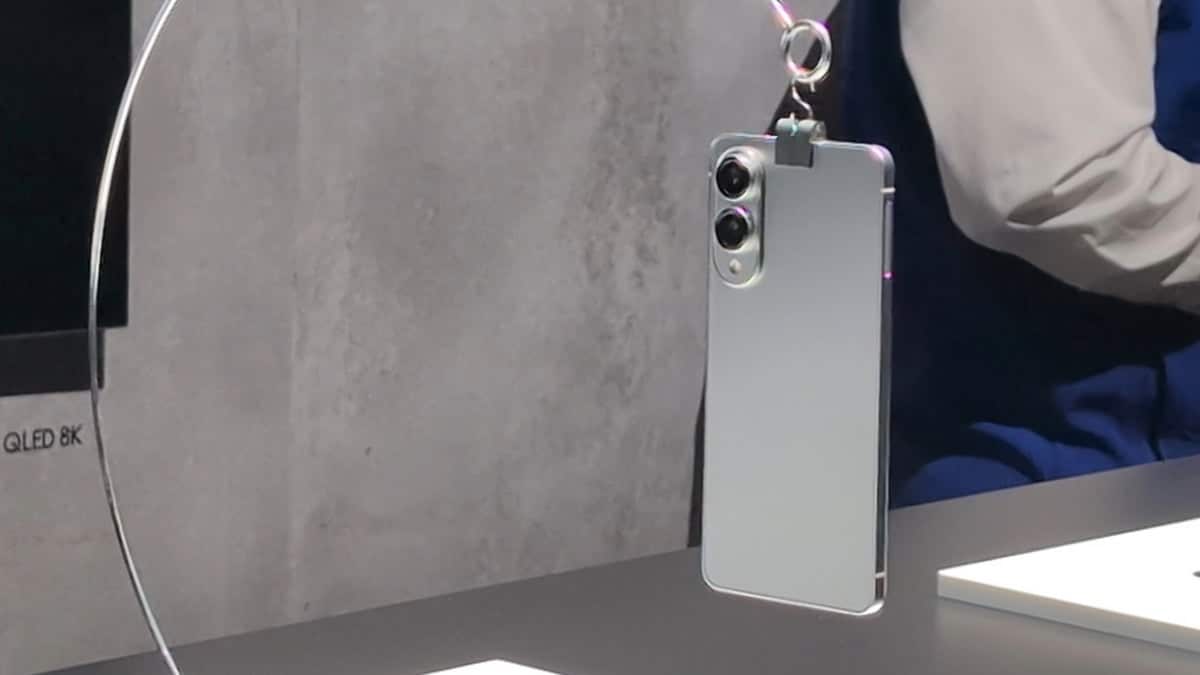
As we get closer to the launch of the Samsung Galaxy S25 Edge, a burning question has popped up: why isn’t the device using silicon-carbon battery technology, which has been getting a lot of buzz for its potential to store more energy? A Samsung executive, speaking on the condition of anonymity, has shared some insights into the company’s current thinking. The focus, it seems, isn’t so much about dismissing new materials but about leveraging cutting-edge software—particularly AI—to enhance battery life in ways we haven’t seen before.
The executive confirmed that, despite the growing excitement around silicon-carbon batteries, the Galaxy S25 Edge won’t feature this technology. The decision, they say, is less about skepticism toward the material itself and more about Samsung’s strategic shift towards software-based improvements to overall device longevity, especially through the use of “agentic” AI.
Agentic AI: The Secret Ingredient for Better Battery Life
“Our main goal with the Galaxy S25 Edge is to provide the best user experience possible, and that means thinking beyond just battery size,” the executive explained. “We’re seeing significant improvements thanks to our AI algorithms, which help manage power use more efficiently across the entire device. This goes far beyond the basic tricks like dimming the screen or closing background apps.”
So, what exactly is “agentic AI”? Essentially, it’s a type of AI that learns from your usage patterns and environmental factors to make real-time decisions aimed at prolonging battery life. Rather than just trying to squeeze out a few extra hours with a bigger battery, agentic AI can predict what you’re likely to do next, allocate resources to the apps you’re using most, and even optimize how the phone communicates with networks—all without you needing to think about it.
“Imagine your phone knowing when it needs to ramp up performance and when it can dial things back,” the executive added. “It learns your routines, your favorite apps, and even your network conditions to make those adjustments automatically. The result? A battery life that can often last longer than what you’d expect from a larger battery, just by being more intelligent about how it’s used.”
This approach suggests that Samsung isn’t just relying on hardware tweaks to solve battery issues. Instead, the company is betting that intelligent software can help a phone get more out of its battery than simply increasing capacity.
Looking Toward the Future of Mobile Power
While agentic AI is the key to Samsung’s current strategy, the executive confirmed that the company is also keeping a close eye on emerging battery technologies. Silicon-carbon is still in the mix, but it’s not the only option being explored.
“Silicon-carbon is definitely something we’re looking at, alongside other promising materials,” the executive said. “But the reality is, the semiconductor industry evolves so quickly, and battery technology needs to keep up. We’re focused on finding solutions that not only improve energy density but also increase longevity, charge faster, and, most importantly, have better safety profiles.”
In addition to silicon-carbon, Samsung is investigating other innovative options, including solid-state batteries, lithium-sulfur, and alternative chemistries that could change the game for mobile devices. Developing these technologies, however, is no small feat.
“Bringing any new battery tech to market is a long, complex process,” the executive explained. “It’s not just about creating a prototype in a lab. We need to scale up production, ensure consistency, and meet strict safety standards for millions of devices. We’re dedicated to leading in this space, but we’re taking a responsible, measured approach.”
Beyond the Numbers: A Holistic Approach to Performance
The executive also emphasized that Samsung’s strategy isn’t just about chasing specific specs like battery size or processor speed. It’s about a balanced, holistic view of device performance—how hardware, software, and user experience all come together.
“A phone isn’t just a collection of parts,” they remarked. “It’s an experience. If we can make the battery last longer through smarter software and provide a smoother, more responsive interface, then we’ve succeeded. Users may not always know the details of our AI systems, but they’ll certainly notice how long their phone lasts and how seamlessly it works.”
This suggests that Samsung might be shifting the narrative around battery life, moving away from the obsession with larger capacities and towards smarter, more efficient power management through AI.
A Calculated Move for the Galaxy S25 Edge
By choosing not to incorporate silicon-carbon batteries in the Galaxy S25 Edge, Samsung is signaling confidence in its AI-powered approach to battery management. It’s a strategy that could redefine how we think about mobile power, moving away from raw battery size and toward more intelligent energy use. While this shift may not be immediately apparent to most users, the results—longer battery life and a more fluid experience—could speak for themselves once the device is in hand.
In the end, the future of mobile power might not be about the materials inside the battery but about how smartly that battery is managed. And as we approach the release of the Galaxy S25 Edge, it will be fascinating to see how well Samsung’s promises play out in the real world.