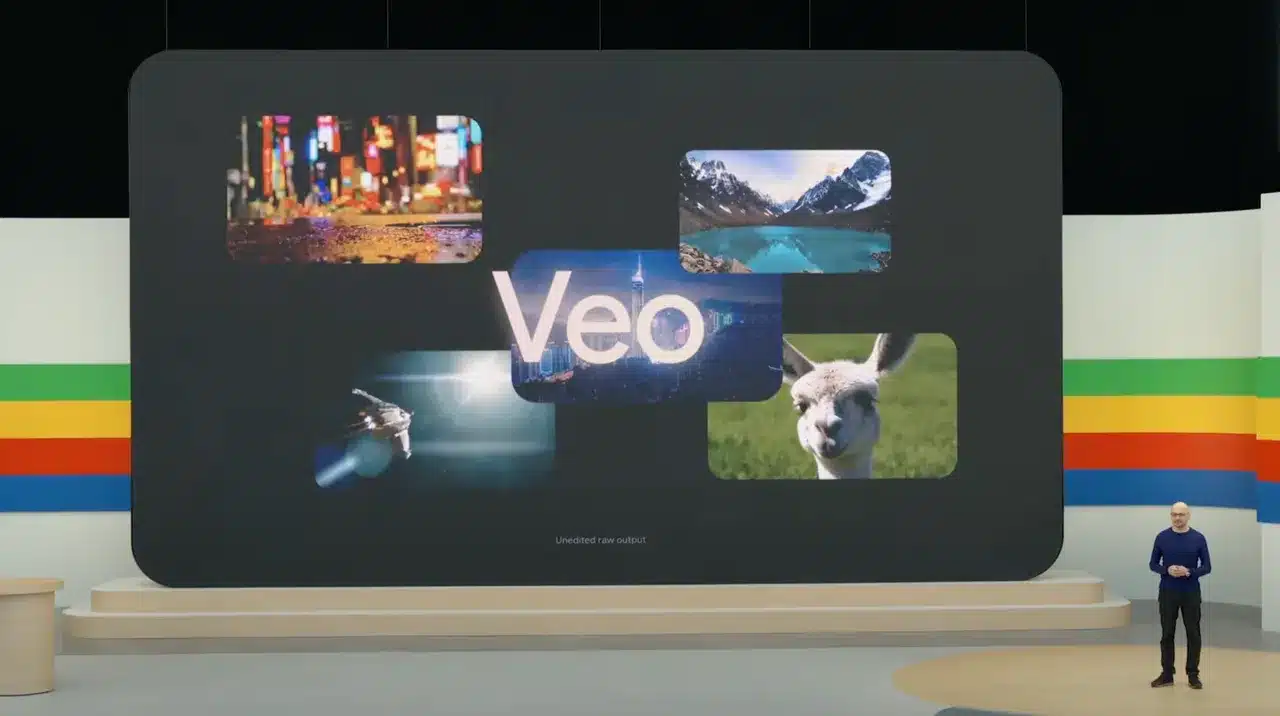
The internet is suddenly brimming with hyper-realistic video clips, and they aren’t the result of elaborate film shoots. They’re coming from Google’s newest AI marvel, Veo. This cutting-edge text-to-video tool, developed by Google DeepMind, is shifting the ground beneath digital content creation. And it’s stirring up both awe and anxiety in equal measure. Early demos of Veo reveal short films so lifelike, they’ve left many viewers unsettled.
A Leap in AI Video Generation: What Veo Brings
Veo marks a serious evolution in AI video generation. Where earlier tools often stumbled—delivering choppy, soundless clips—Veo produces high-resolution footage with synchronized audio that feels eerily real.
- Integrated Audio: Perhaps the most striking feature is how Veo naturally weaves in audio. Not just generic noise, but full dialogue, music, and environmental soundscapes, all synced seamlessly with the video.
- Realistic Visuals: It’s not just the sound. Veo manages to replicate real-world physics, maintain visual continuity, and even animate human figures with startling believability. Lip movements, in particular, match up with spoken words in a way that’s hard to dismiss.
- Prompt Adherence: Veo responds to highly detailed text prompts, turning complex instructions into fully realized video scenes that actually make sense—a significant step up from the jumbled outputs of its predecessors.
- Accessible Creation: With just a written prompt, users can produce professional-looking video content. No cameras, no crew, no editing suite. That shift is a big deal.
Early Access and Public Reaction
For now, Veo is being tested by a select group in the U.S., mostly through Google’s Gemini Ultra subscription tier. But that hasn’t stopped clips from spreading far and wide on social media.
Some of them are playful—like a giraffe casually riding a moped—while others tread closer to the uncanny valley. One particularly viral clip features AI-generated avatars discussing the model itself. One exclaims, “We can talk! No more silence!” It’s a strange, self-aware moment. Another showcases a stand-up comedy routine with an AI performer delivering punchlines to synchronized audience laughter. None of it was filmed. None of it was real.
Concerns Over Blurred Reality
Naturally, this raises red flags. When anyone can generate ultra-realistic video content in minutes, where does that leave truth?
- Misinformation and Disinformation: Already, people are crafting fake news segments that look nearly indistinguishable from genuine broadcasts. That’s a serious concern, especially in a time when digital misinformation is already a global issue.
- Impact on Industries: If tools like Veo become mainstream, they could disrupt everything from filmmaking and advertising to journalism. Why hire a crew when an AI can do the heavy lifting?
- Ethical Questions: Then there’s the thorny issue of deepfakes. If Veo can recreate realistic imagery and voices of real people, what’s stopping someone from making harmful or misleading content featuring individuals who never consented?
Google’s Approach to Responsible AI
Google isn’t blind to these issues. The company says it’s committed to developing AI responsibly. To help with transparency, they’ve rolled out something called SynthID.
- SynthID: This tool embeds invisible watermarks into AI-generated media. Think of it as a digital fingerprint. There’s also a corresponding web portal where users can upload content to check if it carries Google’s watermark.
- Prohibited Use Policies: Google has also published strict rules on how its generative tools can be used. They explicitly ban content that promotes violence, impersonation, fraud, or other illegal activity.
Still, even with these safeguards, experts remain cautious. Detection tech like SynthID is useful, but not foolproof. And awareness around these tools—how to spot them, how to use them ethically—lags behind the pace of development.
Veo represents a pivotal moment. It gives people the power to produce videos that were, until recently, only possible with large-scale production teams. And that’s incredible—but also incredibly complicated.
As AI video generation tools become more accessible, there’s going to be a need for broader public literacy around media authenticity. Skepticism will become a valuable skill. So will a reliance on verified sources and trustworthy platforms.
This isn’t just a tech milestone—it’s a cultural one. Veo’s arrival has made the ongoing conversation around AI, reality, and trust even more urgent. And we’re only at the beginning.