

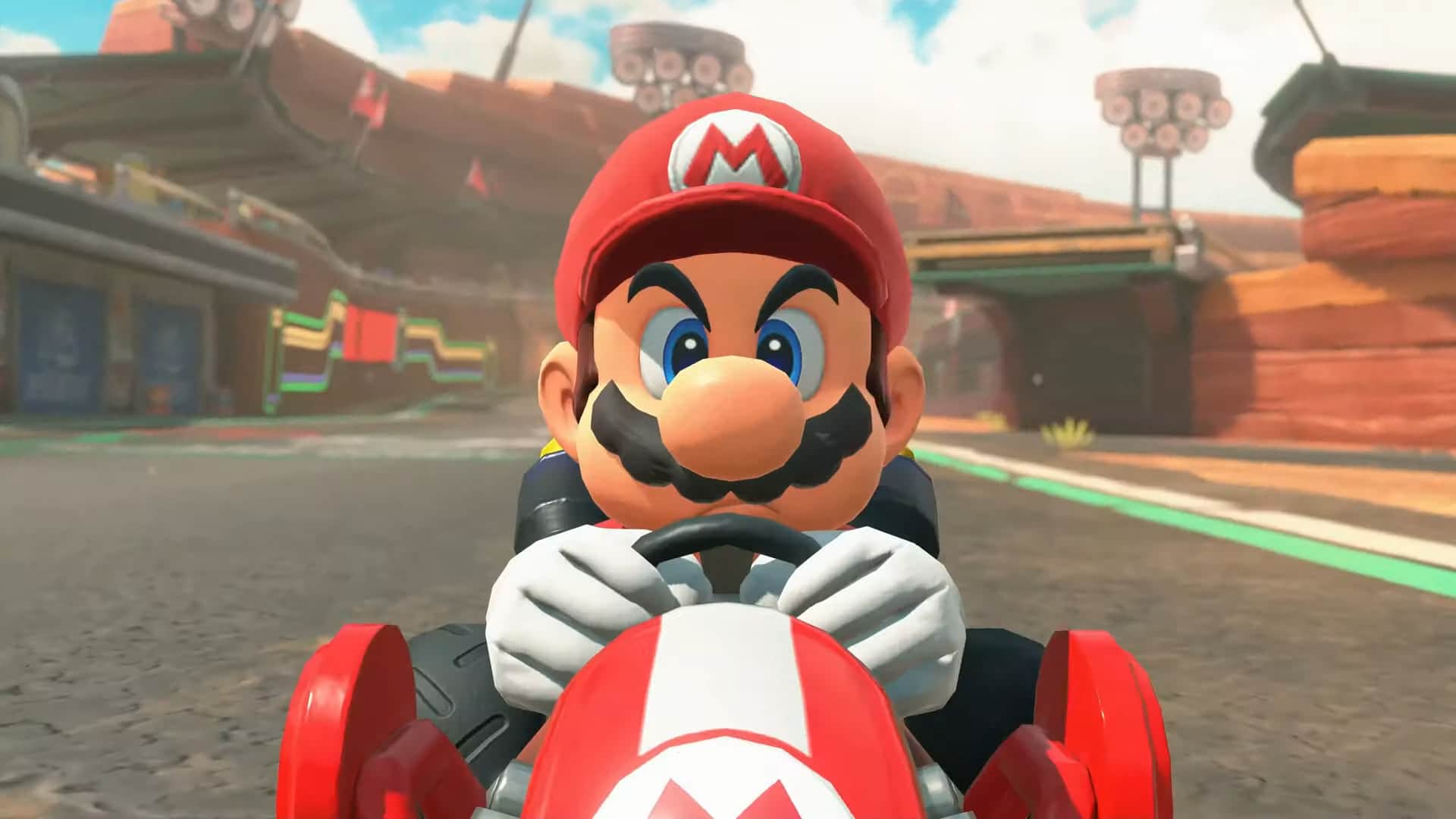
For ten years now, Mario Kart 8 has been a staple in both casual gaming nights and fierce online competitions. With its vibrant tracks, an ever-expanding roster, and chaotic item-fueled fun, it’s easy to see why it’s still so popular. But lately, something has shifted in the conversation around the game. A once-dismissed suspicion has started gaining traction: is Mario Kart 8 subtly—and perhaps deliberately—tilting the scales during races?
A growing chorus within the community thinks so. They’re pointing to design elements that don’t quite feel accidental. Instead, they suggest Nintendo may have embedded mechanisms that subtly manipulate outcomes to keep races tight, unpredictable, and, some argue, unfair. It’s been dubbed “gaslighting” by frustrated players who feel the game is toying with them. And honestly? They might be onto something.
The Rubber Band Effect: A Classic Taken Too Far?
Longtime fans of the series are no strangers to the so-called “rubber band” effect—where AI racers mysteriously speed up or slow down to keep the competition close. It’s always been there. But in Mario Kart 8, it seems more aggressive, more deliberate.
Plenty of players have noticed AI opponents pulling off impossible recoveries. You’ll see them zip ahead with uncanny acceleration or snag high-tier items at just the right moment. And if you’re in first place? Brace yourself. You’re probably about to be hit by a barrage of red shells, blue shells, and who knows what else. It doesn’t always feel like bad luck. Sometimes it feels, well, scripted.
Item Distribution: Truly Random or Just Pretending?
The drama of item boxes is central to Mario Kart’s appeal. They’re supposed to be random, injecting just the right amount of chaos into each race. But many players aren’t buying it anymore.
Take a closer look:
- Top Player Item Droughts: Skilled racers often find themselves stuck with coins or bananas—fine, sure, but not exactly helpful when you’re a sitting duck for blue shells.
- Catch-Up Item Spikes: Meanwhile, players in the back often pull bullet bills, stars, and golden mushrooms in rapid succession, rocketing forward with ease.
- Relentless Red Shells: The number of red shells targeting the front-runner can feel suspiciously high, to the point where it seems the game favors chaos over merit.
These patterns, reported over and over again, hint at a system that might be less about randomness and more about manufactured suspense.
Speed and Physics: Micro-Adjustments at Play?
Some theories go even deeper. Beyond just AI behavior and item luck, there are claims that the game subtly tweaks your kart’s performance mid-race. These are tough to prove, of course, but interesting nonetheless.
Ever feel like your kart suddenly drags or doesn’t handle quite right when you’re in the lead? Or that things just seem a little smoother when you’re trailing behind? It might be nothing. Then again, it might be the game nudging you in one direction or another, so subtly you can’t quite put your finger on it.
The “Friendly” Fire Problem
Team races introduce their own kind of weirdness. In theory, your AI teammates should help, or at the very least, not hurt. But in practice, they sometimes seem just as likely to hit you with items as the enemy team.
Some chalk this up to clumsy programming. Others see it as yet another subtle way the game keeps the race unpredictable. Either way, it’s frustrating—especially when a well-thrown shell from a so-called teammate knocks you out of first.
Why Would Nintendo Do This?
It’s not necessarily malicious. The leading theory is that Nintendo designed these mechanics to make the game more accessible. If every race ends with the same skilled players dominating, newcomers might check out quickly. But if there’s always a chance for a comeback, even for the underdog, more people stay engaged.
And it works. That constant tension—the idea that anything can happen, even in the final seconds—is a huge part of Mario Kart’s lasting charm. Every race feels like a battle, which makes each win feel earned. Or, well, almost earned.
A Decade of Doubt, Voiced Louder Than Ever
For years, players who questioned these systems were dismissed as sore losers. But as Mario Kart 8 Deluxe continues to thrive and new players join the fray, the chorus has grown louder. More videos, more discussions, more strange clips of improbable AI wins and suspicious item chains are surfacing.
What was once a niche conspiracy theory is starting to feel like common knowledge. No, Nintendo hasn’t confirmed any of it. But within the community, the belief that Mario Kart 8 plays by its own hidden rules is more widespread than ever.
So What Now? Play Smarter, Not Angrier
Knowing this doesn’t have to ruin the game. In fact, it might just make you a better player. If you’re aware of the potential for a blue shell ambush, you can strategize around it. If you understand that the game might favor the underdog, you can prepare for that final lap frenzy.
Mario Kart 8 has been messing with us, maybe. But maybe that’s part of the fun. The trick now is to accept it and adjust. Because if the game is indeed playing a game of its own, then it’s up to us to learn the rules and play right back.
Ten years in, and we’re still discovering how deep the rabbit hole goes. That alone says something about the game’s staying power—and its mystery.