

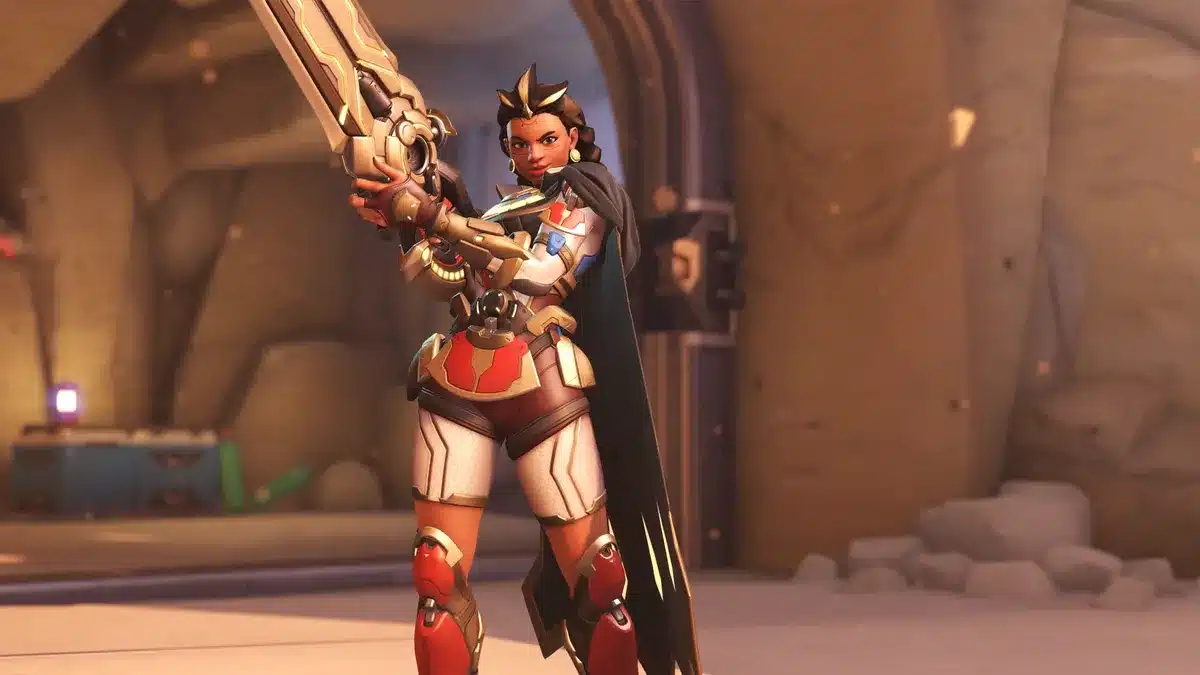
Remember those weeks where logging into Overwatch felt different? You queued for Competitive Play, ready to climb the ranks, only to find your trusty main hero greyed out, unavailable for selection. This wasn’t a bug; it was the Hero Pool system, a bold experiment implemented in Overwatch 1 that sparked heated debates among players. While Overwatch 2 launched without this feature, Blizzard developers, including game director Aaron Keller, have discussed the thinking behind it, offering a look into the challenges of managing competitive balance and player experience.
Blizzard introduced Hero Pools to Overwatch 1’s Competitive Play starting in Season 20, which kicked off in early 2020. The idea was simple, yet impactful: each week, a select number of heroes would be removed from the playable roster in Competitive matches. The specific heroes rotated, initially determined by an algorithm looking at recent play rates in high-level play, and later curated manually by the development team based on different criteria, including competitive meta data and even World Cup play statistics.
Typically, the weekly ban list included a few heroes from each role – Tank, Damage, and Support. The number of banned heroes varied slightly from week to week, but the impact was immediate and undeniable. Players who specialized in a now-banned hero had to adapt, either by switching to a different character within their preferred role or by stepping outside their comfort zone entirely. Team compositions shifted dramatically, strategies that relied on specific hero synergies became impossible, and players suddenly found themselves facing unfamiliar matchups.
So, why did Blizzard mess with the core roster that players had spent years mastering? The rationale, as explained by developers in various updates and “Director’s Take” style communications at the time, centered on combating competitive staleness. Overwatch, by its nature, is a constantly evolving game, but metas – the dominant strategies and hero compositions – can sometimes settle for extended periods. When the same few heroes and team setups rule the ladder week after week, the game can feel predictable and less exciting for both players and viewers.
The developer goal with Hero Pools was to forcibly shake up that meta on a regular basis. By temporarily removing key figures from the competitive stage, they aimed to make players explore different hero combinations, strategies, and counter-picks. This, in theory, would keep the competitive landscape feeling fresh, encourage hero diversity across the player base, and potentially prevent specific heroes or compositions from becoming too oppressive for too long. They wanted players to feel like each week brought a new challenge and a new puzzle to solve.
Speaking about the system, developers often highlighted the intention was not to punish players, but to enhance the long-term health and variety of competitive play. They acknowledged that it would require players to be more flexible, a skill they considered valuable at higher ranks. The hope was that this forced adaptation would lead to a more skilled and versatile player base overall, better equipped to handle the dynamic nature of the game.
From the player perspective, Hero Pools were, to put it mildly, divisive. For some, the system was a breath of fresh air. They relished the opportunity to experiment, learn new heroes, and play in metas that felt significantly different from the week prior. Watching professional matches also became more dynamic, as pro teams had to showcase deeper hero pools and strategize around the bans. It added an exciting layer of uncertainty and improvisation to the game.
I remember queuing up one week only to find my main support hero unavailable. Initially, it was frustrating. I felt like I was at a disadvantage. But it pushed me to finally learn another support I’d been meaning to try. That week was a struggle, but it forced me to improve my mechanics and understanding of a different playstyle, which ultimately made me a more well-rounded player. Many players shared similar stories of being pushed outside their comfort zone in a positive way.
However, a significant portion of the player base felt strong negative emotions towards Hero Pools. The most common complaint was the feeling of unfairness when a hero they had invested significant time and effort into mastering was randomly banned for a week. Competitive integrity was a major concern; players questioned how they could consistently climb the ranks when the very tools they relied on were arbitrarily removed. Imagine dedicating hundreds of hours to perfecting a hero, only for the game to tell you “not this week.” It felt like progress was being hampered by an external force.
Players also pointed out that for those with limited time to play, learning multiple heroes to a competitive standard was a tall ask. Some felt forced to play heroes they weren’t good at, leading to frustrating losses and a feeling that the quality of matches suffered. The weekly uncertainty also made planning and serious practice more difficult. Just as you felt you were getting a handle on the current meta, the bans would hit, and the landscape would shift entirely.
Ultimately, despite the stated goals and the period of experimentation, Blizzard decided to remove Hero Pools from Overwatch 1 Competitive Play towards the end of 2020. The developer reasoning behind the removal acknowledged that the system hadn’t consistently achieved the desired outcomes and that player frustration was a significant factor. While it did shake up the meta, it sometimes felt arbitrary or led to less strategic gameplay rather than more. The disruption it caused for players often outweighed the benefits of meta diversity.
When Overwatch 2 launched in October 2022 with its fundamental shift to 5v5 gameplay, the Hero Pool system was not part of its initial competitive offering, and it has not returned since. The decision not to carry it forward suggests that the developers took the lessons learned from the Overwatch 1 experiment to heart. Managing meta shifts and competitive balance remains an ongoing challenge in Overwatch 2, but Blizzard currently approaches this through hero balance patches, new hero releases, and map pool rotations rather than outright weekly bans.
The Hero Pool experiment in Overwatch 1, discussed in developer updates and Director’s Takes during that period, serves as a fascinating case study in competitive game design. It was a bold attempt to address a real problem – meta staleness – but the implementation proved challenging for a live service game with a dedicated player base. While the system itself is gone, the discussions around it highlight the continuous effort required by developers to keep a competitive game fresh and balanced while respecting the players’ investment and desire for a fair climb up the ranks. It was a period that fundamentally altered how players approached Competitive for a time and offered valuable insights into the delicate balance of disruption and stability in the world of esports.